
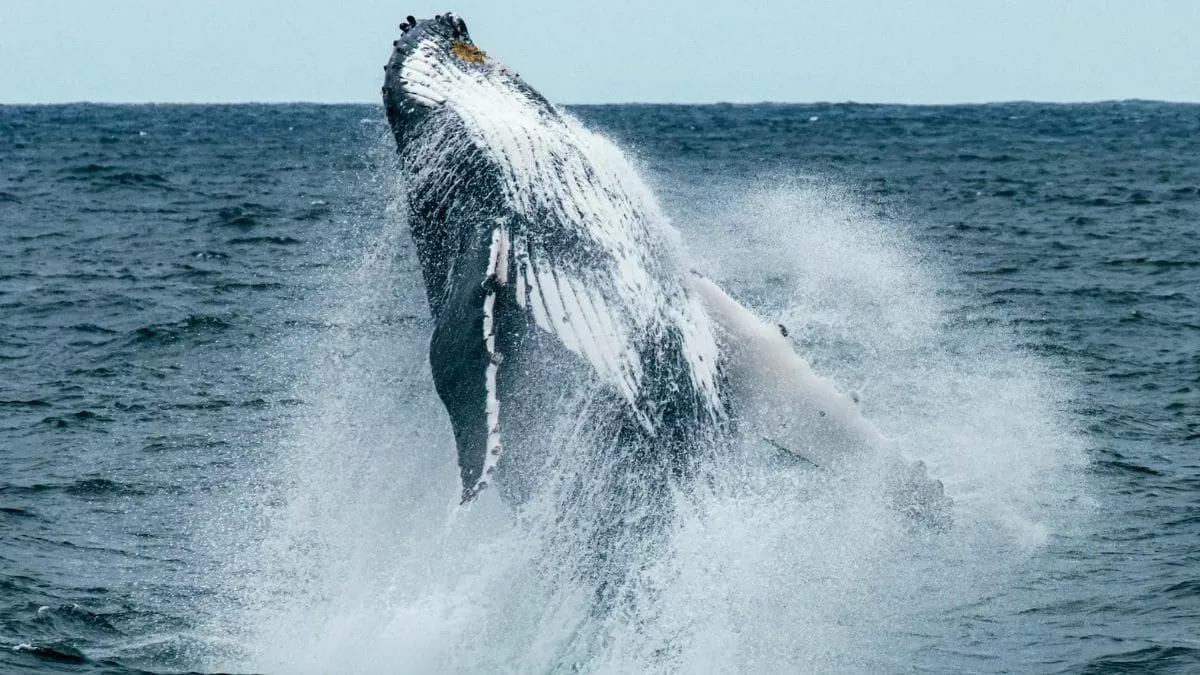
North Atlantic Right Whales are one of the most majestic creatures on our planet. These gentle giants can grow up to 50 feet in length and weigh up to 70 tons, making them one of the largest mammals in the world. Unfortunately, they are also one of the most endangered. With only around 400 individuals left in the wild, these magnificent creatures are facing numerous threats to their survival.
One of the biggest threats to North Atlantic Right Whales is fishing gear entanglement. These whales often get caught in fishing gear, such as nets and lines, which can cause serious injuries or even death. Another major threat is ship collisions. As these whales migrate along the east coast of North America, they often cross paths with busy shipping lanes, putting them at risk of being struck by large vessels.
In order to protect these endangered whales, scientists are constantly looking for new and innovative ways to track their movements and understand their behavior. Recently, they have turned to an unlikely source for help – NASA satellite data. By using this data, scientists are able to track the whales’ key food source, the red-colored plankton Calanus finmarchicus, in the Gulf of Maine.
Calanus finmarchicus, also known as copepods, are tiny crustaceans that play a crucial role in the marine food chain. They are a vital food source for many marine animals, including the North Atlantic Right Whale. These copepods are also known for their distinctive red pigment, which makes them easily identifiable from space.
Using NASA satellite data, scientists are able to detect and track large swarms of these copepods in the Gulf of Maine. This information is then used to map out the whales’ feeding grounds and migration patterns. By understanding where and when these copepods are present, scientists can predict where the whales will be and take necessary measures to protect them from potential threats.
This innovative approach has already yielded promising results. Scientists have been able to identify previously unknown feeding grounds for the North Atlantic Right Whales, which has helped in the implementation of new conservation measures. By avoiding these areas during fishing and shipping activities, the risk of entanglement and collisions can be greatly reduced.
Moreover, this method also provides valuable information about the health of the copepod population. As these tiny creatures are highly sensitive to changes in their environment, their presence and abundance can serve as an indicator of the overall health of the marine ecosystem. By monitoring the copepod population, scientists can gain insight into the health of the whales’ food source and take necessary actions to protect it.
The use of NASA satellite data to track the North Atlantic Right Whales’ food source is a prime example of how technology and science can work together to protect our planet’s precious wildlife. This innovative approach not only helps in the conservation of these endangered whales, but it also provides valuable information about the health of our oceans.
However, this is just one step towards protecting the North Atlantic Right Whales. It is important for us to continue to support and fund research efforts that aim to understand and protect these magnificent creatures. We must also take responsibility for our actions and make conscious efforts to reduce the threats these whales face, such as fishing gear entanglement and ship collisions.
As we continue to learn more about the North Atlantic Right Whales and their environment, it is our duty to take action and ensure their survival for future generations. Let us all work together to protect these gentle giants and the diverse marine ecosystem they call home. With the help of innovative technologies and dedicated scientists, we can make a positive impact and secure a better future for these endangered mammals.

