
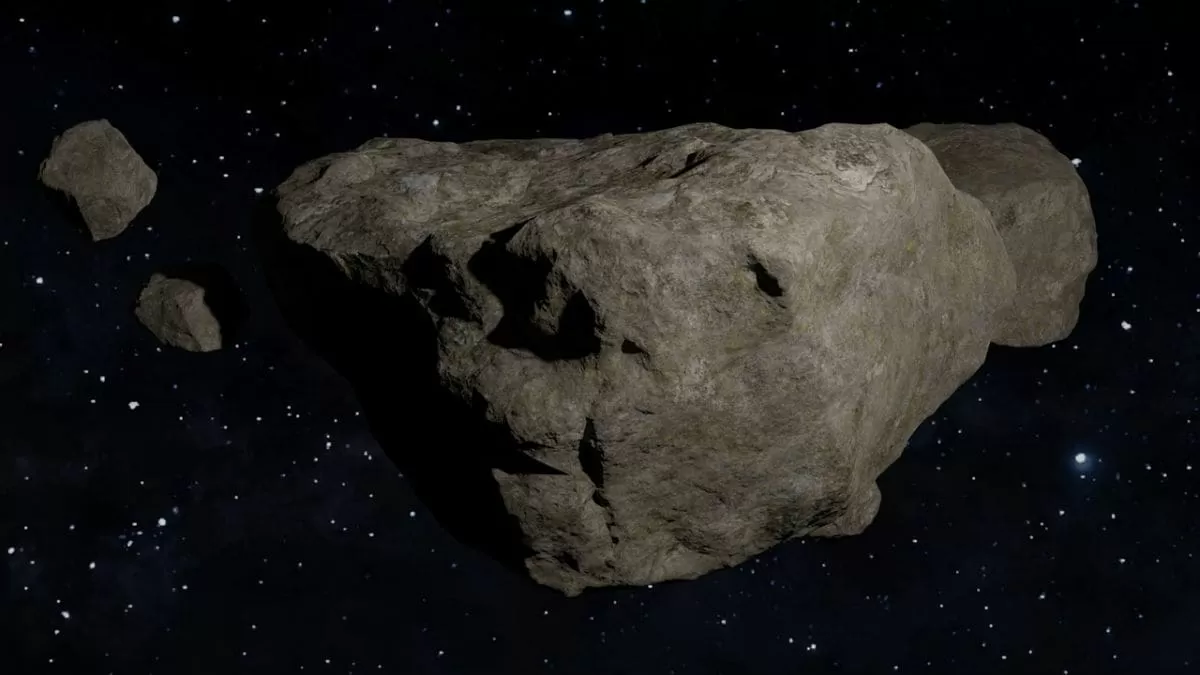
On May 9, an exciting event will take place in the night sky as a 950-foot-wide asteroid named 2002 JX8 makes its way past Earth. But don’t worry, there is no need to panic or take cover. Scientists have confirmed that there is no risk of collision, as the asteroid will remain a safe distance of over 2.6 million miles away. In fact, this event is being eagerly anticipated and will be livestreamed by the Virtual Telescope Project starting at 4:30 p.m. EDT.
The news of this asteroid passing by Earth has caused some concern among people, especially given its classification as potentially hazardous. However, it’s important to understand that this classification is based on the size and distance of the asteroid, not on the likelihood of it actually colliding with Earth. In fact, this is a common occurrence in our solar system, with many asteroids passing by our planet without causing any harm.
The Virtual Telescope Project, founded by astrophysicist Gianluca Masi, is a non-profit scientific and educational organization that aims to bring the wonders of the universe closer to people through live online observations. And this upcoming livestream of the asteroid 2002 JX8 is just one of the many events they have broadcasted over the years.
For those interested in watching this spectacular event, all you need is an internet connection and a device to access the Virtual Telescope Project’s website. The livestream will begin at 4:30 p.m. EDT on May 9 and will be available for anyone to watch, free of charge. This is a great opportunity for people all over the world to witness this rare event and learn more about the wonders of our universe.
But why is this asteroid considered potentially hazardous? The answer lies in its size and distance from Earth. Asteroids are classified as potentially hazardous if they have a size of at least 460 feet and come within 4.6 million miles of Earth’s orbit. This is a safety precaution taken by scientists to monitor and track any potential threats to our planet. However, as mentioned earlier, the chances of this asteroid actually colliding with Earth are extremely low.
In fact, this asteroid is not the only one that has been classified as potentially hazardous. There are currently over 2,000 known asteroids that fall under this category, but the majority of them pose no real threat to our planet. Thanks to advanced technology and the hard work of scientists, we are able to track and monitor these asteroids, ensuring the safety of our planet.
The passing of asteroid 2002 JX8 is also a reminder of the importance of space exploration and research. By studying these celestial bodies, we are able to gain a better understanding of our solar system and the universe as a whole. It also allows us to prepare and plan for any potential threats that may arise in the future.
So, mark your calendars for May 9 and join the Virtual Telescope Project in witnessing this incredible event. Let’s take this opportunity to appreciate the beauty of our universe and the wonders it holds. And remember, there is no need to worry or fear, as this asteroid will safely pass by Earth, leaving us in awe of the vastness and complexity of our universe.

