
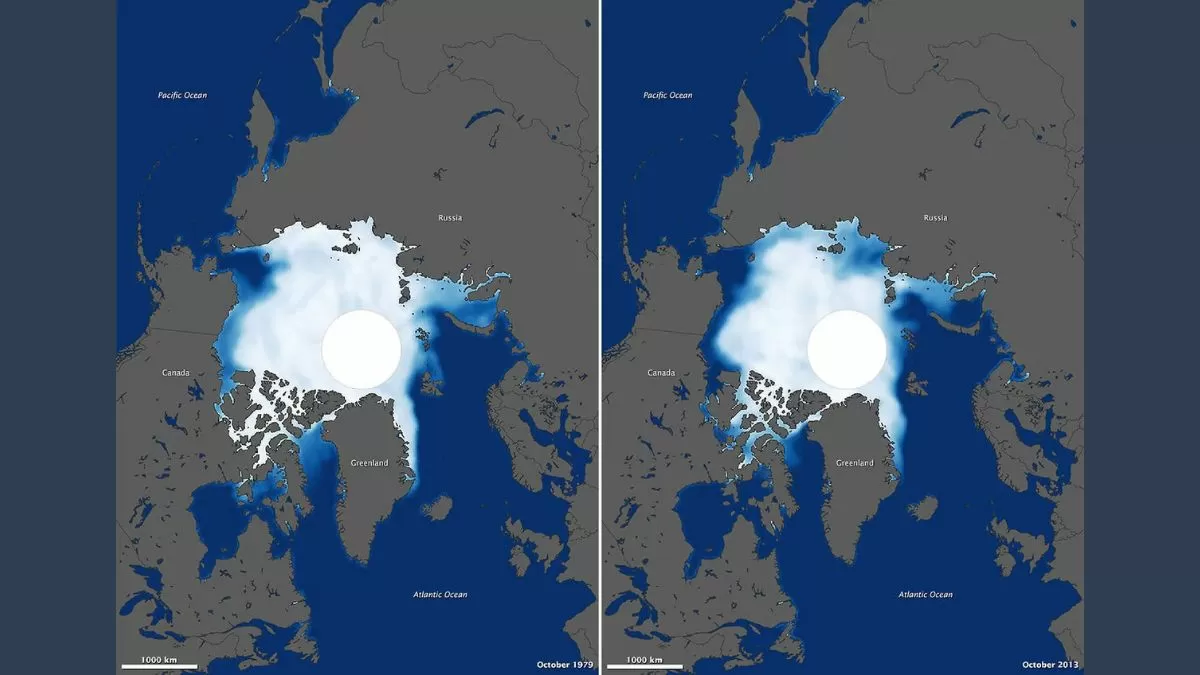
A recent study conducted by researchers at Tongji University, using data from NASA’s GRACE satellites, has revealed some interesting findings about the state of Antarctica’s ice cover. The study, which focused on the period from 2021 to 2023, observed a significant increase in ice gains, mainly due to unusual precipitation. However, the long-term satellite data from 2002 to 2020 paints a different picture, showing a significant and accelerating trend of ice loss.
The study, published in the journal Nature, has caught the attention of the scientific community and the general public alike. It has sparked a debate about the current state of Antarctica’s ice cover and its potential impact on the environment. While the short-term gain in ice may seem like a positive development, experts are quick to point out that it does not reverse the effects of long-term ice loss.
The findings of this study are crucial in understanding the dynamics of Antarctica’s ice cover and its impact on global sea levels. The GRACE satellites, which have been monitoring the Earth’s gravitational field since 2002, provide a unique perspective on the changes happening in Antarctica’s ice sheets. The data collected by these satellites has been instrumental in understanding the effects of climate change on the polar regions.
The recent ice gains observed in Antarctica are mainly due to an increase in precipitation, which is a result of changing weather patterns. This unusual precipitation has led to an increase in the mass of the ice sheets, resulting in a temporary gain in ice cover. However, this gain is not expected to last, as the long-term trend of ice loss continues to accelerate.
Experts warn that the short-term gain in ice cover should not be seen as a sign of improvement. In fact, it is a cause for concern as it indicates a disruption in the delicate balance of Antarctica’s ecosystem. The increase in precipitation may seem like a positive development, but it can have adverse effects on the environment. It can lead to changes in ocean currents and temperature, which can have a cascading effect on marine life.
The long-term satellite data from 2002 to 2020 shows a significant and accelerating trend of ice loss in Antarctica. This is a cause for alarm as it has a direct impact on global sea levels. The melting of Antarctica’s ice sheets can lead to a rise in sea levels, which can have catastrophic consequences for coastal communities and low-lying areas. It can also disrupt ocean currents and weather patterns, leading to extreme weather events.
The findings of this study highlight the need for urgent action to address the issue of climate change. The increase in ice gains in Antarctica may seem like a temporary relief, but it should not overshadow the long-term trend of ice loss. It is a wake-up call for governments and individuals to take immediate steps to reduce their carbon footprint and mitigate the effects of climate change.
The study also emphasizes the importance of continued monitoring of Antarctica’s ice cover. The GRACE satellites have been instrumental in providing valuable data, but they are nearing the end of their lifespan. It is crucial to invest in new technologies and methods to continue monitoring the changes in Antarctica’s ice sheets.
In conclusion, the recent study by researchers at Tongji University, using NASA’s GRACE satellites, has shed light on the current state of Antarctica’s ice cover. While the short-term gain in ice may seem like a positive development, it does not reverse the effects of long-term ice loss. It is a reminder that climate change is a pressing issue that requires immediate action. We must all work together to reduce our carbon footprint and protect our planet for future generations.

