
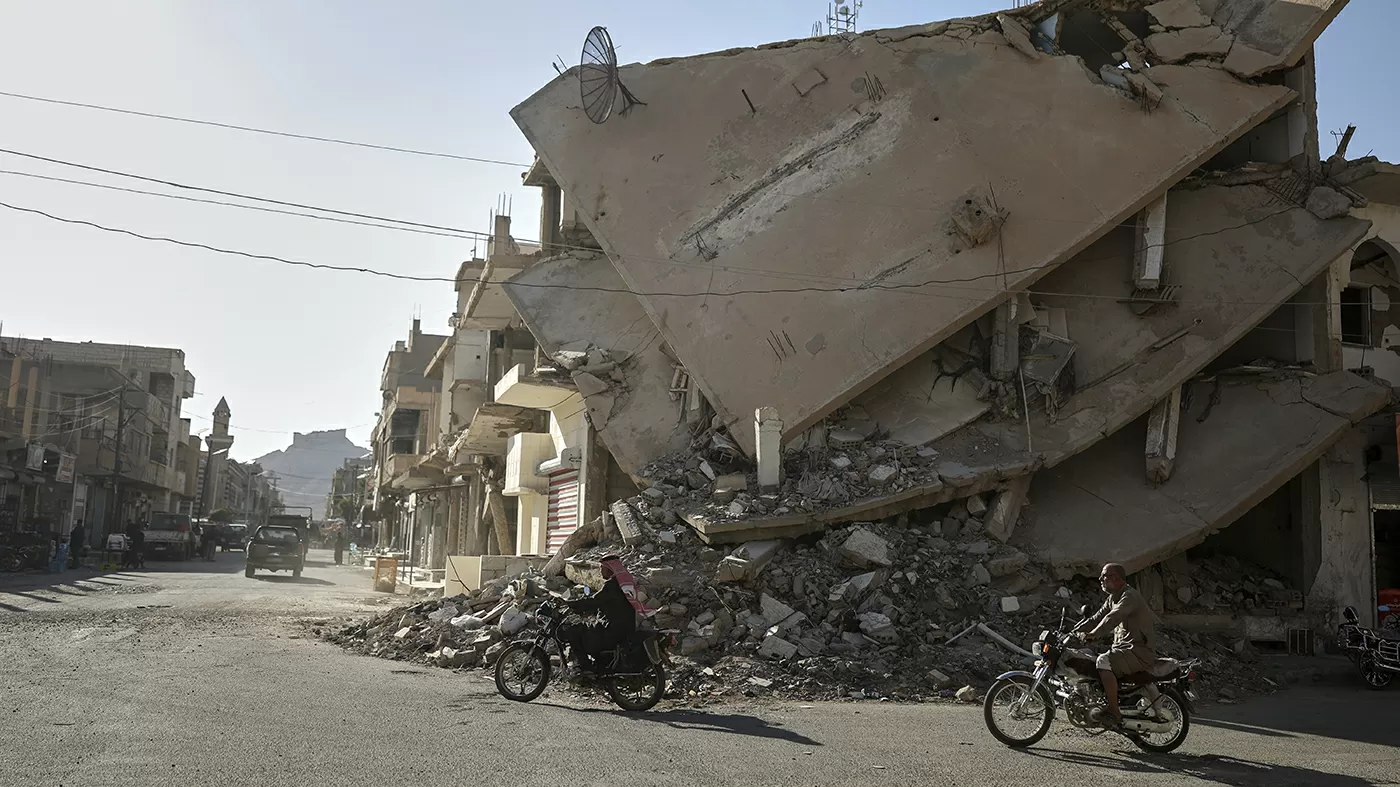
The Syrian crisis has been ongoing for over a decade, with no end in sight. In an effort to put pressure on the Syrian government and protect innocent civilians, the United States passed the Caesar Syria Civilian Protection Act of 2019. However, this act has now become a source of contention between the Senate and the House, with both sides on a collision course over whether to repeal the comprehensive sanctions on Syria.
At the heart of the debate lies the question of whether the Caesar Act has been effective in achieving its intended goals. The act, named after the Syrian military photographer who leaked graphic images of torture and abuse in Syrian prisons, was designed to cut off the Assad regime’s access to international markets and resources. This was meant to weaken the Syrian government and force them to stop the violence against their own people.
On one hand, supporters of the Caesar Act argue that it has had a significant impact on the Syrian government. The sanctions have limited the regime’s ability to export oil and gas, which has drastically reduced their revenue. This has also led to shortages in essential goods, causing further economic strain on the government. Additionally, the act has blocked nearly all U.S. and international reconstruction efforts in Syria, hindering the regime’s ability to rebuild the country.
However, opponents of the act argue that it is not the Syrian government that is bearing the brunt of these sanctions, but rather the Syrian people. The sanctions have contributed to an already dire humanitarian crisis in the country, with millions of Syrians facing food and medicine shortages. The lack of access to resources has also hindered the reconstruction of vital infrastructure, such as hospitals and schools, which are desperately needed to support the Syrian people.
Moreover, the Caesar Act has also faced criticism for its lack of flexibility. The act does not make any allowances for humanitarian aid, which has made it difficult for NGOs and aid agencies to operate in Syria. This has further hindered the delivery of essential goods and services to the Syrian people, who are already suffering from the effects of the ongoing conflict.
It is this very debate that has caused a rare bipartisan coalition in both the Senate and the House. While the two sides may have different views on many issues, they have found common ground in their opposition to the Caesar Act. Senators and Representatives from both parties have come together to push for the repeal of the comprehensive sanctions.
There is growing concern that the Caesar Act is not just causing harm to the Syrian people but could also have unintended consequences for the United States and its allies. The act has been heavily criticized by U.S. allies, such as Turkey and Jordan, who have expressed their concerns about the humanitarian impacts of the sanctions. There is also the fear that the Caesar Act is pushing Syria closer to Iran and Russia, who have been providing support to the Assad regime.
The call for the repeal of the Caesar Act has gained momentum in recent months. In July 2021, a group of 50 U.S. lawmakers, both Democrats and Republicans, signed a letter to President Biden, urging him to consider lifting the sanctions. The letter stated that the act is not achieving its intended goals and is causing harm to innocent civilians.
While the debate over the Caesar Act continues, there is a growing realization that there may be alternative ways to address the situation in Syria. Some lawmakers have proposed targeted sanctions, which would focus on individuals and entities responsible for human rights abuses and corruption, rather than imposing broad and sweeping sanctions on the entire country.
As discussions continue, it is important to remember that the ultimate goal should be to find a solution that protects the Syrian people and brings an end to the conflict. The United States has a responsibility to support the Syrian people, but it is also crucial to reassess the effectiveness of policies such as the Caesar Act and consider alternatives that may have a more positive impact.
In conclusion, the Senate and the House are at a crossroads when it comes to the Caesar Syria Civilian Protection Act of 2019. While there is no denying the grave human rights violations in Syria, it is essential to find a solution that does not cause further harm to innocent civilians. The bipartisan coalition on both sides of the debate is a testament to the need for a more nuanced approach in addressing the Syrian crisis. Let us hope that the discussions between the two sides will lead to a resolution that prioritizes the well-being of the Syrian people.

