
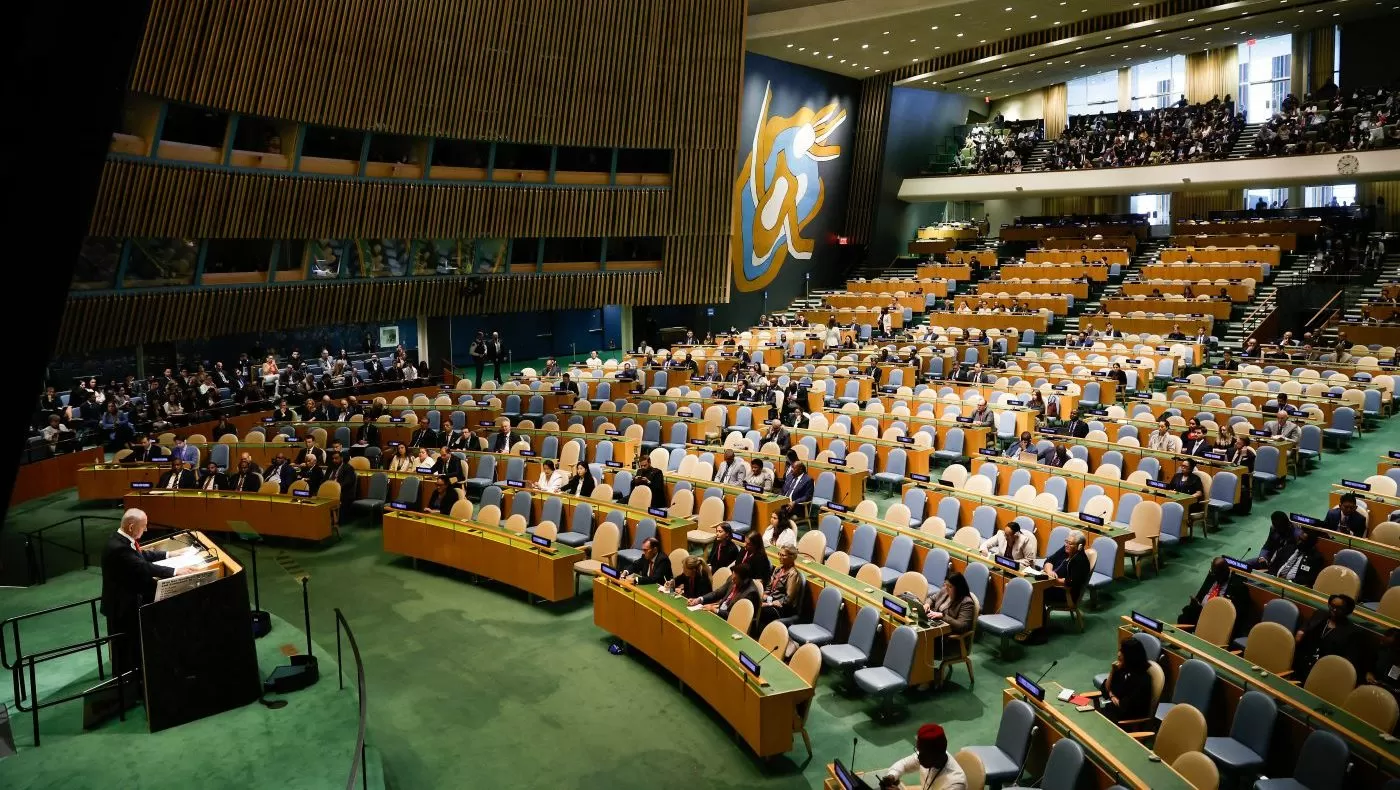
Israeli Prime Minister Benjamin Netanyahu addressed the United Nations General Assembly on Friday, in what was a highly anticipated speech. However, the atmosphere in the auditorium was quite different from what one would expect at such a high-level gathering. As Netanyahu took to the podium, he was met with a nearly empty room, as many delegates chose to boycott his speech in protest against Israel’s actions in the ongoing conflict with Hamas.
This display of boycott and isolation towards Israel is a concerning development, as it highlights the growing international pressure on the country. The ongoing war against Hamas, the militant body governing the Gaza Strip, has only added to Israel’s isolation on the global stage. However, despite these challenges, Prime Minister Netanyahu remained resolute and delivered a powerful speech that highlighted Israel’s commitment to peace and security.
In his address, Netanyahu reiterated Israel’s stance on the conflict with Hamas, stating that the country has the right to defend itself against the constant barrage of rockets and attacks from the Gaza Strip. He also emphasized that Israel has always been open to peace negotiations and has made numerous efforts to reach a peaceful resolution. However, Hamas has consistently rejected these efforts and continues to use violence and terrorism as a means to achieve its goals.
The Israeli Prime Minister also highlighted the double standards and hypocrisy of the international community when it comes to Israel. He pointed out that while Israel is constantly condemned for defending itself, countries like Iran, which openly call for its destruction, are given a free pass. This blatant bias against Israel only adds to the country’s isolation and makes it difficult for them to find a fair and just resolution to the conflict.
Despite the boycott and isolation, Prime Minister Netanyahu’s speech was a powerful reminder of Israel’s resilience and determination to protect its citizens. He also took the opportunity to showcase Israel’s contributions to the world in various fields, such as technology, medicine, and agriculture. These achievements are a testament to the country’s strength and innovation, despite the ongoing challenges it faces.
It is also worth noting that while some delegates chose to boycott Netanyahu’s speech, many others stayed to listen and show their support for Israel. This is a clear indication that not all countries are swayed by the biased narrative against Israel and recognize the country’s right to defend itself.
In conclusion, the boycott of Prime Minister Netanyahu’s speech at the United Nations General Assembly is a concerning development that highlights the growing isolation of Israel on the international stage. However, the Israeli Prime Minister’s powerful address served as a reminder of the country’s determination to protect its citizens and its contributions to the world. It is time for the international community to recognize and support Israel’s efforts towards peace and security, rather than isolating and condemning the country. Only through fair and unbiased dialogue can a lasting resolution to the conflict be achieved.

