
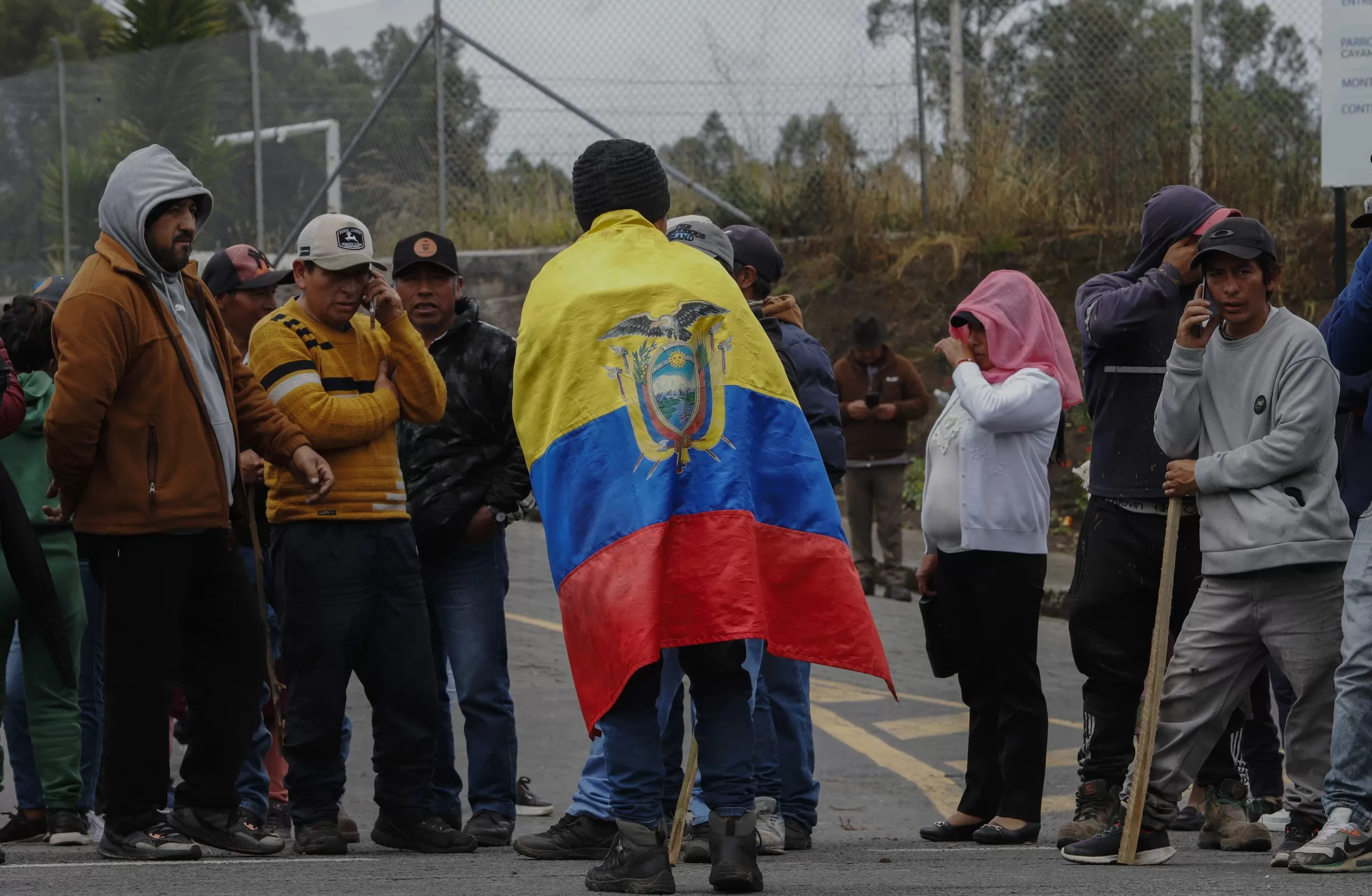
Ecuador’s Indigenous Movement Rattles Government with “Indefinite National Strike”
Ecuador, a country known for its rich biodiversity and cultural diversity, is currently facing a turbulent time due to the ongoing nationwide strike by its Indigenous population. This strike, also known as the “Indefinite National Strike”, is the latest episode in the “Stories of Resistance” that have been a recurring feature in the country’s history.
Led by the Confederation of Indigenous Nationalities of Ecuador (CONAIE), the strike has brought the country to a standstill, with roads and highways blocked, businesses closed, and schools and universities shut down. The Indigenous population, which accounts for nearly a quarter of the country’s population, is demanding that their voices and concerns be heard and addressed by the government of President Daniel Noboa.
The Indigenous movement’s demands include the reversal of austerity measures imposed by the government, protection of Amazon rainforest and Indigenous lands, and an end to the exploitation of natural resources. These demands are crucial for the survival and well-being of the Indigenous communities, who have long been marginalized and forgotten by the government.
The roots of this current strike can be traced back to October 2019 when the government announced the removal of fuel subsidies, leading to a sharp increase in the prices of gasoline and other essential commodities. This move was met with immediate backlash, with protests erupting across the country. The Indigenous communities were at the forefront of these demonstrations, which eventually forced the government to back down on the decision.
However, the government’s subsequent decision to accept a loan from the International Monetary Fund (IMF) and implement other austerity measures only added fuel to the fire. The Indigenous population, who are already struggling with poverty and discrimination, saw this as a betrayal by the government and decided to take a stand against these policies.
What started as a protest against economic policies soon evolved into a broader movement, with the Indigenous communities bringing to light other issues such as environmental protection, healthcare, education, and rights of Indigenous people. The movement, known for its peaceful and organized protests, has gained widespread support from various sectors of society, including students, workers, and human rights organizations.
The strike has not only paralyzed the country’s economy but has also put pressure on President Noboa’s government, which has been accused of neglecting the needs of its Indigenous population. Despite attempts by the government to negotiate and reach a resolution, the Indigenous organizations have remained firm in their demands, refusing to back down until their voices are heard and their demands are met.
This “Indefinite National Strike” is not the first time that the Indigenous population of Ecuador has taken to the streets to fight for their rights. The country has a long history of Indigenous resistance and struggles, with the most notable being the “Uprising of the Fourteen”, a successful rebellion in 1990 that forced the government to recognize the rights of Indigenous people.
And now, thirty years later, the Indigenous movement is once again making headlines and gaining support not just in Ecuador but also across the globe. The strike has sparked conversations about the importance of protecting our environment and respecting the rights of Indigenous communities who are the custodians of our natural resources.
The ongoing strike has also brought to light the pervasive inequalities and discrimination faced by Indigenous people in Ecuador and other parts of the world. It has become a symbol of resistance against oppressive systems and a reminder that the fight for justice and equality is far from over.
In conclusion, the Indigenous movement’s “Indefinite National Strike” in Ecuador is a powerful and significant protest that has the potential to bring about much-needed changes in the country. It is a reminder to the government that they cannot ignore the voices of their Indigenous population any longer. The movement is a beacon of hope and a source of inspiration for all those who are fighting for justice and equality, and it is a testament to the power of the people when they come together to demand their rights.

