
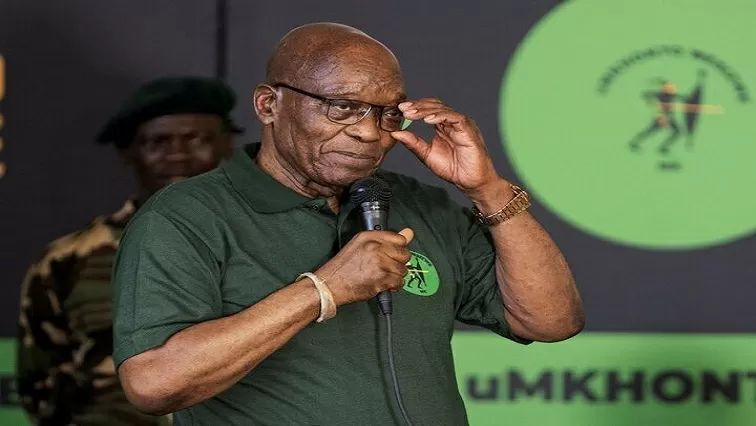
Former President Jacob Zuma has been at the center of controversy for many years, with numerous allegations of corruption and mismanagement of public funds. However, the latest revelation that he has accumulated a staggering R28 million in legal fees, which was paid by the state, has left many South Africans shocked and outraged.
The news of Zuma’s legal fees was revealed by the Minister of Justice and Correctional Services, Ronald Lamola, during a parliamentary question and answer session. Lamola stated that the former president’s legal fees were paid by the state in accordance with the State Attorney Act, which allows for the state to cover the legal costs of public officials who are facing legal action in their official capacity.
This revelation has sparked widespread criticism and condemnation from the public, who are already burdened with the high cost of living and struggling economy. Many are questioning why the state should foot the bill for Zuma’s legal battles, especially when he is no longer in office and facing charges of corruption and fraud.
The R28 million legal fees accumulated by Zuma is just the tip of the iceberg, as it does not include the costs incurred by the state in defending him in the numerous court cases he has faced over the years. This includes the infamous “spy tapes” case, which saw the state spending over R15 million in legal fees to defend Zuma.
The fact that the state has been paying for Zuma’s legal fees has raised serious concerns about the misuse of public funds and the lack of accountability within the government. It also highlights the need for stricter regulations and oversight when it comes to the use of state resources.
However, despite the public outcry, there are some who argue that the state was within its rights to cover Zuma’s legal fees. They argue that as a former president, Zuma is entitled to the same benefits and privileges as other public officials, and that the state has a duty to protect its employees from legal action.
But this argument fails to acknowledge the severity of the charges against Zuma and the impact it has on the country’s economy and reputation. The former president’s legal battles have not only cost the state millions of rands, but they have also caused significant damage to the country’s image and investor confidence.
Furthermore, the fact that Zuma has been able to accumulate such a large amount in legal fees raises questions about his financial status and whether he has the means to pay for his own legal defense. This is especially concerning considering that Zuma has been accused of using his position of power to enrich himself and his family.
The R28 million legal fees paid by the state could have been used to address pressing issues such as poverty, unemployment, and the struggling education and healthcare systems. Instead, it has been used to defend a former president who has been accused of betraying the trust of the people and abusing his power for personal gain.
In light of these revelations, it is imperative that the government takes immediate action to address the misuse of public funds and hold those responsible accountable. This includes implementing stricter regulations and oversight measures to prevent similar situations from occurring in the future.
It is also important for the government to prioritize the needs of the people and ensure that public funds are used for the betterment of society, rather than to protect the interests of a few individuals. The R28 million legal fees paid for Zuma’s defense is a stark reminder of the need for transparency and accountability in the management of public funds.
In conclusion, the news of former President Jacob Zuma’s R28 million legal fees, paid by the state, has once again highlighted the need for a more responsible and accountable government. It is a wake-up call for the government to prioritize the needs of the people and ensure that public funds are used for the greater good. Let us hope that this serves as a lesson for the future and that steps are taken to prevent such misuse of public funds from happening again.

