
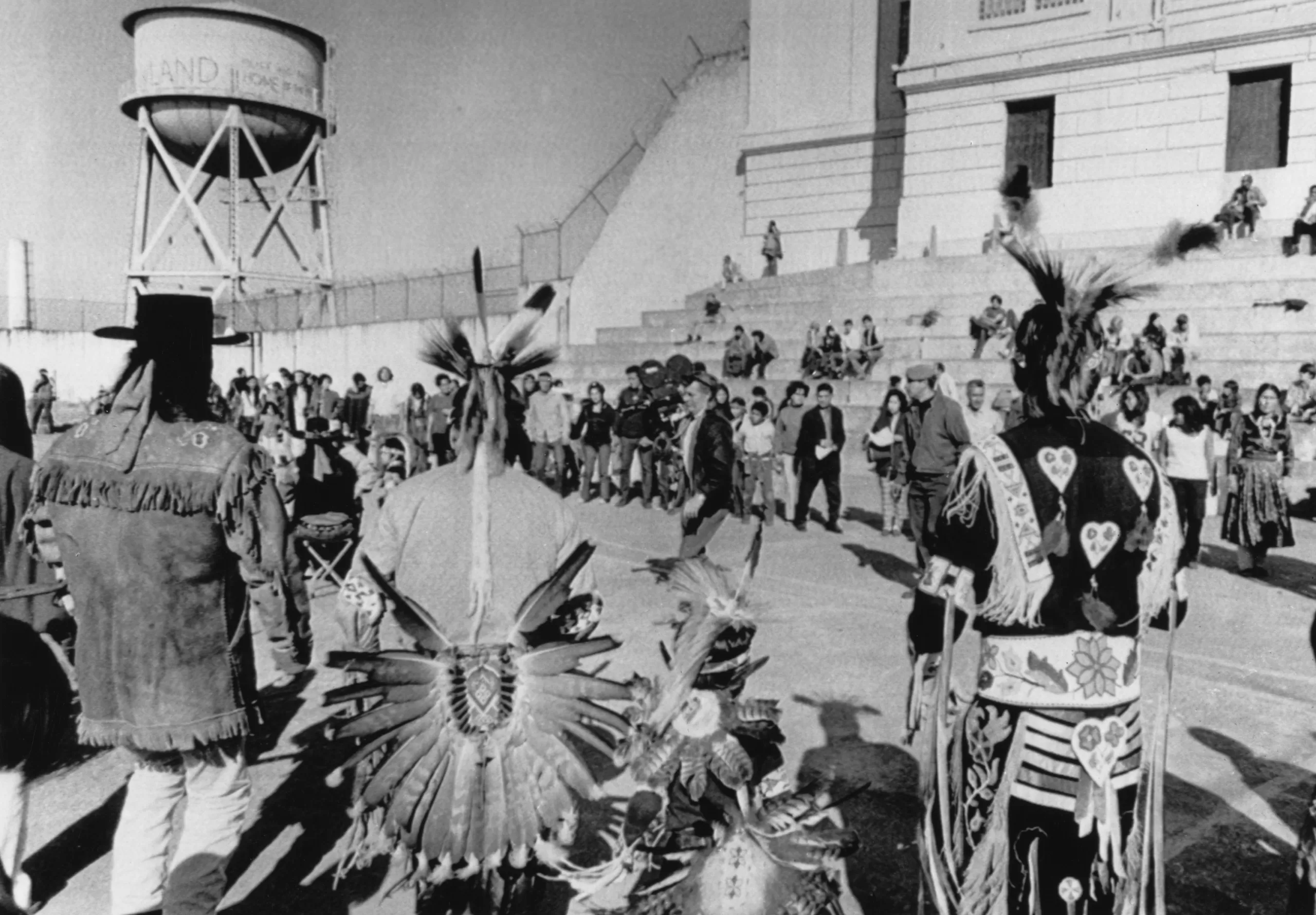
Every year on Thanksgiving morning, while many Americans are preparing for a day filled with food, family, and football, a group of Native Americans gathers on Alcatraz Island in the San Francisco Bay. They come to honor the strength and resilience of their ancestors, to pay tribute to their resistance and to remember a pivotal moment in history – the 1969 Native American occupation of Alcatraz. This year marks the 78th episode of the ongoing Stories of Resistance.
The sunrise ceremony on Alcatraz is a powerful and poignant reminder of the struggles and triumphs of Indigenous peoples in America. It is a time to reflect on the past and look towards the future, to acknowledge the injustices that have been faced and to celebrate the resilience that continues to live on.
The origins of the ceremony can be traced back to the 1960s, a time of great change and activism in the United States. During this era, many marginalized and oppressed groups were fighting for their rights and recognition, including Native Americans. In 1969, a group of Native American activists and leaders occupied Alcatraz Island, a former federal prison that had been abandoned for years. They claimed the island as their own, citing the 1868 Treaty of Fort Laramie, which stated that any abandoned federal land should be returned to the Native peoples who once inhabited it.
The occupation lasted for 19 months, and during this time, the activists raised awareness about the struggles of Indigenous peoples, both past and present. They also established an educational center on the island, offering classes on Native American history, culture, and traditions. The occupation received widespread media coverage, and it sparked a renewed interest in Native American rights and issues.
While the occupation eventually came to an end, its impact was far-reaching and long-lasting. The annual sunrise ceremony on Alcatraz Island is a way to honor the legacy of this historic event and to continue the fight for Indigenous rights and recognition. It also serves as a reminder that the struggle is ongoing and that there is still work to be done.
The ceremony begins before dawn, as the sun begins to rise over the San Francisco Bay. Participants gather in a circle, facing east towards the rising sun, and offer prayers, songs, and traditional dances. It is a deeply spiritual and meaningful experience, a way to connect with the land and with one another.
As the sun continues to rise, a traditional fire is lit, and a sacred pipe is passed around the circle. This pipe represents the unity and strength of the Native American community, and its smoke carries prayers and blessings to the heavens. The ceremony is a way to honor not only the sacrifices and struggles of the past but also to acknowledge the challenges that still exist for Indigenous peoples today.
The Stories of Resistance initiative, of which the sunrise ceremony is a part, aims to educate and empower Native American communities and to raise awareness about their history and ongoing struggles. It is a reminder that despite the hardships faced, Indigenous peoples have never given up and continue to resist and persist, always holding on to their traditions and culture.
The ceremony on Alcatraz Island is also a call for unity and solidarity. It brings together people from different tribes, backgrounds, and generations to celebrate their common heritage and to stand in solidarity with one another. It is a reminder that the fight for Indigenous rights is not just the responsibility of Native Americans but of all Americans.
As we gather around our Thanksgiving tables with our loved ones, let us take a moment to remember the Native American community and their ongoing struggles. Let us honor their resistance and resilience and pledge to stand with them in their fight for justice and recognition. And let us never forget the powerful message of the sunrise ceremony on Alcatraz Island – that even in the face of adversity, the flame of hope and strength will continue to burn bright.

