
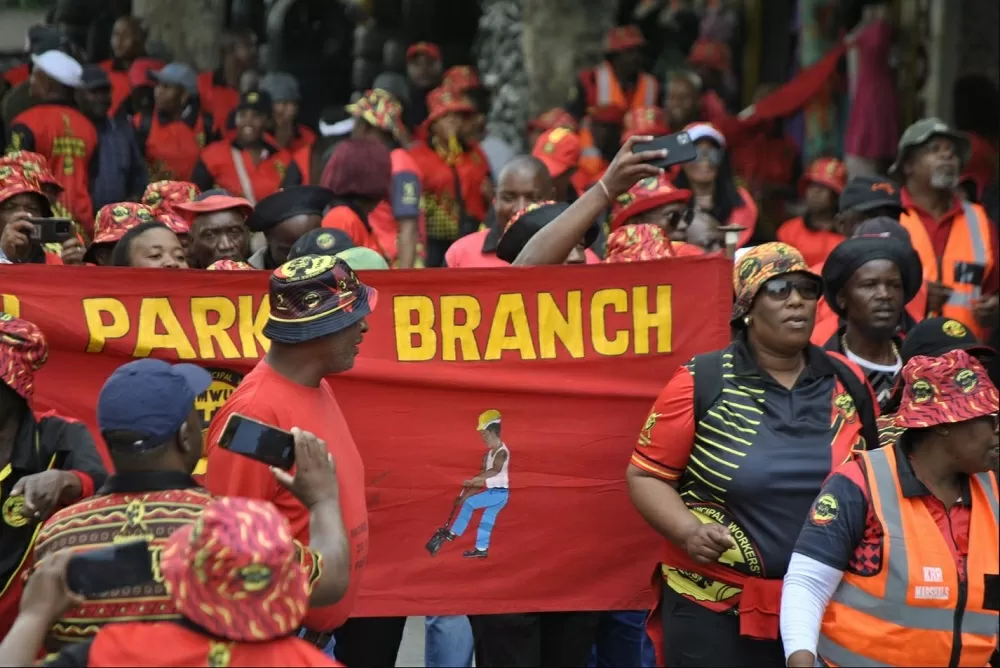
COSATU Marks 40 Years: Celebrating Relevance and Empowering the Working Class
The Congress of South African Trade Unions (COSATU) is celebrating its 40th anniversary this year, and it is a milestone worth commemorating. For the past four decades, COSATU has been at the forefront of fighting for the rights of the working class in South Africa. Founded in 1985, during the height of apartheid, COSATU has played a crucial role in the struggle for a democratic and equal society. As we mark this significant milestone, it is essential to reflect on COSATU’s journey and its plans for the future.
COSATU was formed by a merger of various trade unions, including the African National Congress (ANC)-aligned unions, the Council of Unions of South Africa (CUSA), and the Federation of South African Trade Unions (FOSATU). The primary objective of the formation of COSATU was to unite the fragmented trade union movement in South Africa and to provide a strong and united voice for workers. Over the years, COSATU has grown in strength and numbers, becoming the largest trade union federation in the country, with over 1.8 million members.
Throughout its existence, COSATU has been a champion for workers’ rights, fighting for better wages, improved working conditions, and the protection of workers’ rights. The federation has also been a vocal advocate for social justice and economic equality, advocating for policies that benefit the working class and marginalized communities. COSATU’s efforts have not gone unnoticed, with the federation receiving numerous accolades and recognition for its contribution to the labor movement and society at large.
As we celebrate 40 years of COSATU’s existence, it is crucial to acknowledge the challenges the federation has faced and overcome. During the apartheid era, COSATU was at the forefront of the struggle against the oppressive regime, with its members facing harassment, imprisonment, and even death. Yet, despite these challenges, COSATU remained resilient and continued to fight for the rights of workers. Even after the fall of apartheid, COSATU has faced many hurdles, including the changing global economic landscape, increased competition, and the rise of precarious employment. However, the federation has remained steadfast in its commitment to the working class, adapting to changing times and emerging as a strong and influential voice in the labor movement.
As COSATU marks its 40th anniversary, the federation is using this milestone to assert its relevance amongst the working class. The celebration is an opportunity to reflect on the achievements of the past and to renew the federation’s commitment to the struggles of the present and future. COSATU’s theme for this year’s anniversary is “40 years of fighting for workers’ rights and social justice.” This theme highlights the federation’s unwavering dedication to the cause of workers and its role in the broader struggle for social and economic justice.
One of the key events to mark COSATU’s 40th anniversary is the National Congress, which will be held later this year. The National Congress is the highest decision-making body of the federation and will bring together delegates from COSATU’s 19 affiliated unions to discuss and chart the way forward for the federation. The National Congress is an opportunity for COSATU to reflect on its achievements, evaluate its current strategies and policies, and plan for the future. It is also a platform for the federation to reaffirm its commitment to the working class and to elect new leadership to guide the federation for the next four years.
COSATU’s 40th-anniversary celebrations will also include various events and activities aimed at engaging and empowering workers. These activities will include workshops, seminars, and campaigns on issues such as job security, decent work, and social protection for workers. COSATU will also use this opportunity to reach out to non-unionized workers and encourage them to join the federation and be part of the struggle for workers’ rights and social justice.
As we celebrate COSATU’s 40th anniversary, it is essential to recognize the critical role the federation plays in the labor movement and society. COSATU has been a driving force for change, advocating for policies that benefit the working class and promoting social and economic justice. The federation has also been instrumental in shaping South Africa’s democracy and continues to play a vital role in the country’s development.
In conclusion, as COSATU marks

