
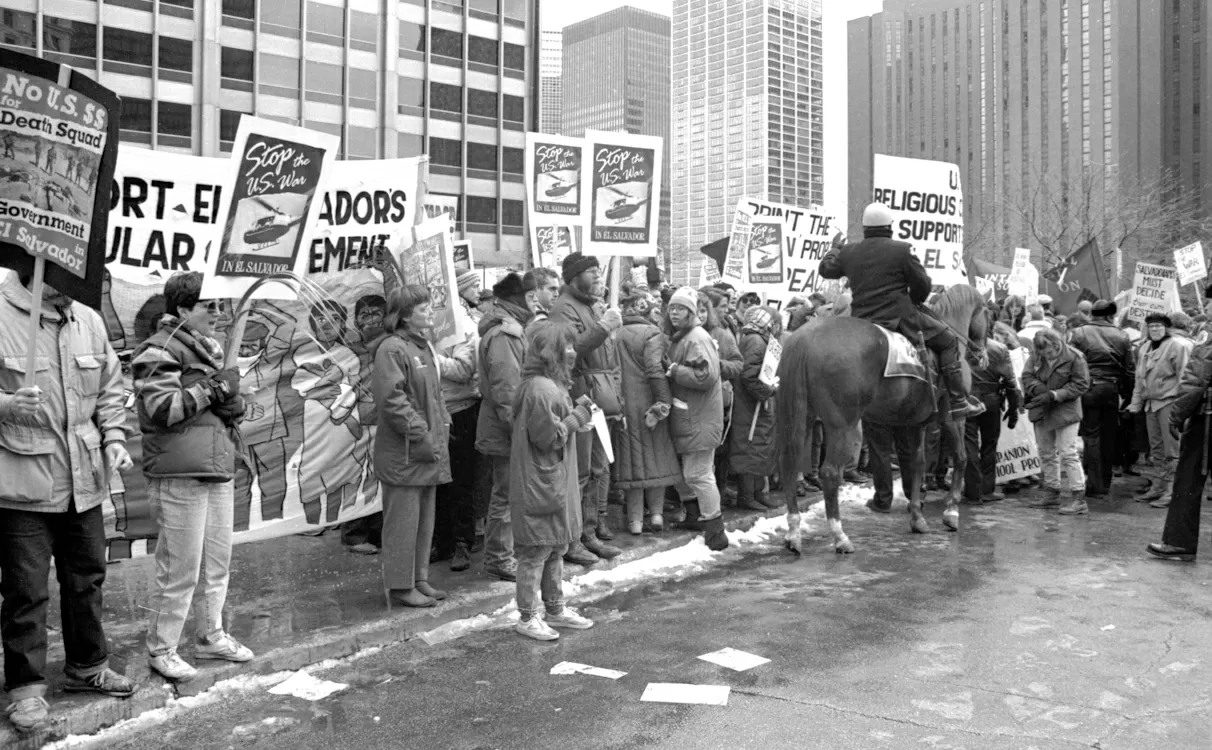
The 1980s were a time of great political turmoil in Central America. The United States, in an effort to combat the spread of communism, had been heavily involved in the region for decades. However, their intervention often came at a high cost for the people of Central America, who were caught in the crossfire of political and military conflicts. In the face of this injustice, a powerful movement of solidarity emerged in the United States, standing up against US intervention and showing support for the people of Central America. This is the story of the 1980s solidarity movement, a powerful example of resistance and solidarity in the face of oppression.
The solidarity movement of the 1980s was a diverse and multifaceted movement, with various groups and individuals coming together to show their support for the people of Central America. One of the most visible forms of resistance was through marches and demonstrations. These marches were often large and passionate, with people from all walks of life coming together to demand an end to US intervention in Central America. These marches were not only a way to show solidarity, but also a way to raise awareness and educate the public about the situation in Central America.
Hunger strikes were another powerful form of resistance used by the solidarity movement. Activists would go on hunger strikes to draw attention to the suffering of the people in Central America and to put pressure on the US government to change their policies. These hunger strikes were often risky and physically demanding, but they were a powerful way to show solidarity and to make a statement against US intervention.
In addition to these direct forms of resistance, the solidarity movement also took action to disrupt US intervention in Central America. This included blocking weapons shipments to countries like El Salvador and Nicaragua, where the US was supporting oppressive regimes. These actions were often risky and could result in arrests, but they were a powerful way to show that the people of the United States were not in support of their government’s actions in Central America.
The solidarity movement also showed its support through various forms of solidarity actions. This included boycotts of companies that were profiting from US intervention in Central America, as well as divestment campaigns to pressure universities and other institutions to withdraw their investments from companies involved in the conflict. These actions were a way for people to use their economic power to show solidarity and to put pressure on the US government to change its policies.
One of the most powerful forms of solidarity shown by the movement was through pledges of resistance. These were commitments made by individuals and groups to take nonviolent direct action in the face of US intervention in Central America. These pledges were a way for people to show their unwavering support for the people of Central America and their determination to resist US intervention.
The 1980s solidarity movement was not without its challenges and setbacks. The US government and its allies in the media often portrayed the movement as being unpatriotic and sympathetic to communism. This led to a backlash against the movement and made it difficult for activists to gain support and funding. However, despite these challenges, the solidarity movement continued to grow and gain momentum.
One of the most significant achievements of the solidarity movement was the passage of the Boland Amendment in 1982, which prohibited the US government from providing military aid to the Contras in Nicaragua. This was a major victory for the movement and showed the power of grassroots activism and solidarity.
The 1980s solidarity movement was a shining example of resistance and solidarity in the face of oppression. It showed that ordinary people could come together and make a difference, even in the face of powerful governments and institutions. The movement also had a lasting impact, inspiring future generations of activists and showing that solidarity knows no borders.
Today, as we continue to see the effects of US intervention in Central America, the lessons of the 1980s solidarity movement are more relevant than ever. It reminds us that we have a responsibility to stand up against injustice and to show our solidarity with those who are oppressed. The 1980s solidarity movement may have ended, but its legacy lives on, inspiring us to continue the fight for a more just and peaceful world.

