
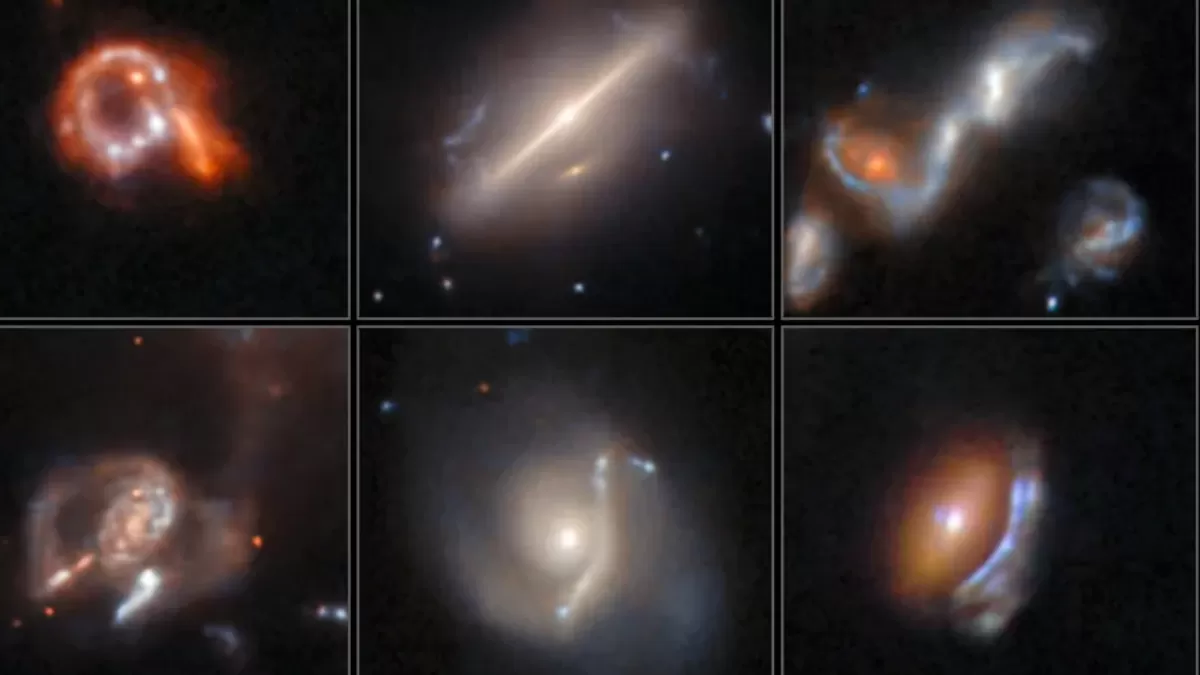
Artificial Intelligence (AI) has revolutionized the way we live and work, and now it is making groundbreaking discoveries in the field of astronomy. In a recent project, AI combed through decades of data from the Hubble Space Telescope and revealed hundreds of unusual celestial objects that had previously been missed by astronomers. This remarkable feat was achieved by ESA’s AnomalyMatch neural network, which scanned around 100 million image cutouts in just a matter of days, flagging over 1,300 anomalies. These findings showcase the immense potential of AI in unlocking hidden discoveries within vast astronomical archives and ushering in a new era of efficient and faster exploration of the universe.
The Hubble Space Telescope has been orbiting the Earth for over 30 years, capturing stunning images of the cosmos and providing us with invaluable insights into the mysteries of the universe. However, with such a vast amount of data, it is impossible for human astronomers to manually analyze every single image. This is where AI comes in – with its ability to quickly and accurately analyze large datasets, it has become an invaluable tool for scientists in various fields.
ESA’s AnomalyMatch neural network was specifically designed for the purpose of identifying anomalies in astronomical images. But what exactly are anomalies? These are celestial objects or events that are rare or unexpected, such as colliding galaxies, rare gravitational lenses, or even jellyfish galaxies. These anomalies are often overlooked by human astronomers, but with the help of AI, they can be identified and studied in detail.
The success of this project is a testament to the power of AI in processing and analyzing vast amounts of data. In just a matter of days, the neural network was able to flag over 1,300 anomalies, some of which had never been seen before. This is a significant achievement and has opened up new avenues for exploration and discovery in the field of astronomy.
One of the most exciting aspects of this project is the collaboration between machines and scientists. While AI may be able to analyze large datasets at a much faster rate, it still requires human input and expertise to interpret the findings and draw meaningful conclusions. This partnership between machines and scientists has the potential to unlock even more discoveries and push the boundaries of our understanding of the universe.
Moreover, the use of AI in astronomy has the added benefit of reducing the workload for human astronomers. With machines taking on the task of analyzing vast amounts of data, scientists can focus on other aspects of their research, leading to more efficient and faster progress in the field.
This project also highlights the importance of preserving and utilizing astronomical data archives. The Hubble Space Telescope has been in operation for over three decades, and its data continues to provide us with new and exciting discoveries. By utilizing AI, we can extract even more valuable information from these archives and continue to deepen our understanding of the universe.
The success of this project has opened up new possibilities for future collaborations between AI and astronomy. With the continuous advancements in AI technology, we can expect even more remarkable discoveries to be made in the years to come. This is an exciting time for the field of astronomy, and the use of AI will undoubtedly play a significant role in shaping its future.
In conclusion, the recent project where AI combed through decades of Hubble Space Telescope data and revealed hundreds of anomalies is a groundbreaking achievement. It has demonstrated the immense potential of AI in unlocking hidden discoveries within vast astronomical archives and has paved the way for more efficient and faster exploration of the universe. The collaboration between machines and scientists has shown that together, we can achieve great things and push the boundaries of our knowledge. As we embark on this new era of AI-assisted astronomy, the possibilities are endless, and we can only imagine what other secrets of the universe will be uncovered.

