
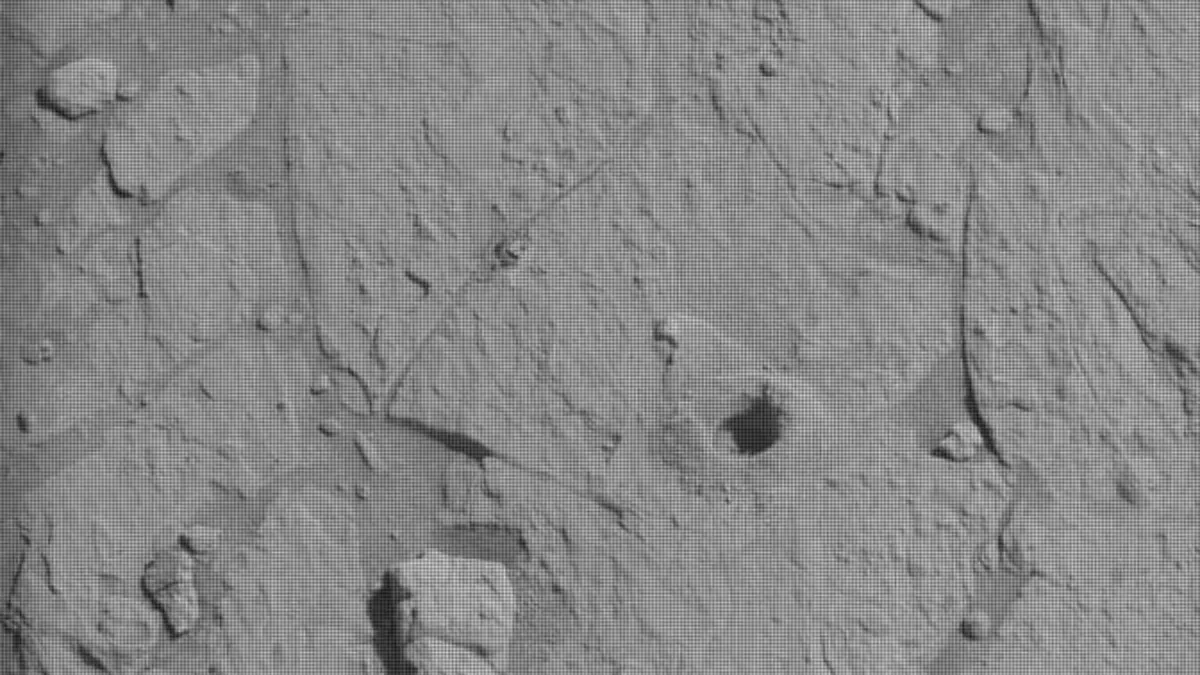
NASA’s Curiosity rover has once again resumed its scientific operations on Mars after a brief hiatus during the solar conjunction period. The rover has returned to a previous drill site in Gale Crater to conduct a rare organic chemistry experiment, using its final supply of TMAH (tetramethylammonium hydroxide) to analyse Martian rock samples for signs of organic molecules.
This exciting development marks a significant milestone for the Curiosity mission, as it continues to uncover the mysteries of the Red Planet and provide valuable insights into its past and present. The rover, which has been exploring Mars since 2012, has already made groundbreaking discoveries, including evidence of past water and the potential for habitable environments.
During the solar conjunction, which occurs every 26 months, Mars and Earth are on opposite sides of the sun, making communication between the two planets difficult. As a precaution, NASA had temporarily suspended Curiosity’s scientific activities to avoid any potential interference or damage to the rover’s instruments.
But now, as the conjunction period has ended, Curiosity is back in action and ready to continue its mission. The rover has returned to a site known as “Glen Etive,” where it had previously drilled into a rock named “Aberlady” in 2018. This time, however, the focus is on conducting an organic chemistry experiment, a first for Curiosity at this particular location.
Using its robotic arm, Curiosity will collect rock samples and then heat them up to release any organic molecules present. These molecules, also known as carbon-based compounds, are essential building blocks of life and can provide crucial insights into the past habitability of Mars.
But the rover’s work doesn’t stop there. In addition to the organic chemistry experiment, Curiosity will also monitor dust and atmospheric conditions inside Gale Crater. This data will help scientists better understand the weather patterns on Mars and how they may affect the planet’s habitability.
The Gale Crater, where Curiosity landed in 2012, is a 96-mile-wide depression that was formed by a meteor impact billions of years ago. This location was specifically chosen for the rover’s mission because it is believed to have once been a lakebed, making it a prime location to search for signs of past life.
Curiosity’s previous findings at Gale Crater have already provided compelling evidence that Mars was once a habitable planet. The rover has discovered ancient lakebeds, mineral deposits, and organic molecules, all pointing towards a potentially habitable environment in the past.
With this latest experiment, Curiosity aims to add to its already impressive list of discoveries and further our understanding of the Red Planet. The data collected by the rover will be transmitted back to Earth, where scientists will analyze it in detail, providing us with valuable insights into the history and potential habitability of Mars.
The Curiosity mission, which was initially planned for two years, has now been extended multiple times due to its success and the rover’s resilience. It has continued to operate well beyond its expected lifespan, showcasing the incredible engineering and technology that went into its design.
The rover’s team at NASA’s Jet Propulsion Laboratory in California is excited about this latest experiment and the potential for new discoveries. “We’re eager to see what we can learn from the samples collected and analyzed by Curiosity during this organic chemistry experiment. It’s a rare opportunity that could provide us with significant insights into the geological and environmental history of Mars,” said Jennifer Trosper, Curiosity project manager.
The Curiosity rover has been a remarkable feat of human ingenuity and has captured the imagination of people worldwide. Its mission has not only advanced our knowledge of Mars but also paved the way for future robotic and human exploration of the Red Planet.
As Curiosity continues its journey, we can only imagine what groundbreaking discoveries lie ahead. With each new experiment and discovery, we come one step closer to unraveling the mysteries of Mars and understanding our place in the universe. The possibilities are endless, and the future of space exploration looks brighter than ever before.

