
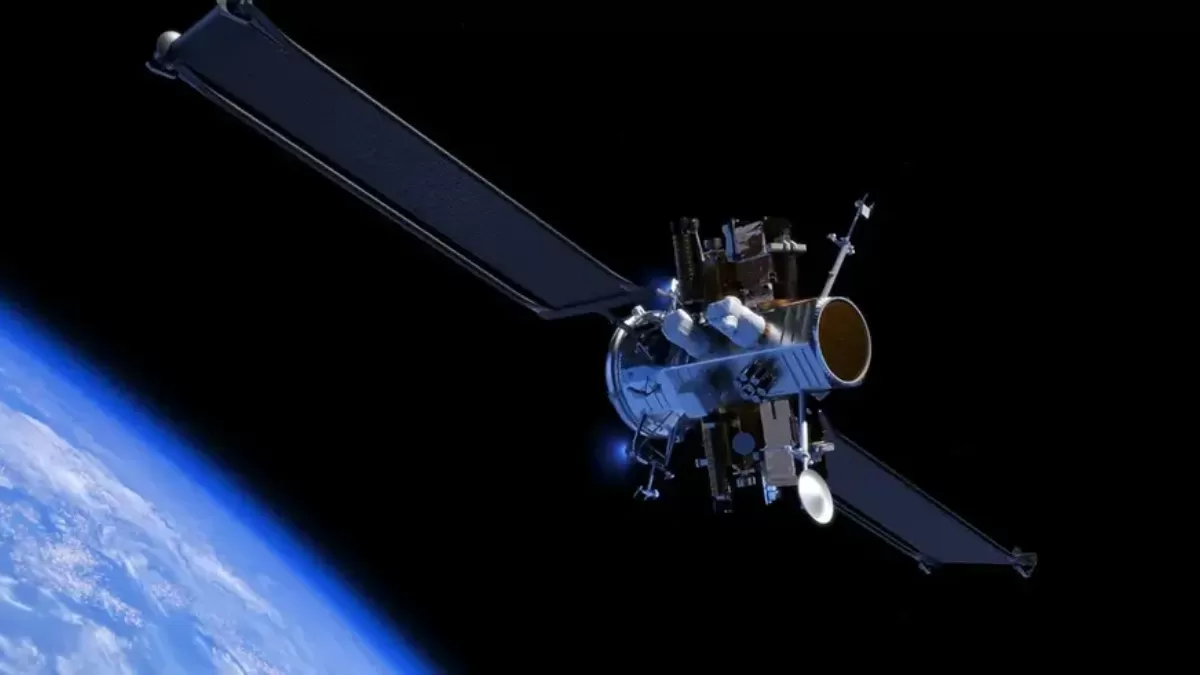
Blue Origin, the space company founded by Amazon CEO Jeff Bezos, has recently announced a groundbreaking new mission called NEO Hunter. This mission, designed to detect and deflect dangerous asteroids, aims to protect Earth and highlights the growing role of private companies in planetary defense.
NEO Hunter, which stands for Near-Earth Object Hunter, is a project that has been in development for several years. Blue Origin has partnered with NASA and other organizations to develop this cutting-edge technology, which is set to launch in the near future.
The main goal of NEO Hunter is to identify and track near-Earth objects (NEOs) that could pose a threat to our planet. These objects, which include asteroids and comets, have the potential to cause catastrophic damage if they were to collide with Earth. While there are already existing systems in place to monitor NEOs, NEO Hunter takes it to the next level with its innovative approach.
So, what exactly does NEO Hunter entail? The mission will utilize a combination of CubeSats, ion beams, and kinetic impact to detect and deflect potentially dangerous asteroids. Let’s break down each component of this ambitious project.
CubeSats are small, cube-shaped satellites that are cheaper and easier to launch than traditional satellites. They will be equipped with infrared sensors and cameras that will scan the sky for signs of NEOs. These CubeSats will work together like a network, collecting and transmitting data back to Earth.
But that’s not all. NEO Hunter will also use a technology called ion beams. These beams, produced by an electric propulsion system, will be used to push asteroids off their current trajectory, preventing them from colliding with Earth. This technology has proven to be successful in small-scale experiments and is now being tested on a larger scale.
If an asteroid is predicted to be on a collision course with Earth, NEO Hunter has one more trick up its sleeve – kinetic impact. This involves crashing a spacecraft into the asteroid at high speeds, causing it to deflect its course. This method has been successfully tested by NASA and could be a crucial tool in our planetary defense arsenal.
One of the most significant aspects of NEO Hunter is the involvement of private companies in planetary defense. In the past, government agencies like NASA have been primarily responsible for monitoring and deflecting NEOs. However, with the increasing capabilities of private space companies, such as Blue Origin, they are now playing a more significant role in this crucial aspect of space exploration.
This is a positive development as it brings in new ideas, innovations, and technologies to the table. With the involvement of private companies, the process of detecting and deflecting NEOs can be expedited, and the costs can be significantly reduced. Moreover, it also allows for healthy competition and collaboration between different companies, which can lead to more advanced and effective solutions.
Jeff Bezos, the founder of Blue Origin, has emphasized the importance and urgency of developing technology to protect our planet from potential asteroid impacts. He has stated, “We know that the Earth has been hit by asteroids many times in its history, and it’s just a matter of time before it happens again.” NEO Hunter is a crucial step towards mitigating this threat and ensuring the safety of our planet and its inhabitants.
Apart from its practical benefits, NEO Hunter also serves to inspire a younger generation of scientists and engineers. The innovative and ambitious technologies used in this mission can capture the imaginations of young minds and motivate them to pursue careers in the space industry.
In conclusion, Blue Origin’s NEO Hunter mission is a significant step towards protecting our planet from the potential threat of asteroids. Its use of CubeSats, ion beams, and kinetic impact, along with the involvement of private companies, highlights the increasing role of the private sector in planetary defense. With this groundbreaking technology, we can better monitor and deflect potentially dangerous NEOs, ensuring the safety and security of our planet for future generations.

