
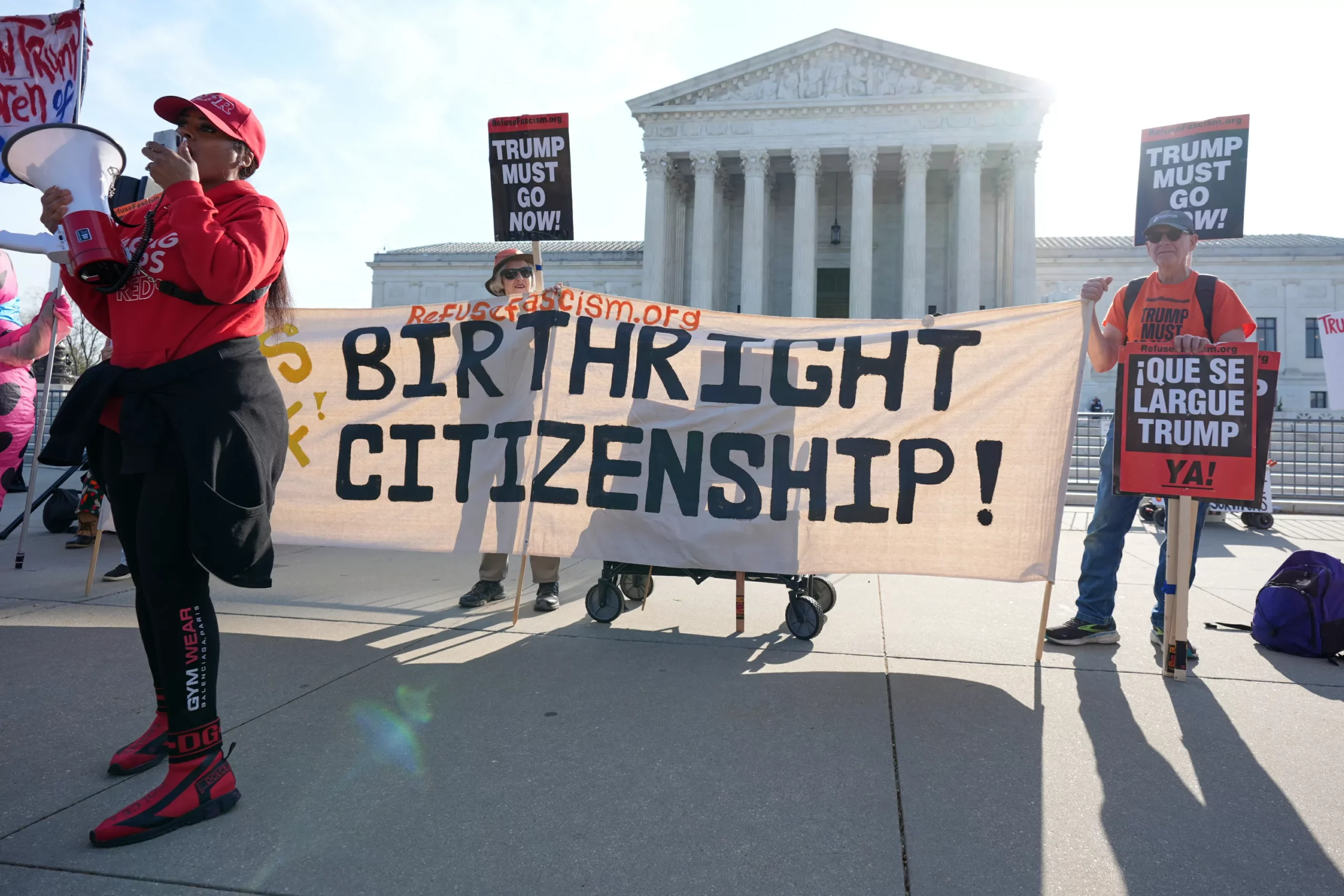
President Trump has once again made headlines with his latest push to challenge the concept of birthright citizenship. In a recent interview with Fox News, the President expressed his desire for the Supreme Court to consider conservative commentator Mark Levin’s perspective on the matter.
Levin, a constitutional lawyer and host of the popular radio show “The Mark Levin Show”, has been a vocal advocate for ending birthright citizenship. He argues that the 14th Amendment, which grants citizenship to anyone born in the United States, was never intended to apply to children of illegal immigrants.
The President’s call for the Supreme Court to take Levin’s perspective into consideration comes as no surprise. Trump has long been a critic of birthright citizenship, calling it a “ridiculous” policy that encourages illegal immigration. He has even gone as far as to say that he can end birthright citizenship with an executive order, a statement that has been met with both support and criticism.
But what exactly is birthright citizenship and why is it such a contentious issue? Birthright citizenship, also known as jus soli, is the principle that anyone born on US soil is automatically granted citizenship, regardless of their parents’ nationality or immigration status. This concept has been a fundamental part of American law since the adoption of the 14th Amendment in 1868.
However, with the rise in illegal immigration and the ongoing debate over immigration reform, birthright citizenship has come under scrutiny. Critics argue that it encourages illegal immigration, as parents may come to the US to have their child in order to secure citizenship for their family. They also argue that it goes against the original intent of the 14th Amendment, which was meant to grant citizenship to former slaves and their descendants.
On the other hand, supporters of birthright citizenship argue that it is a fundamental aspect of American identity and a symbol of inclusivity and diversity. They also point out that the 14th Amendment has been consistently interpreted to grant citizenship to anyone born on US soil, regardless of their parents’ immigration status.
Levin’s perspective on birthright citizenship aligns with the President’s views. He argues that the 14th Amendment was never meant to apply to children of illegal immigrants and that it should be amended to clarify this. He also believes that the issue should be left to the states to decide, rather than being a federal matter.
President Trump’s call for the Supreme Court to consider Levin’s perspective is a significant move in his efforts to end birthright citizenship. With the recent appointment of conservative Justice Brett Kavanaugh, the Court now has a conservative majority, which could potentially tip the scales in favor of Trump’s stance.
However, it is important to note that the Supreme Court has previously upheld birthright citizenship in the landmark case of United States v. Wong Kim Ark in 1898. The Court ruled that a child born in the US to Chinese immigrant parents was a US citizen by birthright.
The issue of birthright citizenship is a complex and divisive one, with strong arguments on both sides. It is a highly debated topic that has been at the forefront of the immigration debate for years. President Trump’s call for the Supreme Court to consider Levin’s perspective only adds to the ongoing discussion and raises questions about the future of birthright citizenship in the United States.
In conclusion, President Trump’s desire for the Supreme Court to consider Mark Levin’s perspective on birthright citizenship is a significant development in the ongoing debate over immigration. As the highest court in the land, the Supreme Court’s decision on this matter could have far-reaching implications for the future of immigration policy in the United States. It remains to be seen how the Court will rule, but one thing is for sure – the issue of birthright citizenship is far from settled and will continue to be a hotly contested topic in the years to come.

