
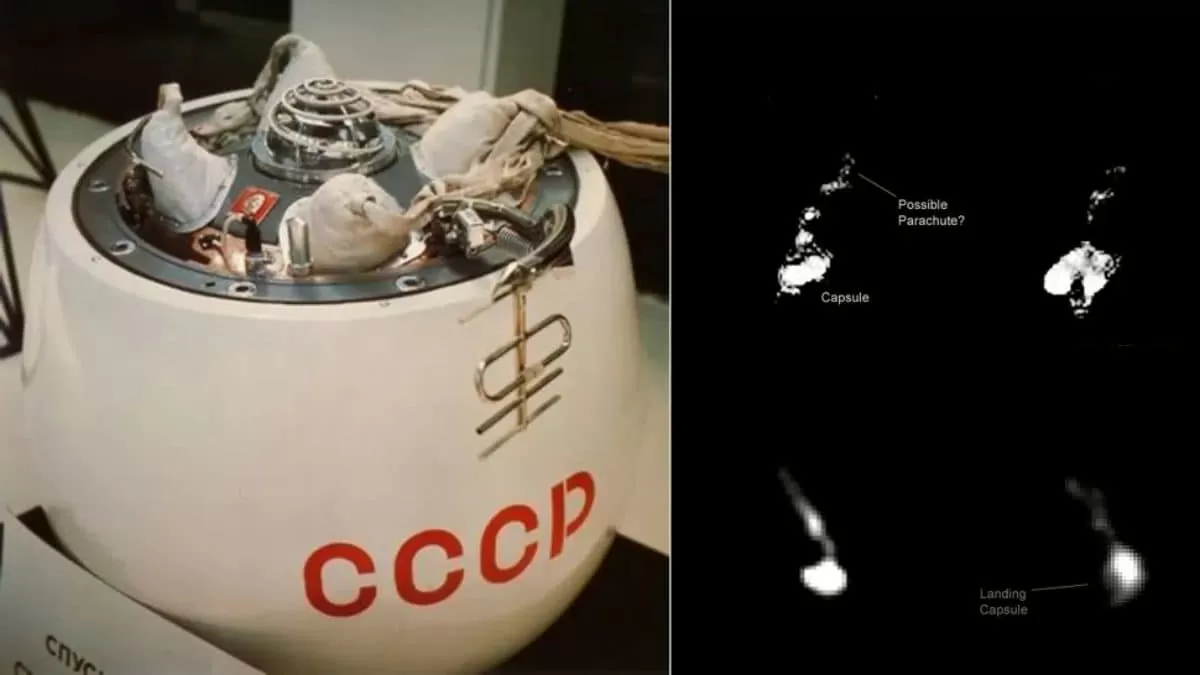
Cosmos 482, a Soviet Venus lander stranded in Earth’s orbit since a failed launch in 1972, is expected to make a dramatic return to Earth’s atmosphere between May 8 and May 14, 2025. This event has sparked great interest among scientists and space watchers globally, as experts believe that the lander may partially survive reentry due to its durable Venus-resistant design.
The story of Cosmos 482 began over 50 years ago, when the Soviet Union was in the midst of the space race with the United States. In an attempt to explore the mysteries of Venus, the Soviet space program launched the Cosmos 482 spacecraft on March 31, 1972. However, the mission was plagued with technical difficulties and the spacecraft failed to reach its intended destination. Instead, it became stranded in Earth’s orbit, where it has remained for over four decades.
For many years, Cosmos 482 was forgotten and considered to be just another piece of space debris. But in 2025, it will once again capture the attention of the world as it makes its descent towards Earth. The estimated date of reentry has been calculated by experts based on the lander’s current orbit and the rate at which it is gradually losing altitude.
What makes this event even more intriguing is the possibility that Cosmos 482 may partially survive reentry. This is due to its unique and durable design, specifically created to withstand the harsh conditions of Venus. The lander was equipped with a thick heat shield and reinforced structure, making it resistant to extreme temperatures and atmospheric pressure. This design was necessary for the lander to survive the intense heat and pressure on Venus, but it may also prove to be beneficial for its reentry into Earth’s atmosphere.
The potential survival of Cosmos 482 has sparked excitement among scientists and space enthusiasts around the world. The lander could provide valuable information and insights into the effects of long-term exposure to space and the durability of spacecraft designs. It could also shed light on the conditions of Venus, a planet that has been notoriously difficult to explore.
The reentry of Cosmos 482 also serves as a reminder of the enduring legacy of the Soviet space program. Despite the challenges and setbacks, the Soviet Union made significant contributions to space exploration, including the first human spaceflight and the first spacecraft to reach Venus. The return of Cosmos 482 is a testament to the ingenuity and determination of the Soviet scientists and engineers who designed and launched the spacecraft.
As the date of reentry draws closer, space agencies and organizations around the world are preparing to track and monitor Cosmos 482’s descent. This includes the European Space Agency, which will use its network of ground-based telescopes to observe the lander’s reentry and collect data. The information gathered from this event could potentially aid in the development of future spacecraft designs and reentry procedures.
The reentry of Cosmos 482 is a rare and exciting event that has captured the attention of the global space community. It serves as a reminder of the ongoing exploration and discovery of our universe, and the enduring legacy of past space missions. As we eagerly await the return of Cosmos 482, let us celebrate the achievements of the Soviet space program and look forward to the valuable insights that this event may bring.

