
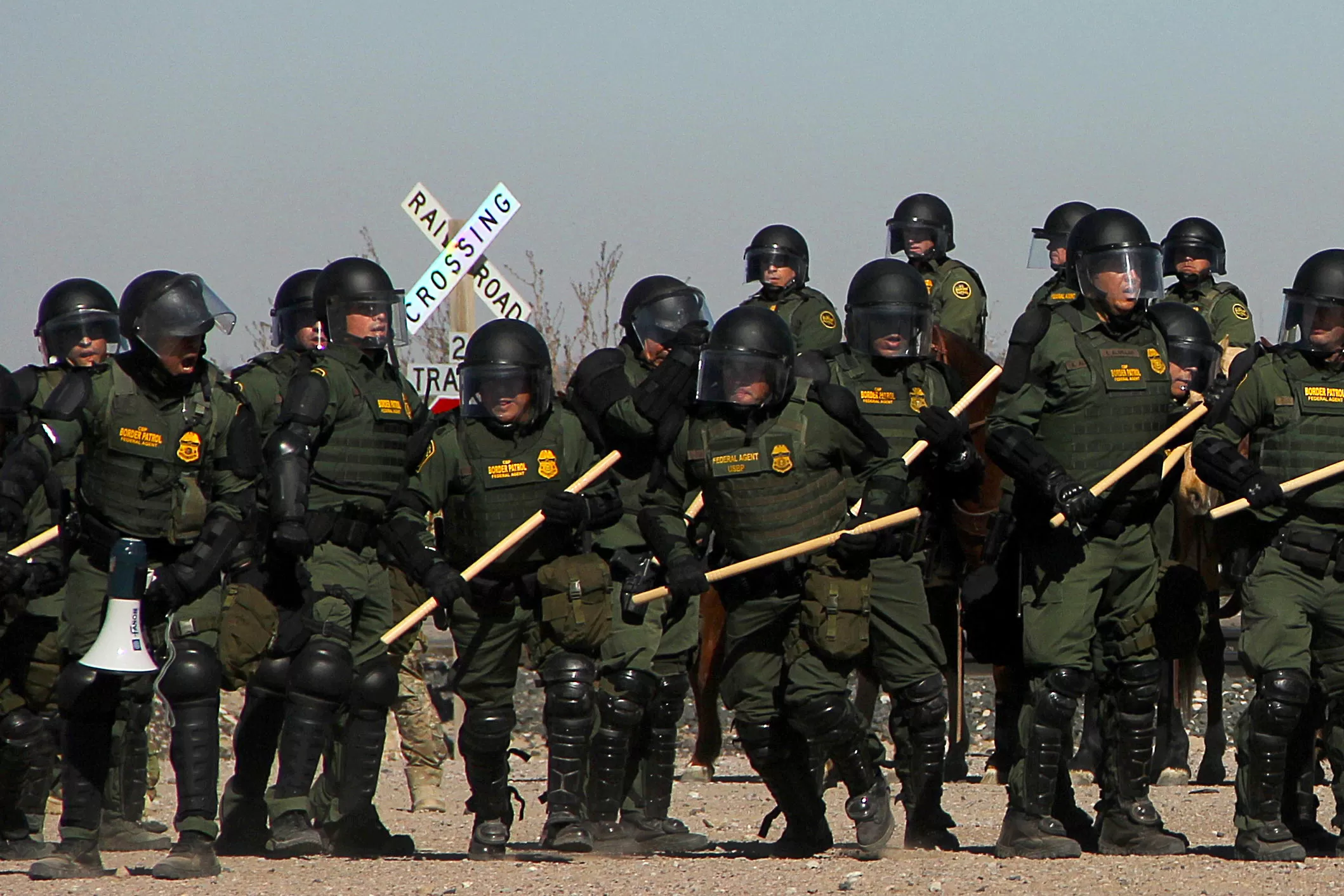
As the Trump administration continues to challenge the limits of the Constitution, one expert is urging us to look at a key factor that is driving the push towards authoritarianism: urban policing. Johns Hopkins Professor Lester Spence argues that the actions of law enforcement in our cities have a significant impact on the erosion of our democratic values.
In recent years, we have seen a rise in police brutality and excessive use of force, particularly against marginalized communities. This has been further exacerbated by the current administration’s rhetoric and policies, which have emboldened law enforcement to act with impunity. As a result, the trust between communities and the police has been eroded, and the very foundation of our democracy has been shaken.
Professor Spence, an expert in race, politics, and urban inequality, has been studying the intersection of urban policing and authoritarianism for years. In his book, “Knocking the Hustle: Against the Neoliberal Turn in Black Politics,” he argues that the rise of neoliberal policies, which prioritize the interests of the wealthy over the needs of the community, has led to the militarization of urban police forces.
This militarization has not only resulted in the increased use of force against citizens but has also led to a shift in the role of the police. Instead of serving and protecting the community, they have become an occupying force, treating citizens as potential threats rather than individuals to be served. This shift in mindset has created a culture of fear and mistrust, where citizens are seen as enemies and the police as the ultimate authority.
Furthermore, the current administration’s policies and rhetoric have only exacerbated this issue. President Trump has continuously praised law enforcement and encouraged them to be more aggressive in their tactics. He has also vilified protesters and labeled them as “thugs” and “anarchists,” further fueling the divide between the police and the community.
But it’s not just the actions of the police that are problematic. It’s also the lack of accountability and oversight. The use of body cameras and civilian review boards are supposed to provide a level of transparency and accountability, but in many cases, they have proven to be ineffective. This lack of accountability only reinforces the idea that the police are above the law and can act with impunity.
So, what can be done to address this issue? Professor Spence believes that we need to fundamentally change the way we think about urban policing. Instead of viewing it as a tool for maintaining social control, we need to see it as a service that should be accountable to the community it serves. This means investing in community-based solutions, such as mental health services and conflict resolution programs, rather than relying solely on law enforcement to address social issues.
We also need to address the systemic issues that have led to the current state of policing. This includes addressing the root causes of poverty, inequality, and racism that disproportionately affect marginalized communities. We must also demand accountability and transparency from our elected officials and hold them responsible for implementing policies that prioritize the needs of the community over the interests of the wealthy.
In conclusion, as the Trump administration continues to push the boundaries of the Constitution, we must not overlook the role of urban policing in this push towards authoritarianism. It is time for us to recognize the impact of militarized and unaccountable police forces on our democracy and take action to address this issue. By investing in community-based solutions and demanding accountability, we can work towards a more just and equitable society for all. Let us heed the warnings of Professor Spence and take a stand against the erosion of our democratic values.

