
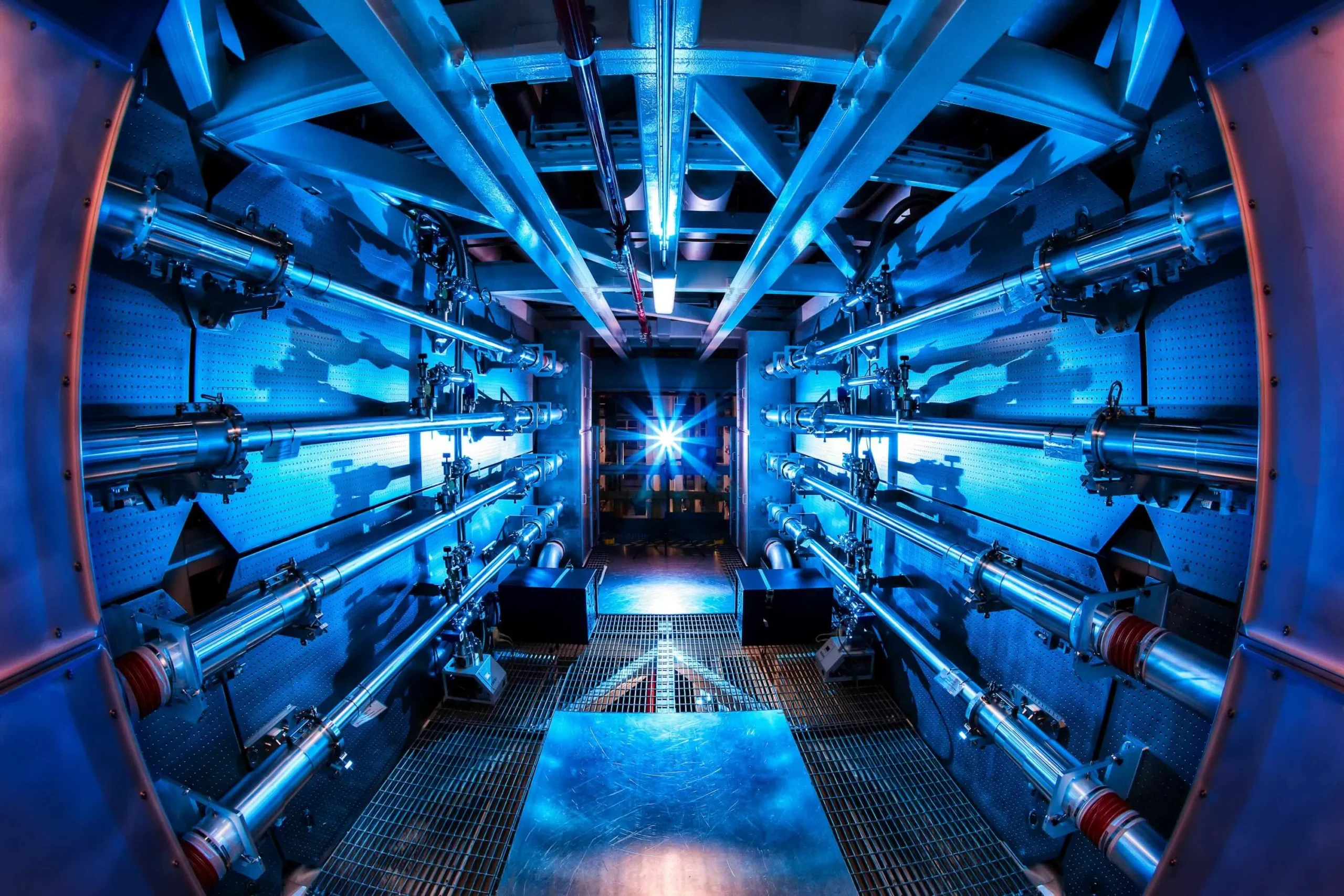
The U.S. Department of Energy’s National Ignition Facility (NIF) has achieved a major breakthrough in its recent attempts, increasing the yield of its experiments. This is a significant achievement that has been years in the making and has the potential to revolutionize the field of energy research.
The NIF, located at the Lawrence Livermore National Laboratory in California, is the world’s largest and most powerful laser facility. Its main goal is to achieve controlled nuclear fusion, a process that has the potential to provide a nearly limitless source of clean energy. This has been a long-standing goal of scientists and researchers, and the NIF has been at the forefront of this pursuit.
In its latest experiments, the NIF has been able to increase the yield of its fusion reactions by a significant margin. This means that the facility has been able to produce more energy from the fusion reactions than ever before. This is a major step forward in the quest for controlled nuclear fusion and has been hailed as a major achievement by the scientific community.
The NIF uses a technique called inertial confinement fusion, where a small pellet of fuel is compressed and heated using powerful lasers. This creates the extreme conditions necessary for fusion to occur. The NIF has been working on improving this process for many years, and the recent increase in yield is a testament to the hard work and dedication of the scientists and researchers involved.
This breakthrough has been made possible by a number of advancements in technology and techniques. The NIF has been able to improve the precision and control of its lasers, allowing for more efficient and effective fusion reactions. In addition, the facility has been able to better understand and mitigate the effects of instabilities that can hinder the fusion process.
The increase in yield is a major milestone for the NIF and has been met with great excitement and optimism. This achievement brings us one step closer to achieving controlled nuclear fusion, which has the potential to provide a clean and sustainable source of energy for generations to come.
But the NIF’s success goes beyond just the pursuit of fusion energy. The facility also plays a crucial role in national security, as it is used to simulate the extreme conditions of nuclear explosions. This allows for the testing and development of new technologies and strategies to ensure the safety and security of our nation.
The NIF’s achievements have not gone unnoticed, and it has received praise and recognition from top officials. U.S. Secretary of Energy, Jennifer Granholm, congratulated the NIF team on their success, stating that “this breakthrough is a testament to the incredible talent and dedication of the NIF team and their partners.” She also emphasized the importance of the NIF’s work in advancing both energy and national security.
The NIF’s success also has significant implications for the global energy landscape. As the world continues to face the challenges of climate change and the need for clean energy, the NIF’s advancements in fusion technology could have a major impact. It has the potential to provide a safe, clean, and virtually limitless source of energy, reducing our dependence on fossil fuels and mitigating the effects of climate change.
The NIF’s recent achievement is a testament to the power of scientific research and collaboration. It is a result of years of hard work, dedication, and innovation. The NIF team, along with its partners and supporters, have shown that with determination and perseverance, we can achieve great things.
As we celebrate this milestone, it is important to remember that the journey towards controlled nuclear fusion is far from over. There are still many challenges and obstacles to overcome, but the NIF’s success gives us hope and motivation to continue pushing forward.
In conclusion, the U.S. Department of Energy’s National Ignition Facility has made a significant breakthrough in its recent attempts, increasing the yield of its experiments. This achievement brings us one step closer to achieving controlled nuclear fusion and has the potential to revolutionize the field of energy research. The NIF’s success is a testament to the power of scientific research and collaboration, and it is a cause for celebration and optimism for the future.

