
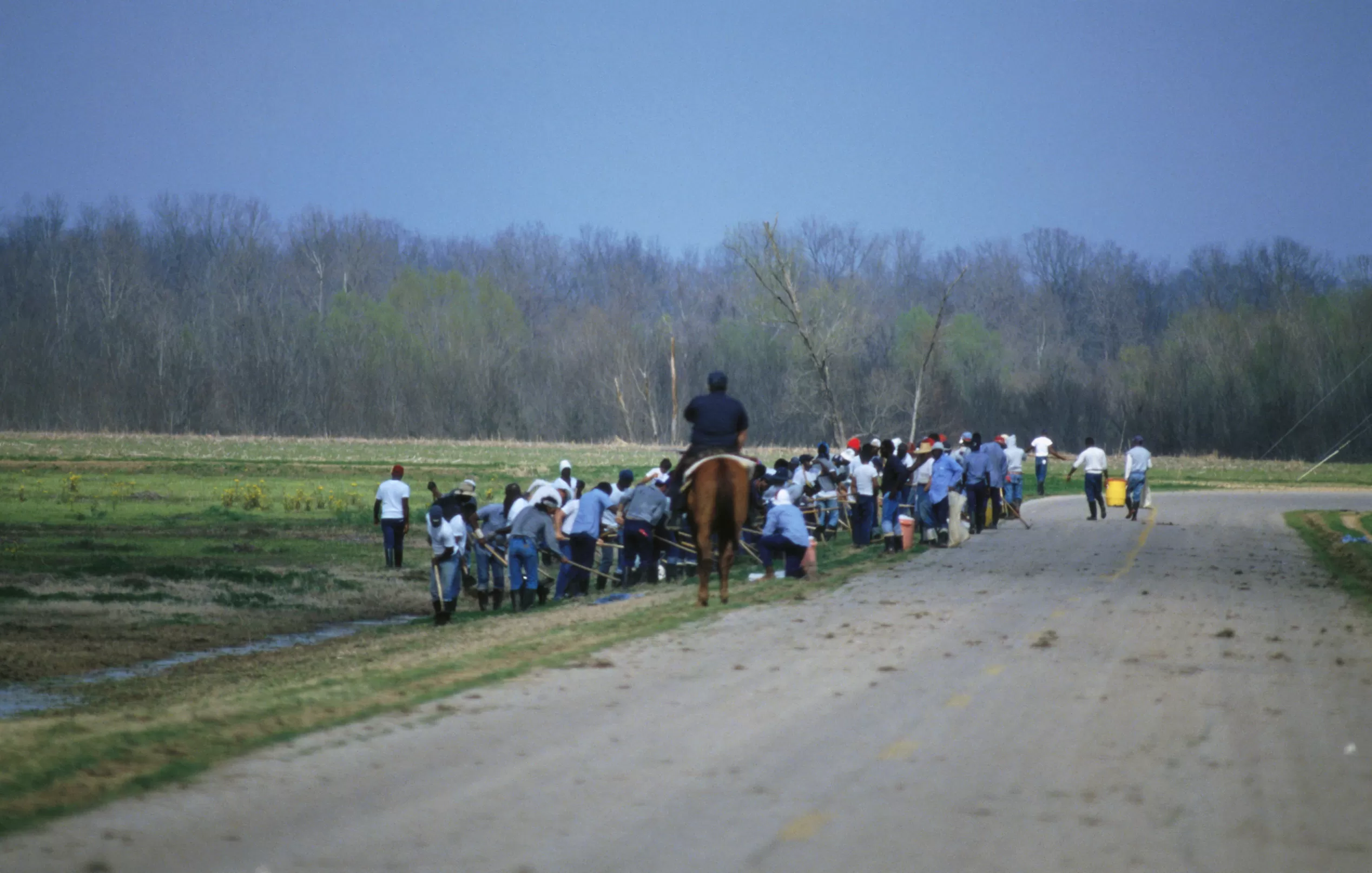
Agriculture has long been considered the backbone of the United States, providing food and resources for its people. However, what many fail to acknowledge is the dark history that lies behind this seemingly idyllic industry. As Joshua Sbicca, director of the Prison Agriculture Lab, points out, the success of American agriculture has been built on a foundation of dispossession and enslavement. And unfortunately, the legacy of this violence still persists today in the form of “agricarceral” farming.
The term “agricarceral” refers to the intersection of agriculture and incarceration, where prisoners are used as a cheap and exploitative labor force in the agricultural industry. This practice has a long history in the United States, dating back to the 19th century when prisoners were used as laborers on plantations and farms. This system was a continuation of the enslavement of African Americans, who were forced to work on plantations for the profit of their owners.
Even after the abolition of slavery, the exploitation of prisoners in agriculture continued. In the late 1800s, the convict lease system emerged, where prisoners were leased out to private companies for labor. This system disproportionately affected African Americans, who were often arrested on false charges and forced to work in dangerous and inhumane conditions.
Fast forward to the present day, and we see the same pattern of exploitation and oppression in the agricultural industry. The use of prison labor in agriculture has become a profitable business for corporations, with prisoners working for as little as 20 cents an hour. This not only perpetuates the cycle of poverty and inequality, but it also dehumanizes and devalues the lives of those incarcerated.
Moreover, the agricultural industry has also played a significant role in the displacement and dispossession of indigenous communities. The forced removal of Native Americans from their lands and the theft of their resources paved the way for the expansion of agriculture in the United States. This violent history has had a lasting impact on these communities, who continue to face challenges in accessing and maintaining their ancestral lands.
The consequences of this violent history are still felt today in the form of food insecurity and environmental degradation. The industrialization of agriculture has led to the consolidation of land and resources in the hands of a few large corporations, leaving small farmers and communities struggling to survive. The use of chemical fertilizers and pesticides has also caused significant damage to the environment, leading to soil erosion, water pollution, and loss of biodiversity.
But despite these challenges, there is hope for a more just and sustainable future for agriculture in the United States. Organizations like the Prison Agriculture Lab are working towards dismantling the “agricarceral” system and advocating for the rights of prisoners. They are also promoting alternative models of agriculture that prioritize the well-being of people and the planet over profits.
In addition, there is a growing movement towards supporting small-scale and regenerative agriculture, which focuses on building healthy soil, promoting biodiversity, and supporting local communities. This approach not only produces healthier and more nutritious food, but it also has a positive impact on the environment and local economies.
As consumers, we also have a role to play in creating a more equitable and sustainable food system. By supporting local farmers and buying from ethical and transparent sources, we can help shift the power away from large corporations and towards small-scale farmers and communities.
In conclusion, the history of agriculture in the United States is a complex and often violent one, built on the dispossession and enslavement of marginalized communities. However, by acknowledging and learning from this history, we can work towards a more just and sustainable future for agriculture. Let us support organizations and movements that are fighting for a fair and equitable food system, and let us make conscious choices as consumers to support a healthier and more sustainable future for all.

