
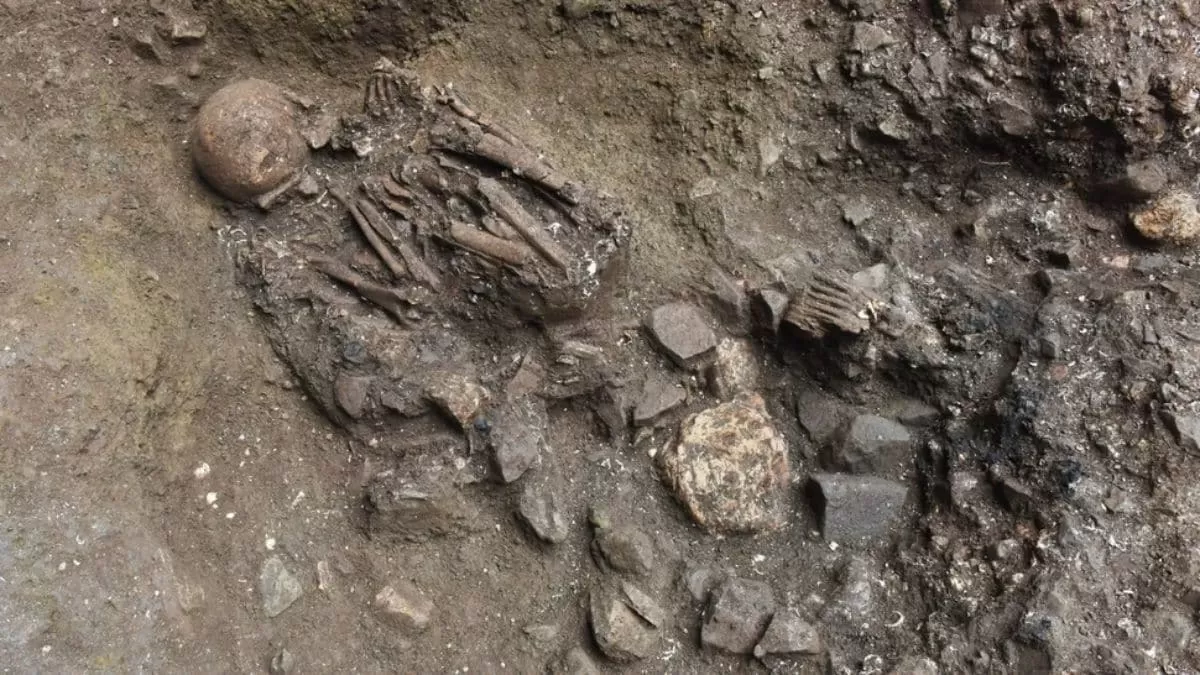
A groundbreaking study of a 7,100-year-old skeleton found in Yunnan, China has shed new light on the human evolution story. The remains, belonging to a woman named Xingyi_EN, have revealed a previously unknown “ghost” human lineage that has only been speculated through genetic analysis. This remarkable discovery has opened up new avenues of research and has the potential to change our understanding of human history.
The findings, published in the journal Nature, have captured the imagination of scientists and the general public alike. Xingyi_EN belonged to a group of people known as the Basal Asian Xingyi lineage, which is considered to be a deeply divergent group in the human evolutionary tree. This group is believed to have lived in Asia over 100,000 years ago and may have contributed to the genetic makeup of modern-day Tibetans.
The skeleton was discovered in the early 1980s during an excavation in Yunnan. However, it was only recently that scientists were able to extract DNA from the remains and study its genetic makeup. This was made possible by the advancement in technology and techniques used in ancient DNA analysis.
The study of ancient DNA has revolutionized our understanding of human evolution. By sequencing the DNA of ancient individuals, scientists have been able to trace the genetic history of different populations and determine their migration patterns. However, this discovery of Xingyi_EN’s skeleton is particularly significant as it provides physical evidence of the existence of a previously unknown human lineage.
The analysis of Xingyi_EN’s DNA revealed that she belonged to a distinct group that had branched off from other human lineages thousands of years ago. This group had a genetic makeup that was different from any other known human lineage, and it is believed that they may have coexisted with other human populations but did not interbreed with them.
The study also found evidence of a unique genetic variant in Xingyi_EN’s DNA that is present in modern-day Tibetans. This suggests that the Basal Asian Xingyi lineage may have contributed to the genetic makeup of modern Tibetans, who are known to have adapted to high-altitude living.
The discovery of this “ghost” human lineage has sparked numerous questions and avenues of research. Scientists are now interested in understanding why this group diverged from other human lineages and how they managed to survive for thousands of years. The findings also raise questions about the interbreeding of different human populations and the impact it had on our genetic diversity.
The study of ancient DNA has the potential to reshape our understanding of human history. It not only provides us with insights into our evolutionary past but also highlights the complex and dynamic nature of human populations. This discovery of a previously unknown human lineage in Yunnan has added a new chapter to the human evolutionary story and has opened up new possibilities for further research.
Moreover, this discovery highlights the importance of protecting and preserving archaeological sites. The excavation of Xingyi_EN’s remains was only possible because of the efforts of archaeologists and the support of the local community. It is essential that we continue to safeguard our cultural heritage and allow for further discoveries that can enrich our understanding of human history.
In conclusion, the study of Xingyi_EN’s skeleton has revealed the existence of a “ghost” human lineage that was previously only known through genetic inference. This remarkable discovery has opened up new avenues of research and has the potential to change our understanding of human evolution. It is a testament to the advancement of technology and the dedication of scientists in unraveling the mysteries of our past. We can only imagine what other secrets may be hidden in the ancient remains waiting to be discovered.

