
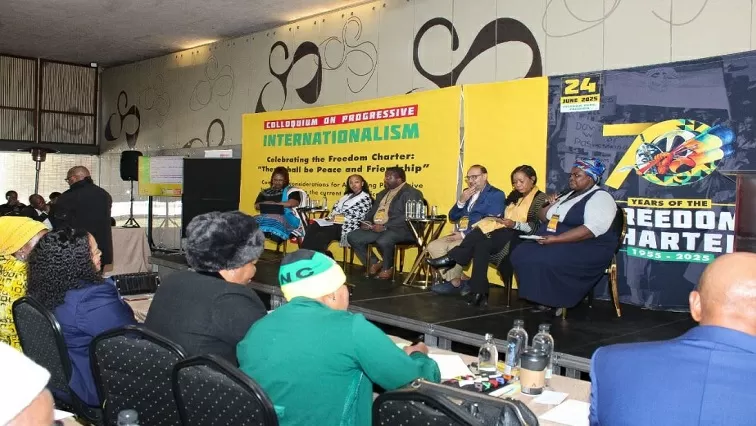
The African National Congress (ANC) is gearing up to commemorate the historic adoption of the Freedom Charter in Kliptown, Soweto on June 26, 1955. This momentous event marked a pivotal moment in South Africa’s struggle for freedom and equality, and it continues to hold great significance for the nation today.
As we approach the 66th anniversary of this milestone, it is important to reflect on the significance of the Freedom Charter and its enduring impact on our country. The Charter was a product of the collective efforts of thousands of South Africans from all walks of life who came together to envision a truly democratic and just society.
The adoption of the Freedom Charter was a bold and radical move by the ANC, which at the time was facing severe persecution and oppression from the apartheid government. It was a powerful statement of the people’s determination to fight for their rights and their vision for a better future.
The Charter’s principles of equality, freedom, and justice for all were a direct challenge to the apartheid regime’s oppressive policies. It called for the equal distribution of wealth and land, the right to education and healthcare, and the end of racial discrimination. These principles continue to guide our country’s laws and policies, and they are enshrined in our Constitution.
The location of the adoption of the Freedom Charter, in Kliptown, Soweto, was also significant. Soweto was a hotbed of resistance against apartheid, and it was where the people’s struggle for freedom and equality was most visible. The decision to hold the Congress of the People in Kliptown was a deliberate one, as it represented the heart of the people’s struggle.
The Congress of the People was attended by over 3,000 delegates, representing various organizations and communities from all corners of South Africa. This gathering was a symbol of unity and solidarity among South Africans, regardless of race, class, or gender. It was a powerful demonstration of the people’s determination to overcome the injustices of apartheid and build a new, democratic society.
The adoption of the Freedom Charter was met with great enthusiasm and hope by the people of South Africa. It gave them a sense of purpose and direction in their struggle against apartheid. The Charter became a rallying cry for the liberation movement, and its principles were echoed in many protests and demonstrations throughout the country.
Today, as we look back on the adoption of the Freedom Charter, we can see how far we have come as a nation. The principles of the Charter have been enshrined in our Constitution, and we have made significant progress in achieving many of its goals. However, we also recognize that there is still much work to be done to fully realize the vision of the Charter.
The commemoration of the adoption of the Freedom Charter is a time for us to reflect on the progress we have made and the challenges that lie ahead. It is also a time to honor the sacrifices of those who fought for the Charter’s principles and to recommit ourselves to achieving its vision of a truly democratic and just society.
The ANC’s commemoration of this historic event is a reminder of the party’s unwavering commitment to the principles of the Freedom Charter. It is a call to action for all South Africans to continue the struggle for a better future for all.
As we celebrate this important anniversary, let us remember the words of the Freedom Charter, “The people shall govern!” Let us continue to work together towards a better, more equal, and just South Africa for all its people.

