
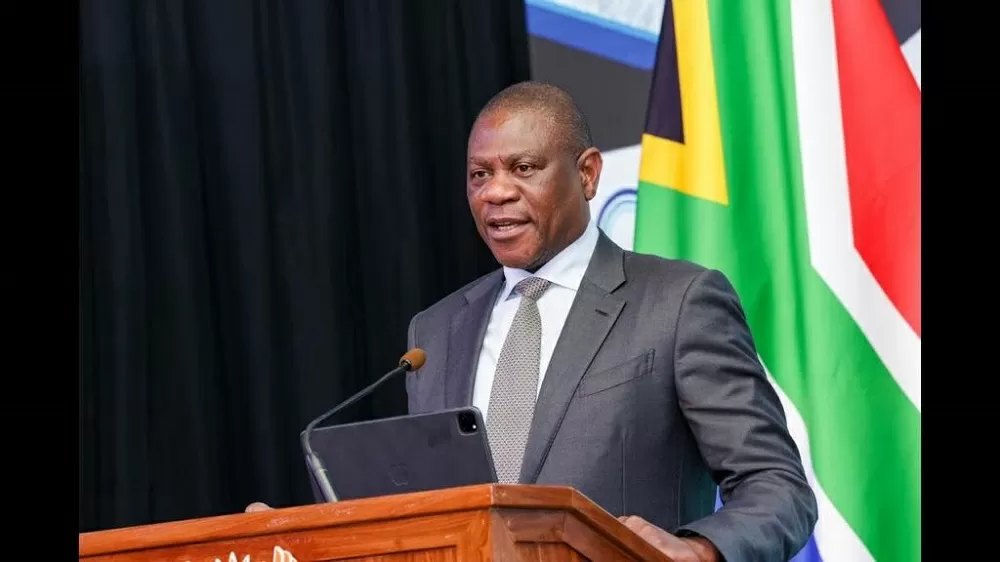
Deputy President Paul Mashatile has recently made a statement regarding the financial state of South Africa’s municipalities. According to the Deputy President, the majority of these municipalities are facing serious challenges with outstanding debts. This revelation has raised concerns among citizens and government officials alike, as it has significant implications for the development and progress of our country.
In his statement, Deputy President Mashatile pointed out that the municipalities are ‘struggling with revenue collection’ and are ‘in arrears with Eskom and water boards’. This is a cause for serious concern as it not only affects the functioning of these local governments but also impacts the daily lives of citizens who rely on basic services such as electricity and water.
The issue of municipalities being in arrears is not a new one. It has been a long-standing problem that has plagued our country’s local governance. However, the Deputy President’s statement sheds light on the gravity of the situation and calls for urgent action to be taken.
It is an undeniable fact that well-functioning municipalities are crucial for the development of any country. They are responsible for providing essential services to citizens, such as waste management, water and sanitation, road maintenance, and electricity. When these services are not delivered efficiently, it directly affects the quality of life of the citizens and hampers the growth of our nation.
The Deputy President’s statement also highlights the need for better financial management and budgeting at the municipal level. It is imperative that these local governments find ways to increase revenue collection and decrease their expenses. This can be achieved through effective financial planning and strict adherence to budgetary constraints.
Furthermore, the Deputy President urged municipalities to ‘manage their finances responsibly and transparently’ and to ‘explore partnerships with the private sector’. This is a crucial step towards improving the financial state of our municipalities. Private sector partnerships can bring in much-needed investment and expertise, which can help these local governments to become more self-sufficient and efficient in their operations.
Despite the concerning state of our municipalities, there is still hope for improvement. The government has already taken some positive steps towards addressing this issue. The Department of Cooperative Governance and Traditional Affairs (COGTA) has launched the Municipal Financial Recovery Service to assist struggling municipalities in improving their financial management. This service provides support, training, and mentorship to local governments to help them achieve financial stability.
Moreover, the government has also introduced the District Development Model, which aims to coordinate government efforts and resources to deliver services to citizens more effectively and efficiently. This model has been designed to improve the overall functioning of municipalities and to ensure that they are able to meet the needs of their communities.
It is also worth noting that not all municipalities are struggling with financial challenges. There are a few exemplary municipalities that have managed to maintain good financial standing and deliver quality services to their citizens. These municipalities serve as a beacon of hope and inspiration for others to follow suit.
In conclusion, Deputy President Paul Mashatile’s statement has shed light on a critical issue that needs immediate attention. The financial state of our municipalities is a matter of great concern, and it is up to all of us to work together towards finding solutions. The government, local authorities, and citizens must collaborate to address this issue and ensure that our municipalities are able to operate efficiently and provide essential services to our communities. With the right strategies and partnerships, we can overcome this challenge and build a better future for all South Africans.

