
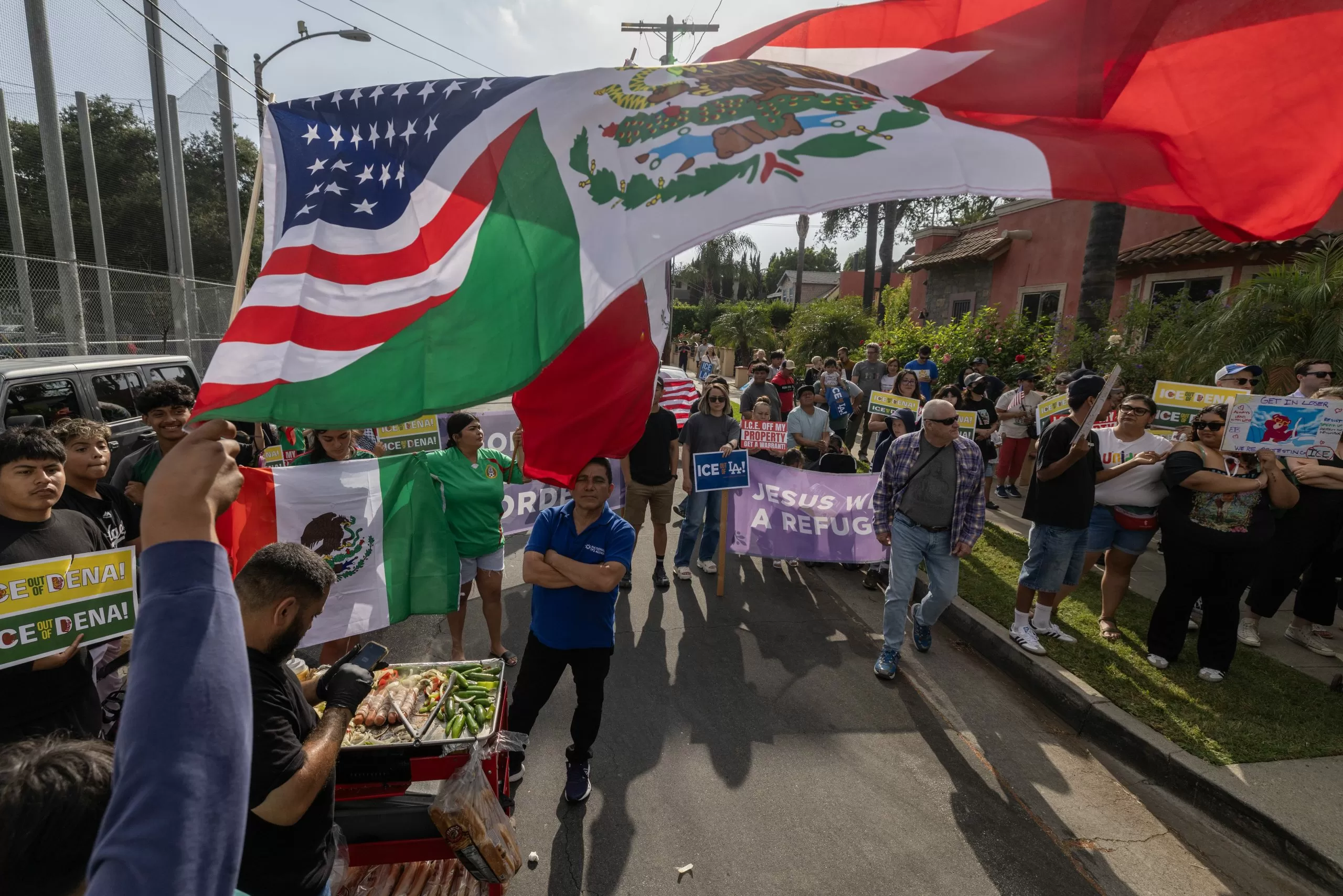
Labor activist and scholar Justin Akers Chacón has dedicated his life to shedding light on the colonial roots of US–Mexico relations. Through his extensive research and activism, he has uncovered the ways in which American imperialism continues to shape Mexico’s economy, US immigration policy, and the lives of working-class people across both countries.
Chacón’s work is crucial in understanding the complex and often tumultuous relationship between the US and Mexico. It goes beyond the surface-level political and economic interactions and delves into the historical and cultural factors that have shaped this relationship for centuries.
One of the key aspects that Chacón highlights is the role of colonialism in shaping US-Mexico relations. The Spanish conquest of Mexico in the 16th century laid the foundation for the exploitation and subjugation of the Mexican people. This legacy of colonialism has continued to influence the relationship between the two countries, with the US often exerting its dominance over Mexico.
One of the most significant ways in which American imperialism has impacted Mexico is through its economy. The US has a long history of exploiting Mexico’s natural resources and labor, dating back to the 19th century when American companies began to invest in Mexican industries such as mining and agriculture. This exploitation has continued to this day, with the US being one of Mexico’s largest trading partners and a major source of foreign investment.
However, this economic relationship is far from equal. The US has often dictated the terms of trade and investment, leading to a dependence on the US market and a lack of economic autonomy for Mexico. This has resulted in a cycle of poverty and underdevelopment for the Mexican people, who are forced to work in low-paying jobs with little job security or benefits.
Chacón also highlights the impact of American imperialism on US immigration policy. The US has a long history of exploiting cheap labor from Mexico, with the Bracero Program in the mid-20th century being a prime example. This program allowed Mexican workers to enter the US temporarily to work in agriculture, but they were often subjected to harsh working conditions and low wages.
Today, the US immigration system continues to be shaped by American imperialism. The militarization of the US-Mexico border and the criminalization of undocumented immigrants are direct consequences of American policies and actions. This has led to the separation of families, detention and deportation of immigrants, and the perpetuation of a system that benefits the US at the expense of Mexican workers.
Chacón’s work also sheds light on the impact of American imperialism on the lives of working-class people in both countries. The exploitation of Mexican labor has not only affected the Mexican economy but has also had a significant impact on the US labor market. The influx of cheap labor from Mexico has led to the displacement of American workers and the suppression of wages.
Furthermore, the US has a long history of interfering in Mexican politics, often supporting corrupt and oppressive regimes that serve American interests. This has resulted in political instability and violence in Mexico, forcing many to flee their homes and seek refuge in the US.
Chacón’s research and activism serve as a wake-up call for both countries to acknowledge and address the colonial roots of their relationship. It is essential to recognize the ongoing impact of American imperialism on Mexico and its people, and to work towards a more equitable and just relationship.
In conclusion, Justin Akers Chacón’s work is a crucial contribution to understanding the complex and often unequal relationship between the US and Mexico. By unpacking the colonial roots of this relationship, he reveals the ongoing impact of American imperialism on Mexico’s economy, US immigration policy, and the lives of working-class people in both countries. It is time for both nations to acknowledge and address this history and work towards a more equal and mutually beneficial relationship.

