
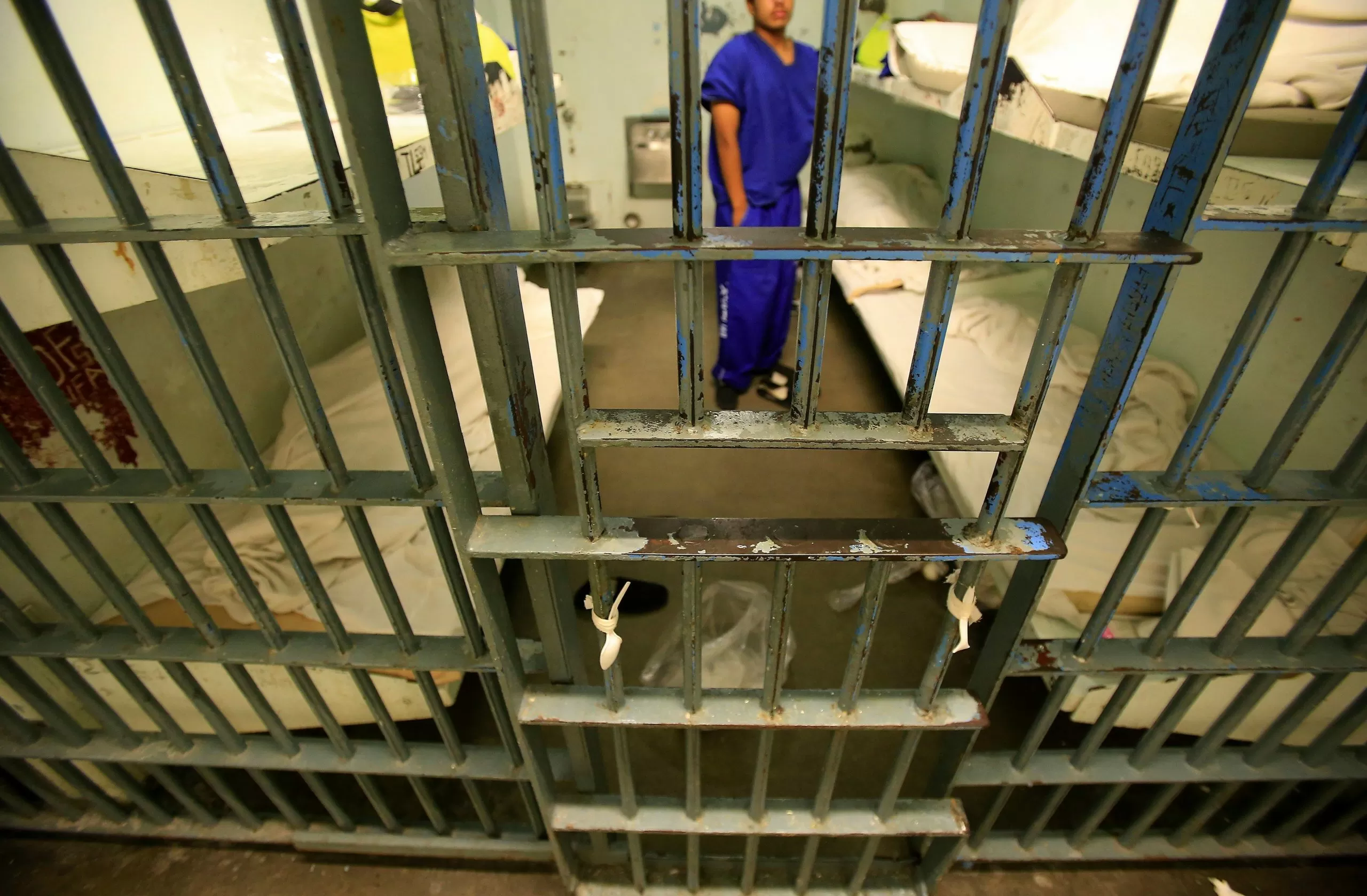
The United States has long been known as the land of the free, but recent statistics show that it is also the land of mass incarceration. According to Nicole Porter, Director of Advocacy at The Sentencing Project, the US has the highest incarceration rate in the world, making it the number one jailer. This statement may come as a shock to many, but it is a harsh reality that needs to be addressed.
In recent years, there has been a growing concern about the issue of mass incarceration in the United States. The term refers to the high number of individuals who are imprisoned in the country, often for non-violent offenses. This has led to overcrowding in prisons, strained resources, and a disproportionate impact on communities of color. However, when compared to other countries, the US stands out as an outlier in terms of its incarceration rates.
Nicole Porter, who has been working on criminal justice reform for over a decade, sheds light on this issue. She explains that while other countries do have their own criminal justice systems and prisons, they do not have the same level of incarceration as the US. In fact, many countries have significantly lower rates of imprisonment, even when accounting for population size.
One of the main reasons for this stark difference is the US’s approach to criminal justice. The country has a punitive system that focuses on punishment rather than rehabilitation. This has led to harsh sentencing laws, mandatory minimums, and a reliance on incarceration as a solution to crime. As a result, the US has a staggering 2.3 million people behind bars, which is almost a quarter of the world’s prison population.
In contrast, other countries have adopted more progressive and effective approaches to criminal justice. For example, many European countries have a strong focus on rehabilitation and reintegration of offenders into society. They prioritize community-based programs, mental health treatment, and education for prisoners. This not only reduces the prison population but also helps in reducing recidivism rates.
Moreover, other countries have also implemented alternative forms of punishment, such as community service, fines, and restorative justice. These approaches not only hold offenders accountable for their actions but also allow them to make amends and learn from their mistakes. This ultimately leads to a safer and more just society.
Another factor contributing to the high incarceration rates in the US is the war on drugs. The country has a long history of criminalizing drug use and imposing harsh penalties for drug-related offenses. This has disproportionately affected communities of color, leading to a racial disparity in the prison population. In fact, African Americans and Hispanics make up a majority of the US prison population, despite being a minority in the country.
Nicole Porter emphasizes that this issue is not just about the numbers, but also about the impact on individuals, families, and communities. Incarceration not only separates individuals from their loved ones but also has long-lasting effects on their lives. It can hinder their ability to find employment, housing, and education, making it difficult for them to reintegrate into society.
The good news is that there is a growing movement for criminal justice reform in the US. Organizations like The Sentencing Project are working tirelessly to bring attention to this issue and advocate for change. There have been some positive developments, such as the First Step Act, which aims to reduce the federal prison population and provide support for individuals reentering society.
However, there is still a long way to go. The US needs to shift its focus from punishment to rehabilitation and invest in alternative forms of punishment. It also needs to address the racial disparities in the criminal justice system and work towards creating a fair and just system for all.
In conclusion, Nicole Porter’s statement about the US being the world’s number one jailer is a wake-up call for the country. It is time to acknowledge and address the issue of mass incarceration and work towards creating a more just and humane criminal justice system. Other countries have shown that there are better and more effective ways to deal with crime, and it is time for the US to follow suit. Let us hope that with continued efforts and advocacy, we can see a significant reduction in the US’s incarceration rates in the near future.

