
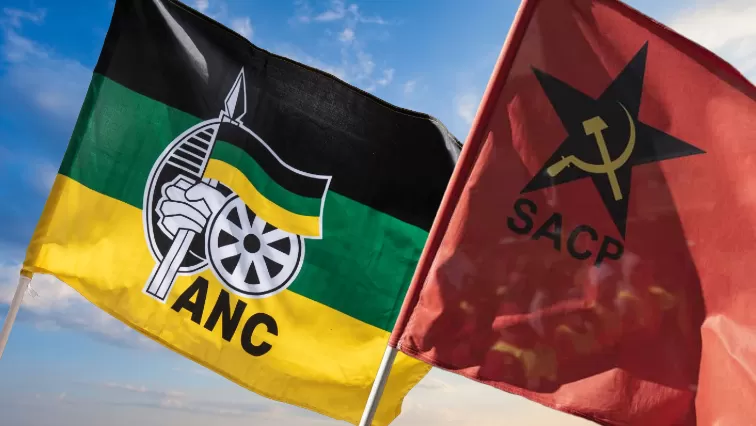
The African National Congress (ANC) and the South African Communist Party (SACP) have a long-standing relationship that dates back to the 1950s. This partnership has been crucial in the struggle against apartheid and has played a significant role in shaping the political landscape of South Africa. The shared goals and ideologies of these two organizations have forged a strong bond that continues to this day, despite challenges and differences along the way.
The ANC and SACP’s relationship began in the 1950s when both organizations were banned by the apartheid government. This shared oppression brought them together, and they found common ground in their fight against racial discrimination and inequality. The ANC, as a nationalist movement, focused on the liberation of black South Africans, while the SACP, a socialist party, advocated for the rights of the working class. Despite their different approaches, both organizations shared the ultimate goal of a free and democratic South Africa.
The partnership between the ANC and SACP was formalized in the 1960s when they established the Congress Alliance. This alliance brought together the ANC, SACP, and other anti-apartheid organizations to work towards a common goal. The Congress Alliance played a significant role in organizing protests, boycotts, and other forms of resistance against the apartheid regime. This collaboration helped to amplify their message and increase their impact, leading to international recognition and support for their cause.
One of the key figures in the ANC and SACP’s relationship was Nelson Mandela. As a member of both organizations, he played a crucial role in bridging the gap between the two. Mandela believed that the ANC’s struggle for political freedom and the SACP’s fight for economic equality were intertwined and could not be separated. He also advocated for a non-racial society, which was a core principle of both organizations. Mandela’s leadership and vision brought the ANC and SACP closer together, laying the groundwork for a lasting partnership.
During the years of apartheid, the ANC and SACP faced numerous challenges, including government repression, arrests, and even assassinations of their leaders. Despite these obstacles, their relationship remained strong, and they continued to work together towards their shared goal of a free South Africa. The two organizations also collaborated in exile, with the SACP providing military training to ANC members. This partnership proved to be crucial in the fight against apartheid, as it allowed the ANC to build a strong armed wing, Umkhonto we Sizwe (Spear of the Nation).
The unbanning of the ANC and SACP in the early 1990s marked a significant turning point in South Africa’s history. The two organizations were able to operate openly and legally for the first time in decades. This opened up new opportunities for collaboration and dialogue, which ultimately led to the end of apartheid and the birth of a democratic South Africa. The ANC and SACP’s shared vision for a non-racial, non-sexist, and democratic society was finally realized, thanks to their unwavering partnership.
In the post-apartheid era, the ANC and SACP continued to work closely together to rebuild and transform South Africa. The SACP played a crucial role in the ANC-led government, providing strategic leadership and expertise in various areas, including policy development and economic transformation. This partnership has also extended to the Tripartite Alliance, which includes the Congress of South African Trade Unions (COSATU). The Tripartite Alliance has been instrumental in driving the government’s agenda and ensuring that the needs of the working class and marginalized communities are addressed.
Today, the ANC and SACP’s close relationship continues to thrive, despite occasional disagreements and challenges. The two organizations remain committed to addressing the country’s socio-economic challenges and building a better future for all South Africans. Their partnership is a testament to the power of unity and collaboration in achieving common goals. As South Africa celebrates 27 years of democracy, the ANC and SACP’s shared history and ongoing partnership serve as a reminder of the sacrifices and struggles that have brought us to where we are today.
In conclusion, the ANC and SACP’s relationship began with shared goals in the 1950s and has evolved into a strong and enduring partnership. Together, they have faced and overcome many challenges, including the oppressive apartheid regime. Their collaboration has been crucial in the fight for a free and democratic South Africa, and their shared vision continues to guide the country towards a better future. As we look towards the future, let us remember the ANC and

