
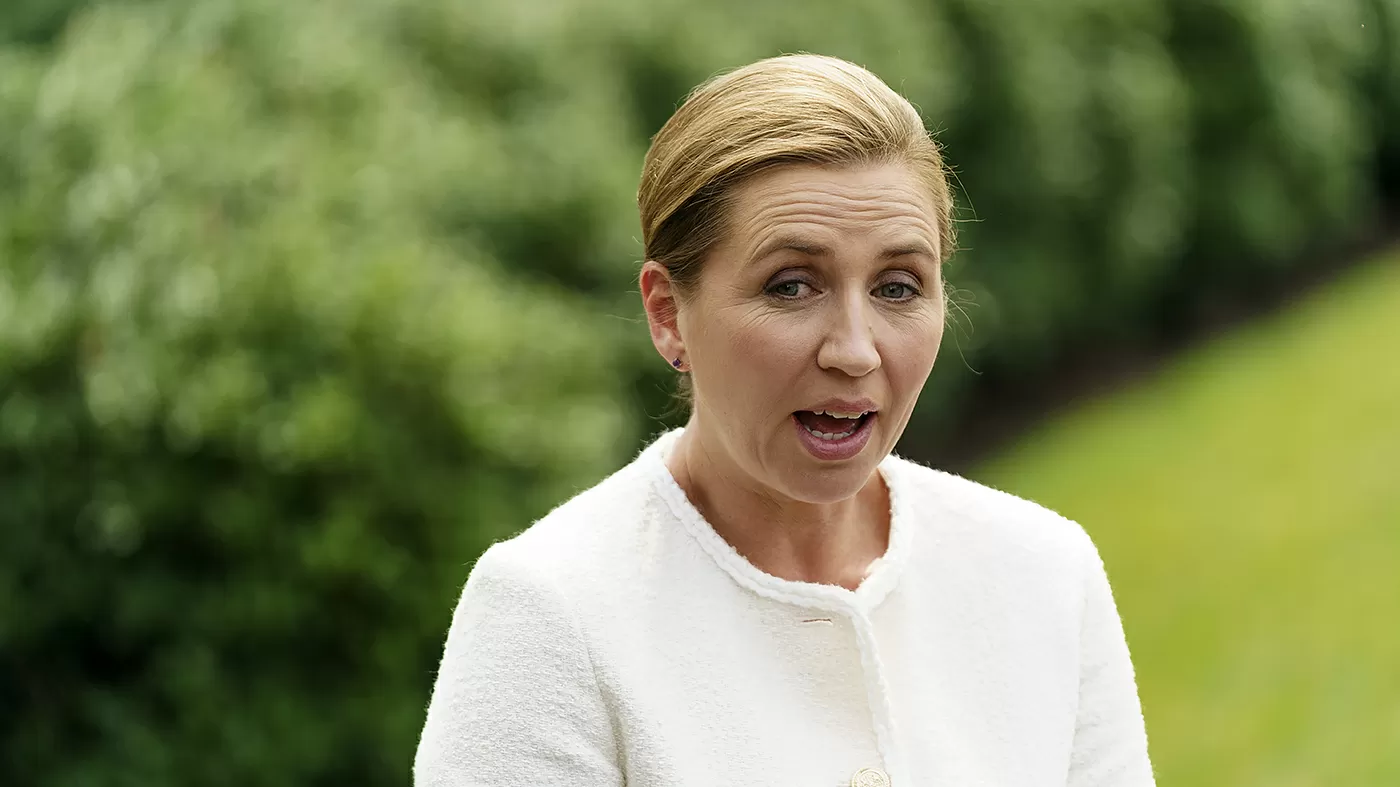
Danish Prime Minister Mette Frederiksen has confirmed that President Trump is still determined to acquire Greenland, despite the country’s repeated rejection of the idea. Speaking at the Munich Security Conference on Saturday, Frederiksen stated that Trump’s desire for the Arctic island remains unchanged. “I think the desire from the U.S. president is exactly the same. He’s very serious about this,” she said, according to the BBC.
This statement comes after months of speculation and controversy surrounding Trump’s interest in purchasing Greenland from Denmark. In December and January, the president made his views known, causing a stir in the international community. However, Denmark’s response has been consistent – Greenland is not for sale.
Despite this, Trump has not backed down from his pursuit of the island. His administration has even explored the possibility of offering a large sum of money to Denmark in exchange for Greenland. This has caused tension between the two countries, with Frederiksen calling the idea “absurd” and stating that Greenland is not for sale.
But why is Trump so interested in Greenland? The answer lies in the island’s strategic location and its vast natural resources. Greenland, which is the world’s largest island, is situated between the North Atlantic and Arctic oceans. It is also home to valuable resources such as oil, gas, and rare earth minerals. With the effects of climate change becoming more apparent, the Arctic region is becoming increasingly important for its potential economic and military benefits.
Trump’s interest in Greenland is not a new development. In fact, the United States has a long history of involvement in the island. During World War II, the U.S. established military bases in Greenland to protect it from potential Nazi invasion. The island also played a crucial role in the Cold War, with the U.S. using it as a strategic location for monitoring Soviet activity.
However, Denmark has maintained control over Greenland since the 18th century and sees it as an integral part of its territory. The island also has a large degree of autonomy, with its own government and parliament. This makes it unlikely that Denmark would agree to sell Greenland, as it is an important part of their national identity.
Despite the challenges, Trump remains determined to acquire Greenland. His persistence has been met with mixed reactions, with some viewing it as a bold and strategic move, while others see it as an overreach of power. However, Frederiksen’s comments at the Munich Security Conference suggest that Trump’s interest in Greenland is not just a passing whim, but a serious pursuit.
The Danish Prime Minister also stated that she had a “good and constructive” conversation with Trump about the issue, and that the two leaders have a strong relationship. This is a positive sign, as it shows that the two countries are willing to engage in dialogue and find a solution that benefits both parties.
In the midst of all the controversy, it is important to remember that the U.S. and Denmark are long-standing allies and share a strong bond. The two countries have a history of cooperation and collaboration, and this should not be overshadowed by the current disagreement over Greenland.
In conclusion, the Danish Prime Minister’s confirmation of Trump’s continued interest in acquiring Greenland sheds light on the ongoing situation. While the idea may seem far-fetched to some, it is clear that Trump sees the potential benefits of owning the island. However, it is also important to respect Denmark’s sovereignty and the autonomy of Greenland. As the situation unfolds, it is crucial for both countries to maintain open communication and work towards a mutually beneficial solution.

