
The United States of America, a country known for its ideals of freedom and equality, has been facing a disturbing reality in recent years. According to scholar and author Dylan Rodriguez, the US operates in a perpetual state of internal war, with the legacy of white supremacy reaching terrifying new heights in the Trump era.
Rodriguez, a professor of media and cultural studies at the University of California, argues that the US has been engaged in a constant state of internal conflict since its inception. From the genocide of Native Americans to the enslavement of African Americans, the country has a long history of violence and oppression towards marginalized communities.
However, Rodriguez believes that this internal war has intensified in the current political climate, particularly under the leadership of President Donald Trump. The rise of white supremacist ideologies and the emboldening of hate groups have led to a surge in hate crimes and discrimination against people of color, immigrants, and other marginalized groups.
The Trump administration’s policies and rhetoric have only exacerbated this issue. From the Muslim ban to the separation of families at the border, the administration has targeted and demonized communities of color, further perpetuating the cycle of violence and discrimination.
Rodriguez argues that this perpetual state of internal war is not just a result of individual acts of violence, but also a systemic issue deeply rooted in the country’s history. He points to the militarization of the police, the mass incarceration of people of color, and the ongoing surveillance and targeting of Muslim and immigrant communities as examples of this systemic violence.
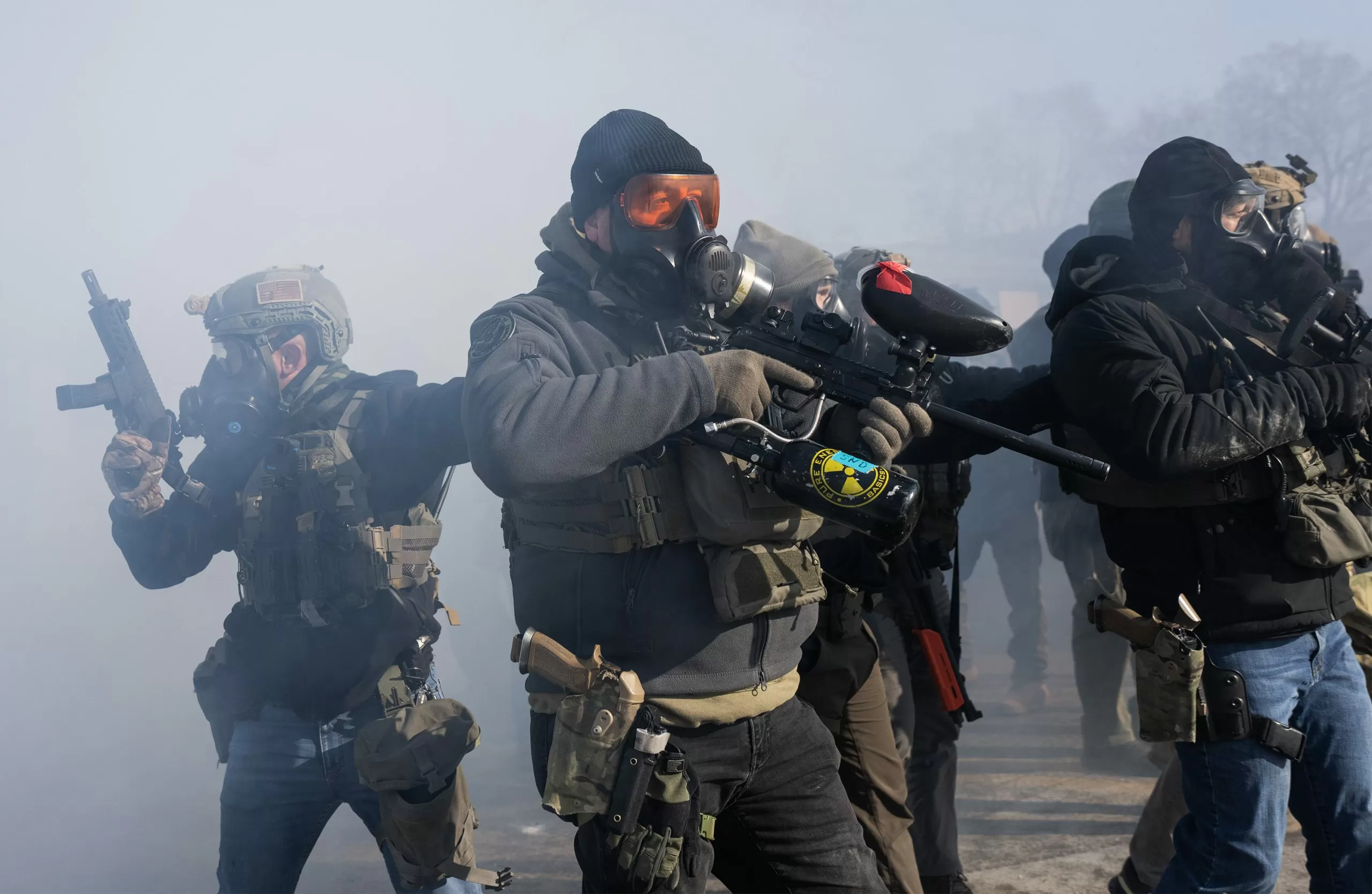
Furthermore, Rodriguez believes that the US government’s response to protests and movements for social justice, such as the Black Lives Matter movement, further highlights the country’s internal war. The use of excessive force and the criminalization of protesters demonstrate the government’s unwillingness to address the root causes of these issues and instead perpetuate the cycle of violence.
In his book, “White Reconstruction: Domestic Warfare and the Logics of Genocide,” Rodriguez delves deeper into the concept of domestic warfare and its impact on marginalized communities. He argues that the US government’s actions, both domestically and internationally, are driven by a white supremacist ideology that seeks to maintain power and control over marginalized communities.
However, Rodriguez also believes that there is hope for change. He calls for a collective effort to dismantle the systems of oppression and violence that have been ingrained in the country for centuries. This includes acknowledging and addressing the country’s history of violence and systemic racism, as well as actively working towards creating a more just and equitable society for all.
In conclusion, the US operates in a perpetual state of internal war, and the legacy of white supremacy has only intensified in the Trump era. It is crucial for us to acknowledge and address this issue, and work towards creating a more inclusive and just society for all. As Rodriguez reminds us, “We must recognize that the struggle against white supremacy is a struggle for the future of humanity.”

