
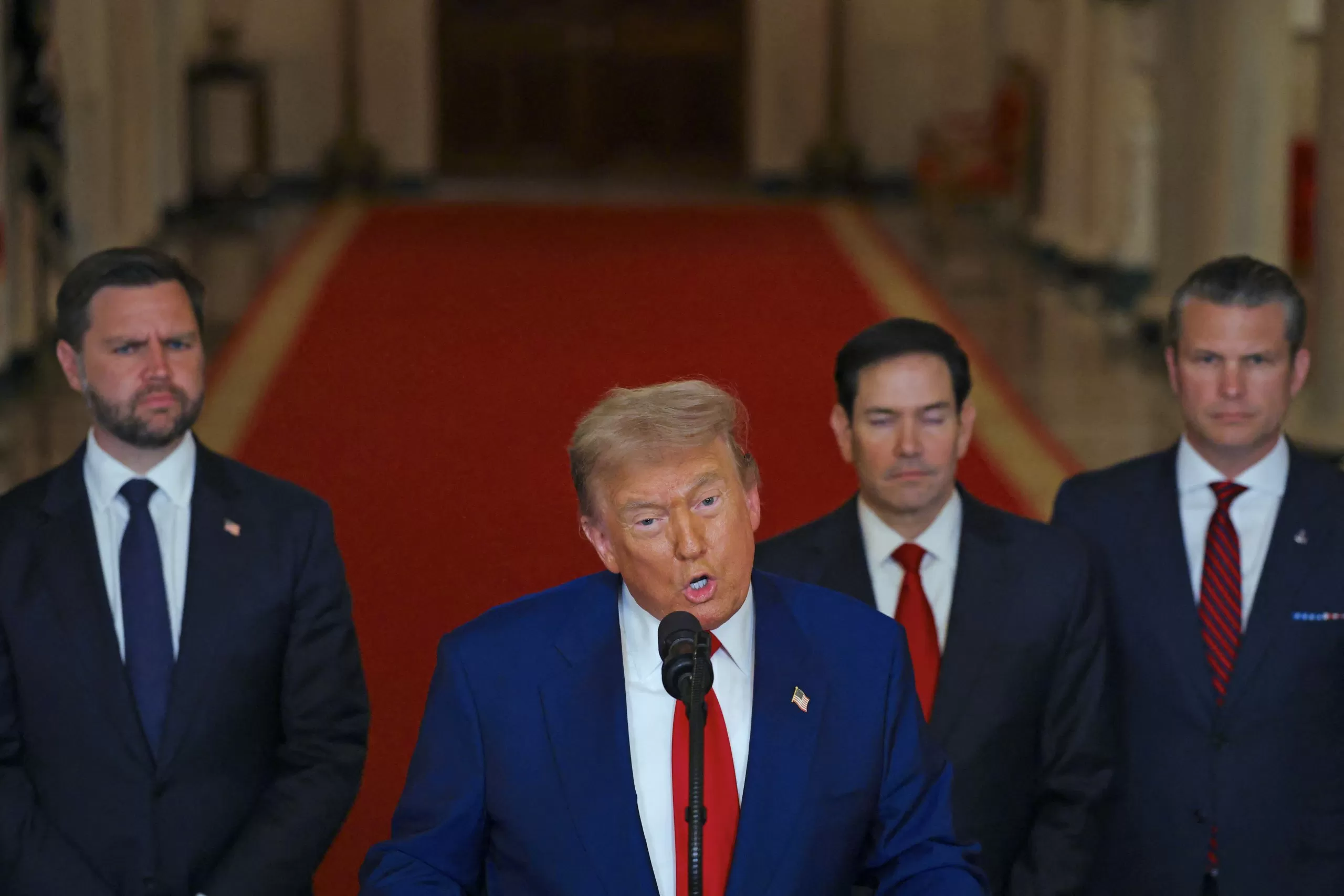
The tension between the United States and Iran has reached a boiling point in recent months, with President Donald Trump, Israeli Prime Minister Benjamin Netanyahu, and their hawkish advisors pushing for aggressive action against the Iranian regime. However, their actions and rhetoric have raised concerns that their approach may lead to a disastrous outcome, with surrender becoming a more appealing option for Iran than war.
The current situation between the US and Iran is a result of the Trump administration’s decision to withdraw from the Iran nuclear deal, also known as the Joint Comprehensive Plan of Action (JCPOA). This move was met with strong opposition from the international community, including the other signatories of the deal – the UK, France, Germany, Russia, and China. The JCPOA was a landmark agreement that aimed to prevent Iran from developing nuclear weapons in exchange for sanctions relief. However, Trump’s withdrawal from the deal and subsequent re-imposition of sanctions have put immense pressure on the Iranian economy, leading to a sharp decline in the country’s oil exports and currency.
In addition to the economic pressure, the US has also taken a series of aggressive actions against Iran, including the assassination of top Iranian military commander Qasem Soleimani and the deployment of additional troops to the Middle East. These actions, coupled with Trump’s belligerent rhetoric, have only served to escalate tensions between the two nations.
Israeli Prime Minister Benjamin Netanyahu, a staunch opponent of the Iran nuclear deal, has also been pushing for a more aggressive stance against Iran. He has repeatedly warned of the Iranian threat and has even claimed to have evidence of Iran’s nuclear ambitions. Netanyahu’s influence on Trump’s decision to withdraw from the JCPOA cannot be ignored, and his hawkish stance has only added fuel to the fire.
Furthermore, both Trump and Netanyahu have surrounded themselves with advisors who share their hardline views on Iran. National Security Advisor John Bolton, a vocal advocate for regime change in Iran, has been a driving force behind the administration’s aggressive policies towards the country. Similarly, Netanyahu’s cabinet is filled with hardliners who have long advocated for a tough stance against Iran.
The combined efforts of Trump, Netanyahu, and their hawkish advisors have put immense pressure on the Iranian regime. However, their actions have also raised concerns that the Iranian government may see surrender as a more favorable option than going to war. The Iranian leadership, despite its tough rhetoric, is well aware of the military might of the US and its allies. They know that a war with the US would be devastating for their country and its people.
Moreover, the Iranian regime has also been facing domestic challenges, with widespread protests and economic hardships. The crippling sanctions imposed by the US have only added to the people’s grievances, and the government’s ability to withstand such pressure is not unlimited. In this scenario, surrender may seem like a more viable option for the Iranian leadership, as it would alleviate the economic burden and potentially lead to the lifting of sanctions.
However, the idea of surrender is not a simple one for any country, especially for a proud nation like Iran. It would be a significant blow to their national pride and could potentially lead to further unrest and instability within the country. It is also important to note that surrender does not necessarily mean an end to the conflict. The US and its allies may still demand significant concessions from Iran, which could further complicate the situation.
In conclusion, the actions of Trump, Netanyahu, and the war hawks in their cabinets have pushed the Iranian regime to a breaking point. While their aggressive stance may have some short-term gains, it also raises the risk of Iran choosing surrender over war. This would have significant implications for the region and the world at large. It is crucial for all parties involved to step back from the brink and find a diplomatic solution to the current crisis. Only through dialogue and cooperation can a lasting peace be achieved in the Middle East.

