
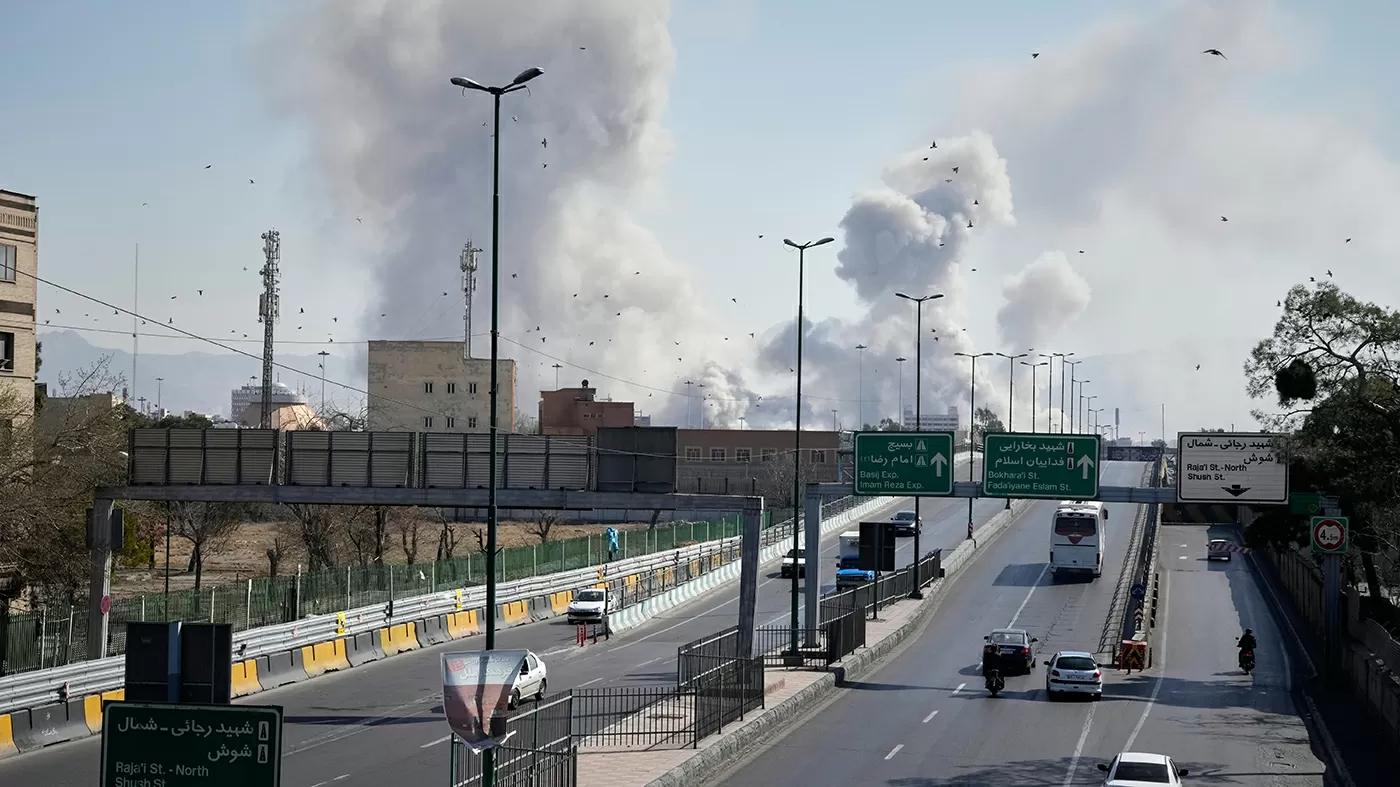
The U.S.-Israeli War Against Iran: A Dangerous Escalation Across the Region
The recent joint operation launched by the United States and Israel against Iran has sparked a rapid and dangerous escalation of tensions in the Middle East. What started as a targeted strike against Iranian nuclear facilities has quickly evolved into a full-blown conflict, with both sides engaging in aggressive and retaliatory actions.
Since the weekend, Tehran has responded to the attack by launching thousands of drones and missiles against Israel and U.S. interests in Gulf states. This has not only further inflamed the situation, but it has also drawn in Gulf allies and pulled European countries and Iranian proxies into the fight.
The consequences of this escalation are far-reaching and have the potential to destabilize the entire region. The U.S. and Israel must tread carefully and consider the potential consequences of their actions, as any misstep could have catastrophic consequences.
The joint operation, which was carried out without consulting other countries or international organizations, has been met with widespread condemnation. Many have criticized the U.S. and Israel for their unilateral actions, which have only served to exacerbate the already tense situation in the Middle East.
The U.S. and Israel have justified their actions by citing Iran’s continued pursuit of nuclear weapons and its support for terrorist groups in the region. However, the use of military force should always be a last resort and must be carried out with caution and consideration for the potential consequences.
The escalation of this conflict has also had a significant impact on the Gulf states, who have found themselves caught in the crossfire. These countries, which have long-standing alliances with the U.S. and Israel, are now facing the threat of retaliation from Iran. This has put them in a difficult position, as they must balance their relationships with both sides while also protecting their own interests.
Furthermore, the involvement of European countries and Iranian proxies has further complicated the situation. This has turned what was initially a regional conflict into a global one, with the potential to draw in other countries and further escalate tensions.
It is crucial that all parties involved in this conflict exercise restraint and work towards finding a peaceful resolution. The use of military force will only lead to more bloodshed and suffering for innocent civilians.
The international community must also play a role in de-escalating the situation. The United Nations and other organizations must step in and facilitate diplomatic talks between the involved parties. It is only through open and honest dialogue that a lasting solution can be reached.
In the midst of this dangerous escalation, it is important to remember the human cost of war. Innocent civilians are the ones who suffer the most in these conflicts, and it is our responsibility to do everything in our power to prevent further violence and bloodshed.
The U.S. and Israel must also consider the long-term implications of their actions. The use of military force may provide a temporary solution, but it will not address the root causes of the conflict. Only through diplomacy and cooperation can a lasting peace be achieved.
In conclusion, the U.S.-Israeli war against Iran is a rapidly expanding conflict that has the potential to engulf the entire region. It is imperative that all parties involved exercise restraint and work towards finding a peaceful resolution. The international community must also play a role in facilitating diplomatic talks and preventing further escalation. Let us not forget the human cost of war and strive towards a future of peace and stability in the Middle East.

