
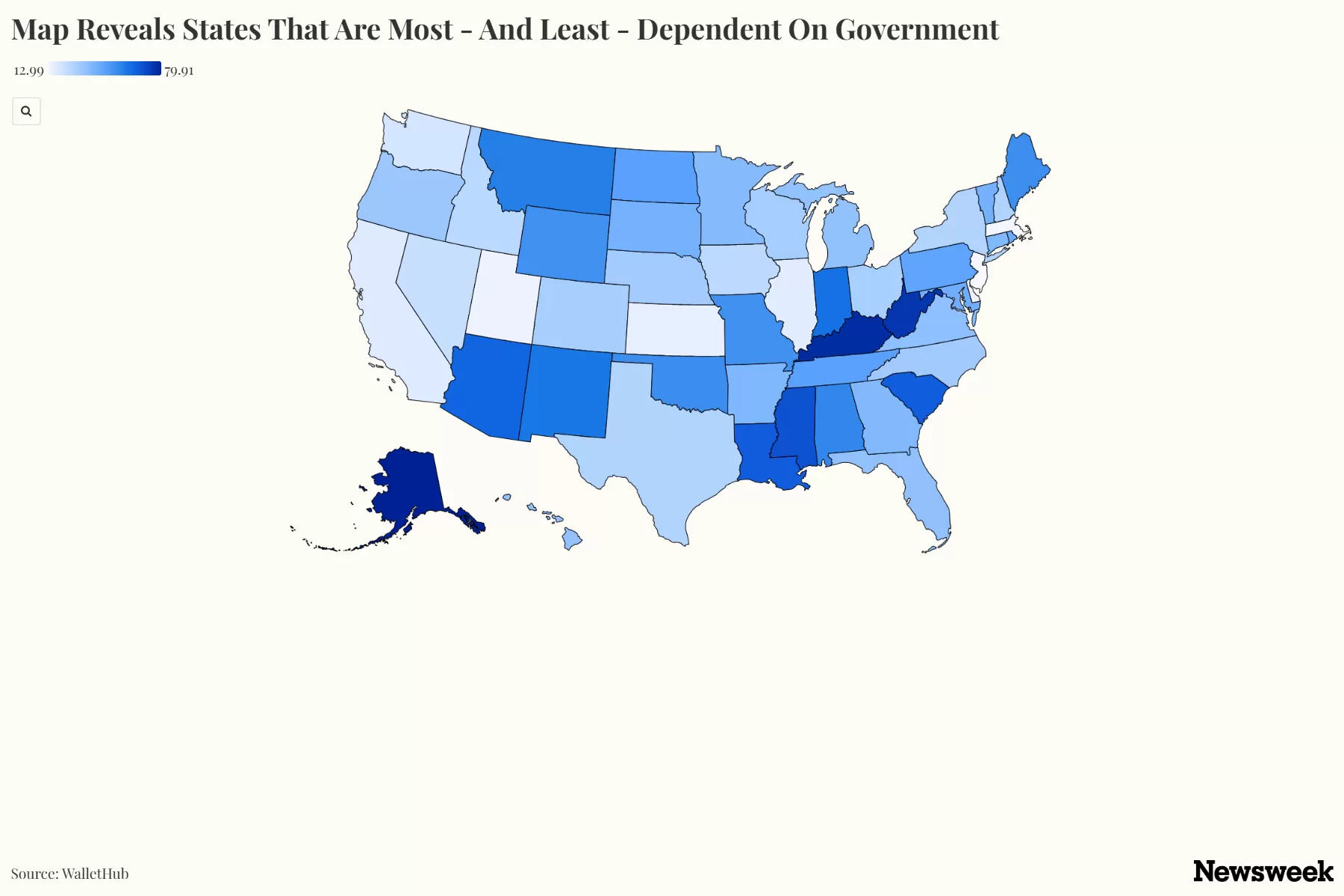
WalletHub, a personal finance website, recently conducted a study to determine the financial health of all 50 states in the United States. The study, which was based on a 100-point weighted scale, analyzed various factors such as income, debt, and overall economic stability to determine the rankings. The results of this study provide valuable insights into the financial well-being of each state and can serve as a useful guide for individuals and policymakers alike.
The study found that the top three states with the highest overall financial health are Massachusetts, Minnesota, and North Dakota, with scores of 71.73, 71.44, and 70.44 respectively. On the other hand, the states with the lowest scores were Mississippi, Louisiana, and Alabama, with scores of 46.56, 46.24, and 45.75 respectively. The remaining states fell somewhere in between these two extremes.
One of the key factors that contributed to the high rankings of the top three states was their strong economies. These states have a diverse range of industries, low unemployment rates, and high median household incomes. This indicates that the residents of these states have a stable source of income and are less likely to struggle with financial difficulties. On the other hand, the bottom-ranking states have higher unemployment rates and lower median household incomes, making it harder for their residents to achieve financial stability.
Another important factor that was considered in the study was the level of debt in each state. The top-ranking states had lower levels of debt compared to the bottom-ranking states. This is a crucial factor as high levels of debt can lead to financial stress and negatively impact an individual’s overall financial health. The study also found that the top-ranking states had a higher percentage of residents with good credit scores, indicating responsible financial habits and a lower risk of defaulting on loans.
In addition to economic factors, the study also looked at the availability of financial resources and opportunities in each state. This includes access to financial education, affordable housing, and healthcare. The top-ranking states scored high in these categories, indicating that their residents have access to the necessary resources to make informed financial decisions and improve their overall financial well-being.
The results of this study serve as a wake-up call for states with lower rankings. It highlights the areas where improvements can be made to enhance the financial health of their residents. By addressing issues such as unemployment, income inequality, and access to financial resources, these states can work towards improving their rankings and providing a better quality of life for their residents.
For individuals, the study can serve as a useful tool in evaluating their own financial health. By looking at the rankings of their state and understanding the factors that contribute to it, individuals can identify areas where they can make improvements in their own financial habits. This includes creating a budget, reducing debt, and seeking out financial education resources.
Furthermore, the study can also be used by policymakers to identify areas where they can implement policies and programs to improve the financial health of their state. This can include initiatives to create job opportunities, increase access to affordable housing and healthcare, and promote financial literacy.
In conclusion, WalletHub’s study provides valuable insights into the financial health of all 50 states in the United States. It highlights the top-performing states and the areas where improvements can be made for those with lower rankings. By understanding the factors that contribute to financial health, individuals and policymakers can work towards creating a more financially stable future for all.

