
Tennis has long been considered a progressive sport when it comes to gender equality. From pioneers such as Billie Jean King to current stars like Serena Williams, the sport has continuously pushed for equal treatment and opportunities for both male and female players. However, despite the strides made in the sport, debates over prize money, scheduling, and media attention still surface regularly.
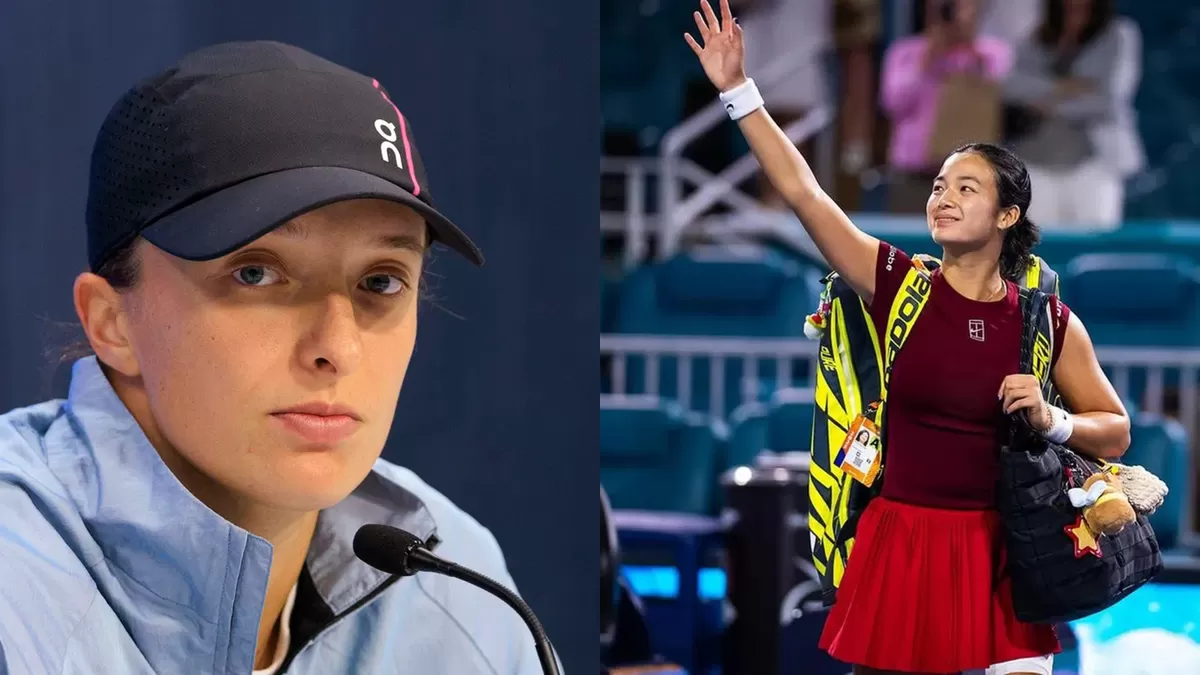
Recently, at the BNP Paribas Open in Indian Wells, two rising stars in women’s tennis, Iga Swiatek and Alexandra Eala, offered a refreshingly honest perspective on the ongoing debate over ATP-WTA inequality. In a sport where women have often felt overshadowed by their male counterparts, these young players are breaking their silence and speaking up for their rights.
At just 19 years old, Iga Swiatek has already made a name for herself in the tennis world. The Polish player rose to fame after winning her first Grand Slam title at the French Open in 2020, becoming the youngest woman to do so since Monica Seles in 1992. Her impressive performance on the court has earned her admiration from fans and fellow players alike. But off the court, Swiatek has been using her platform to raise awareness about issues of gender inequality in tennis.
In a recent interview, Swiatek acknowledged the progress that has been made in terms of equality in tennis but also highlighted the areas where there is still work to be done. When asked about the debate over equal prize money for men and women, she said, “I think we’re getting to the point where we’re really close to equal prize money, but I just hope that it will happen soon.” This statement reflects the optimism and determination of the younger generation to see gender equality fully realized in the sport.
Another young player making waves in the tennis world is 16-year-old Alexandra Eala. The Filipina prodigy has been making headlines with her impressive performances on the court, including winning the Australian Open junior title in 2020. But Eala is also using her platform to advocate for equality in tennis. In an interview, she shared her thoughts on the ongoing debate, saying, “I’m hopeful that one day, women’s tennis will get the same amount of attention as men’s. Because we work just as hard and we deserve the same recognition.”
It is heartening to see young players like Swiatek and Eala speaking up about this issue, as it shows that the fight for gender equality in tennis is not just limited to the older generation. These young stars are paving the way for a more equal future in the sport, and their voices are a powerful reminder that the fight for equality is far from over.
The debate over ATP-WTA inequality has been ongoing for years, with arguments being made from both sides. While some argue that men should earn more due to playing longer sets, others believe that women should receive equal pay as they bring in just as much revenue for tournaments. However, the issue is not just about prize money. It also extends to areas like scheduling and media attention, where women often find themselves playing on smaller courts and receiving less coverage compared to men’s matches.
But with the rise of young players like Swiatek and Eala, it is clear that the future of tennis is in good hands. These players are not only talented athletes but also strong advocates for gender equality. They are using their voices to bring attention to these important issues, and it is up to the governing bodies of tennis to listen and take action.
Tennis has come a long way when it comes to gender equality, but there is still work to be done. Tournaments and organizations must continue to strive for equal treatment and opportunities for all players, regardless of their gender. As Swiatek expressed, “We are all working hard, and we deserve the same recognition.” It is time for the sport to truly live up to its reputation as a progressive and inclusive one.
In the end, it is not about being a man or a woman, but about being a talented and hard-working athlete. As Eala said, “I’ve never been a guy, so I wouldn’t know the feeling of being treated differently. But I believe that we all deserve the same treatment and opportunities.” Let us hope that in the near future, debates over ATP-WTA inequality will be a thing of the past, and young players like Swiatek and Eala will continue to inspire generations to come with their skills and

