
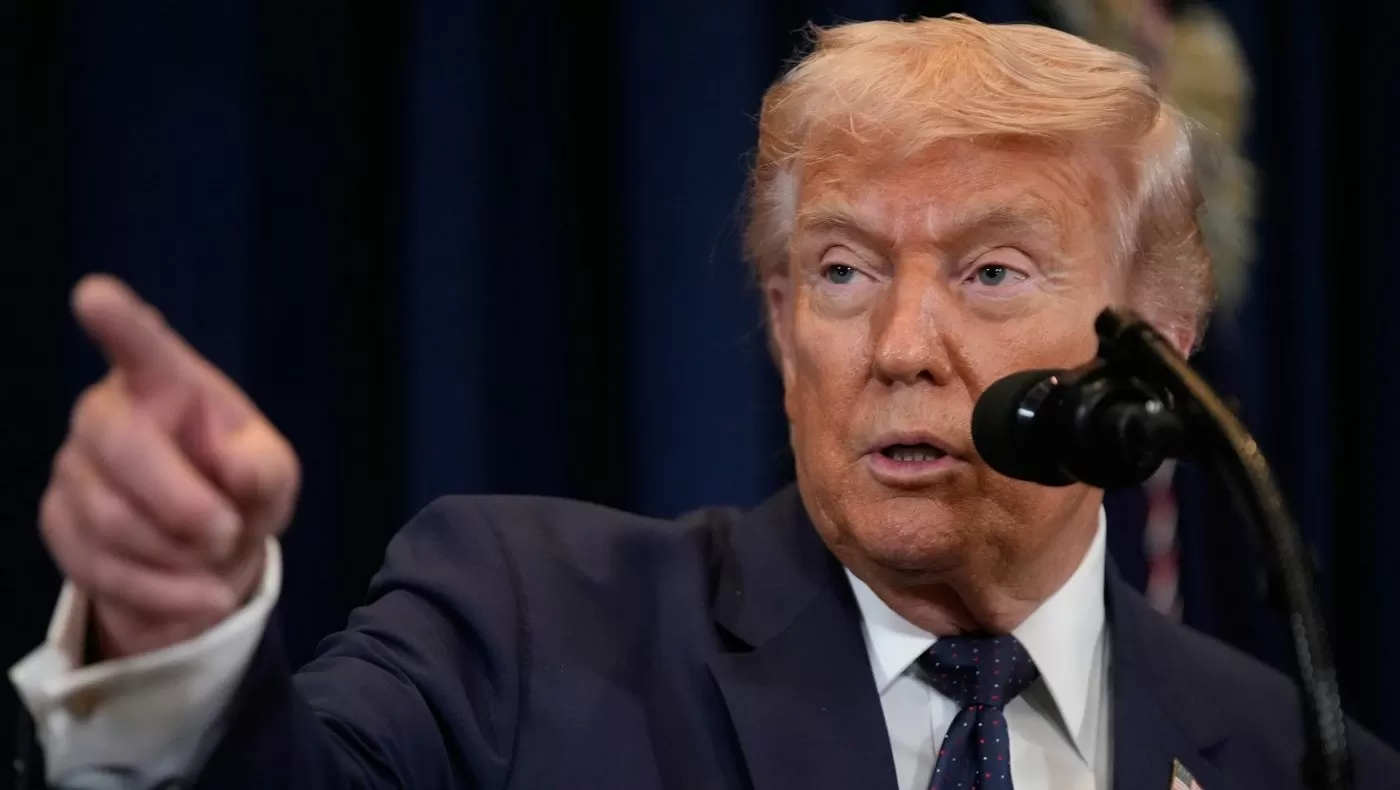
President Trump is no stranger to making bold statements and taking decisive action. And his recent approach to the escalating tensions with Iran is no different. In the face of a potential oil crisis, the President is betting on his “fire and fury” rhetoric to reopen the Strait of Hormuz and avoid any further economic turmoil.
The Strait of Hormuz, a narrow waterway between Iran and Oman, is a critical passage for global oil shipments. It is estimated that nearly one-fifth of the world’s oil supply passes through this strategic chokepoint. Therefore, any disruption in this area can have severe consequences for the global economy, leading to a rise in oil prices and potential shortages.
With tensions between the United States and Iran reaching a boiling point, President Trump has taken a strong stance, vowing to protect American interests and keep the Strait of Hormuz open. His fiery rhetoric has been met with mixed reactions, with some praising his tough stance and others criticizing it as reckless and provocative.
But the President is not backing down. In fact, he has gone as far as to suggest the possibility of Navy warships escorting tankers through the Strait or even a U.S. takeover of the area. This bold strategy has raised eyebrows and sparked debates, but it is clear that President Trump is determined to keep the Strait of Hormuz open and prevent any disruptions to the global oil supply.
Some may question the effectiveness of such a strategy, but history has shown that the United States has the capability to protect its interests and maintain stability in the region. In the 1980s, during the Iran-Iraq War, the U.S. Navy successfully escorted tankers through the Strait of Hormuz, ensuring the uninterrupted flow of oil.
Moreover, President Trump’s tough stance has already shown some results. In recent weeks, there have been reports of Iranian ships harassing and attempting to seize oil tankers passing through the Strait. However, the U.S. Navy has intervened, deterring any further aggressive actions from Iran.
But the President’s strategy goes beyond just protecting the Strait of Hormuz. It also aims to force Iran to the negotiating table and address its aggressive behavior in the region. The United States has already imposed crippling economic sanctions on Iran, and the President’s strong rhetoric is a clear message that the U.S. will not tolerate any more aggression.
Of course, there are risks involved in such a strategy. Any military action or escalation of tensions with Iran could have severe consequences for the region and the world. However, President Trump is confident that his approach will yield positive results and prevent any further escalation of the situation.
In addition to his tough stance, President Trump has also reached out to other countries to join in his efforts to keep the Strait of Hormuz open. The United Kingdom has already agreed to join a U.S.-led maritime security mission in the region, and other countries are considering similar actions. This shows that the international community recognizes the importance of keeping the Strait open and is willing to work together to achieve this goal.
In conclusion, President Trump’s “fire and fury” rhetoric may seem like a risky gamble, but it is a calculated move to protect American interests and maintain stability in the region. The President’s determination to keep the Strait of Hormuz open and his willingness to take decisive action has already shown some positive results. And with the support of the international community, there is hope that a peaceful resolution to the tensions with Iran can be achieved. Let us hope that President Trump’s bold strategy will lead to a peaceful and stable future for all.

