
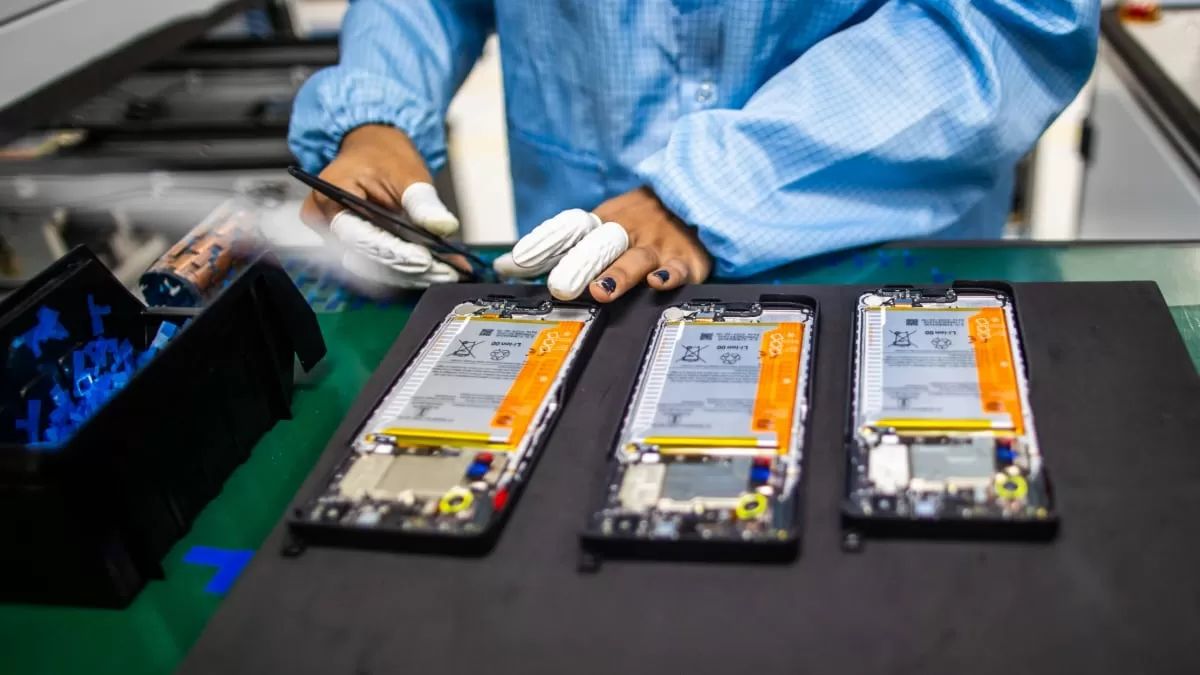
The Indian government’s flagship phone production program, the Production-Linked Incentive (PLI), has been highly successful in increasing domestic output and creating job opportunities. Now, in an effort to further boost the country’s manufacturing sector, the government is considering a second phase of the program that will focus on rewarding companies for their exports and localization efforts. This move is set to bring in more foreign investment and increase India’s presence in the global market.
According to sources familiar with the matter, the proposed second phase of the PLI program will start providing incentives to companies for shipping devices overseas. This is a major shift from the current program, which primarily focuses on incremental domestic output. With the deadline for the current PLI program approaching on March 31, this new plan is being discussed to ensure the continuity of the government’s efforts to promote local manufacturing.
The main objective of this proposed program is to increase the country’s exports by encouraging companies to manufacture their products in India. Not only will this strengthen India’s position in the global market, but it will also create more jobs and boost the economy. The program will provide financial incentives to companies based on their export performance and localization efforts. This means that companies will be rewarded for not only exporting their products, but also for sourcing components from local suppliers.
This is a significant step towards making India a global manufacturing hub. The government’s focus on exports and localization will not only benefit the companies involved, but also the country as a whole. By exporting more products, India will earn foreign currency and reduce its trade deficit. This will also help to strengthen the rupee and boost the country’s economy.
The proposed program will also encourage companies to set up their manufacturing units in India, as they will have access to financial incentives for exporting their products. This will not only increase the production capacity of these companies, but also create employment opportunities for the people of India. Furthermore, with the localization component, more local companies will be involved in the supply chain, leading to a boost in the domestic component industry.
In recent years, India has emerged as a major market for smartphones and other electronic devices. With the increasing demand for these products, the government’s efforts to promote local manufacturing will prove to be a game-changer for the country. By attracting more foreign investment and boosting exports, India will become a global leader in the production of smartphones and other electronic devices.
Moreover, with the ongoing trade tensions between the US and China, India has a golden opportunity to position itself as a reliable alternative for global companies looking to diversify their supply chains. This, combined with the government’s efforts to improve the ease of doing business in the country, will make India a more attractive destination for foreign investment.
The proposed second phase of the PLI program has the potential to revolutionize the manufacturing sector in India. It is a clear indication of the government’s commitment towards making India self-reliant and globally competitive. This move will not only benefit the companies and the economy, but also contribute towards the overall growth and development of the country.
In conclusion, the proposal for a second phase of the PLI program that focuses on rewarding exports and localization efforts is a step in the right direction for India. It will not only make the country a global manufacturing hub, but also boost the economy and create job opportunities for its people. With the government’s continued efforts to promote local manufacturing, India is well on its way to becoming a major player in the global market.

