
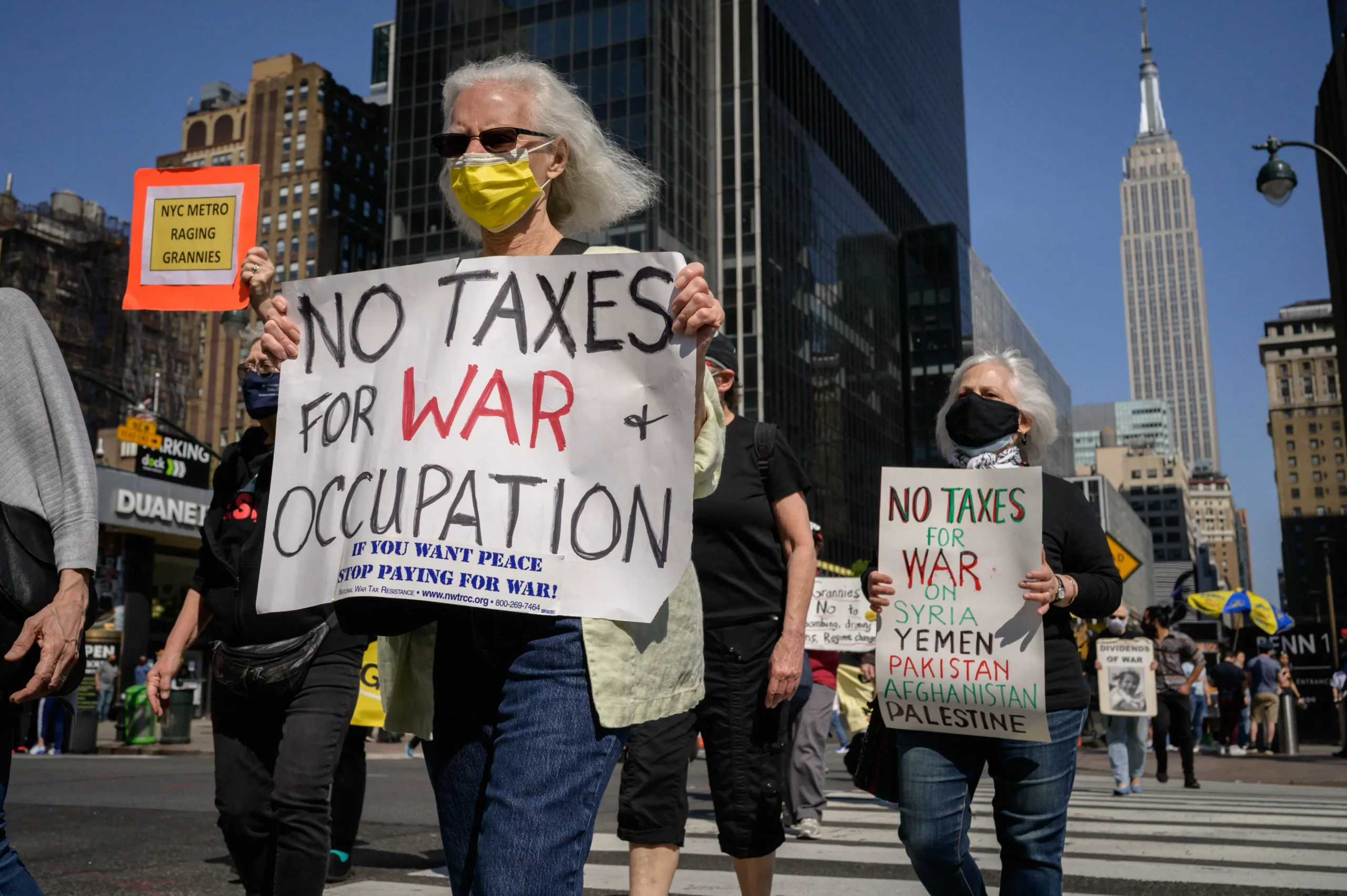
The political tax resistance movement has been gaining momentum in recent years, with a growing number of individuals and organizations refusing to pay their taxes as a form of protest. This act of civil disobedience is deeply tied to the objections over military operations abroad and U.S. immigration enforcement at home.
The United States has a long history of military intervention and involvement in conflicts around the world. From the Vietnam War to the ongoing wars in the Middle East, many Americans have grown increasingly disillusioned with the government’s use of their tax dollars to fund these military operations. The staggering cost of these wars, both in terms of financial resources and human lives, has sparked a sense of outrage and injustice among taxpayers.
At the same time, the current administration’s aggressive immigration policies, particularly the separation of families and the treatment of undocumented immigrants, have also fueled the tax resistance movement. Many see these policies as a violation of human rights and a betrayal of the values that the United States was founded upon. As a result, they are choosing to withhold their tax dollars in protest.
But why tax resistance? Why not other forms of protest? For many, it is a matter of principle. They see their tax dollars as a direct contribution to the actions of the government, and by withholding that contribution, they are taking a stand against policies and actions that they do not support. It is a peaceful, nonviolent way of expressing dissent and holding the government accountable for its actions.
Some may argue that tax resistance is a futile gesture, as the government will simply find other ways to fund its operations. However, history has shown that tax resistance can be a powerful tool for social change. The Boston Tea Party, a famous act of tax resistance, was a key event in the American Revolution. More recently, the anti-apartheid movement in South Africa used tax resistance as a form of protest, leading to the divestment of international companies from the country.
Moreover, tax resistance is not just about the direct impact on government funding. It also serves as a means of raising awareness and starting conversations about important issues. By refusing to pay their taxes, individuals are bringing attention to the ways in which their tax dollars are being used and the harm that is being caused. This can lead to broader discussions and potentially even policy change.
Of course, tax resistance is not without its risks. Those who choose to withhold their taxes may face legal consequences, such as fines or even imprisonment. But for many, the potential consequences are outweighed by the importance of taking a stand and standing up for their beliefs.
It is important to note that tax resistance is not just limited to individuals. Organizations and groups, such as the National War Tax Resistance Coordinating Committee and the War Resisters League, also advocate for and support tax resistance as a form of political protest. These groups provide resources and guidance to those who are considering tax resistance, as well as actively working to change government policies and practices.
In conclusion, the political tax resistance movement is a powerful and courageous expression of dissent against the use of tax dollars for military operations abroad and immigration enforcement at home. It is a peaceful and nonviolent way of holding the government accountable for its actions and raising awareness about important issues. Whether or not it leads to immediate change, it is a reminder that the people have the power to challenge and shape the policies of their government.

