
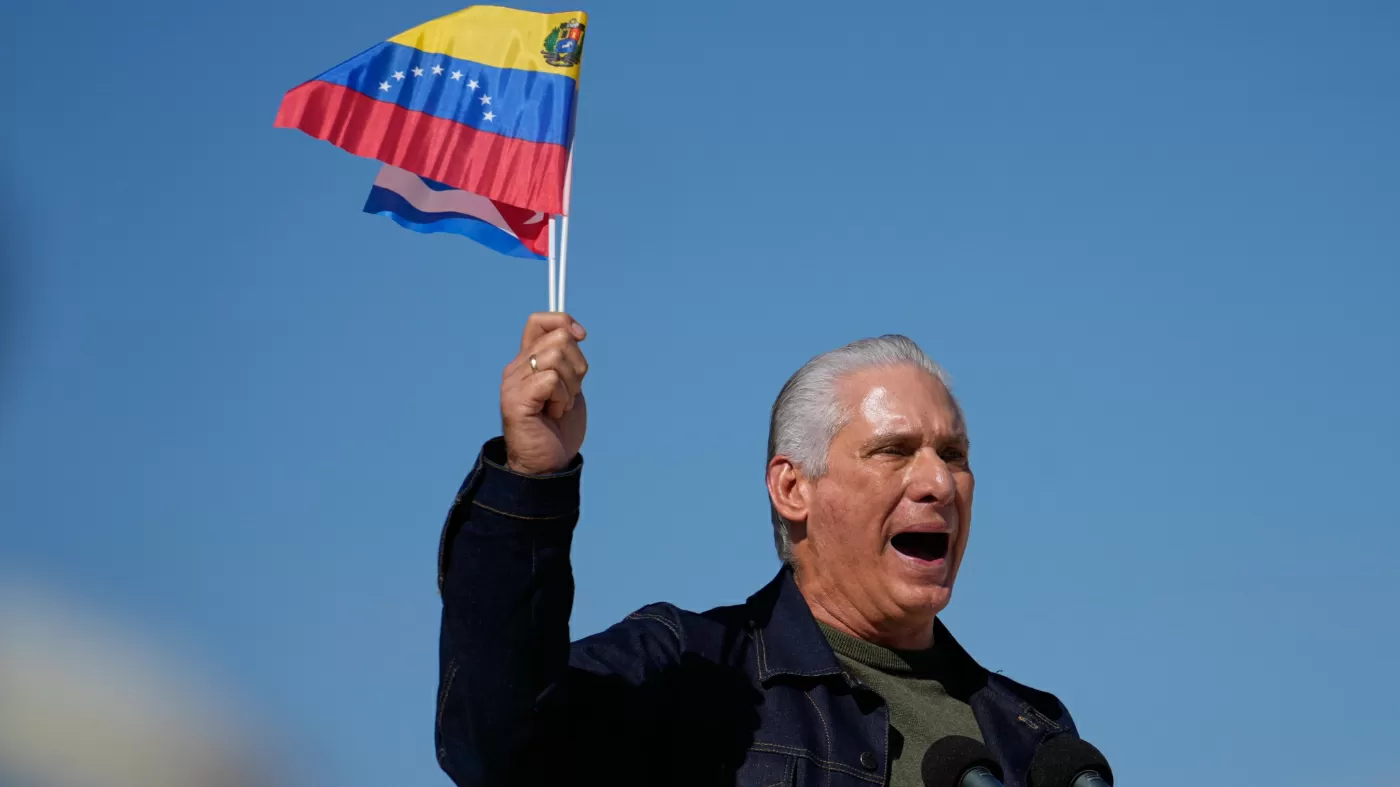
Cuba President Manuel Diaz-Canel has confirmed that his government is engaged in discussions with the Trump administration to address longstanding “bilateral differences” and identify areas of cooperation. This announcement comes after President Trump’s decision to task Secretary of State Marco Rubio with engaging in talks with Cuban officials, with the goal of putting pressure on the country’s communist rule and potentially leading to its collapse after 67 years.
In January, President Trump stated that Cuba’s communist government is “desperate and collapsing” under pressure from the United States. He also expressed hope that the Cuban people would soon be able to experience “freedom and prosperity” under a new government.
President Diaz-Canel’s confirmation of talks with the U.S. signals a significant shift in relations between the two countries. For decades, the U.S. and Cuba have been at odds, with the U.S. imposing a trade embargo on the island nation in 1960 and severing diplomatic ties in 1961. However, under President Barack Obama, the two countries began to thaw their relationship, with the U.S. easing the embargo and re-establishing diplomatic ties in 2015.
President Diaz-Canel’s government has continued to work towards improving relations with the U.S., and the recent talks are a clear indication of their commitment to finding common ground and moving forward in a positive direction. In his statement, President Diaz-Canel reiterated that Cuba is open to respectful dialogue and mutual understanding with the U.S.
The talks between the two countries are focused on finding solutions to long-standing issues, including the U.S. trade embargo and the presence of the U.S. naval base at Guantanamo Bay. Both sides are also discussing potential areas of cooperation, such as economic development, security, and human rights.
President Trump’s decision to task Secretary Rubio with leading the talks has raised some eyebrows, given the senator’s strong stance against the Cuban government. However, President Diaz-Canel has expressed optimism about the negotiations, stating that he believes both sides can find common ground and work towards a better future for both countries.
The potential collapse of Cuba’s communist rule has been a long-standing goal for the U.S., and President Trump’s administration sees this as a real possibility. However, Cuba’s government remains confident in its ability to withstand any pressure from the U.S. and maintain its sovereignty.
In recent years, Cuba has made significant strides in economic development, education, and healthcare. The country has also played a crucial role in international issues, such as peacekeeping efforts and disaster relief. President Diaz-Canel’s government is committed to continuing this progress and ensuring the well-being of its people.
As talks between the U.S. and Cuba continue, it is essential to remember that the ultimate goal is to improve the lives of both countries’ citizens. Constructive dialogue and cooperation can lead to significant progress and a positive future for all.
In conclusion, President Diaz-Canel’s announcement of talks with the Trump administration is a significant step towards improving relations between the U.S. and Cuba. Both sides are committed to finding solutions to long-standing issues and identifying areas of cooperation. With open minds and respectful dialogue, there is hope for a brighter future for both countries. As President Diaz-Canel aptly stated, “only through dialogue and mutual respect can we find the path to a better future for both nations.”

