
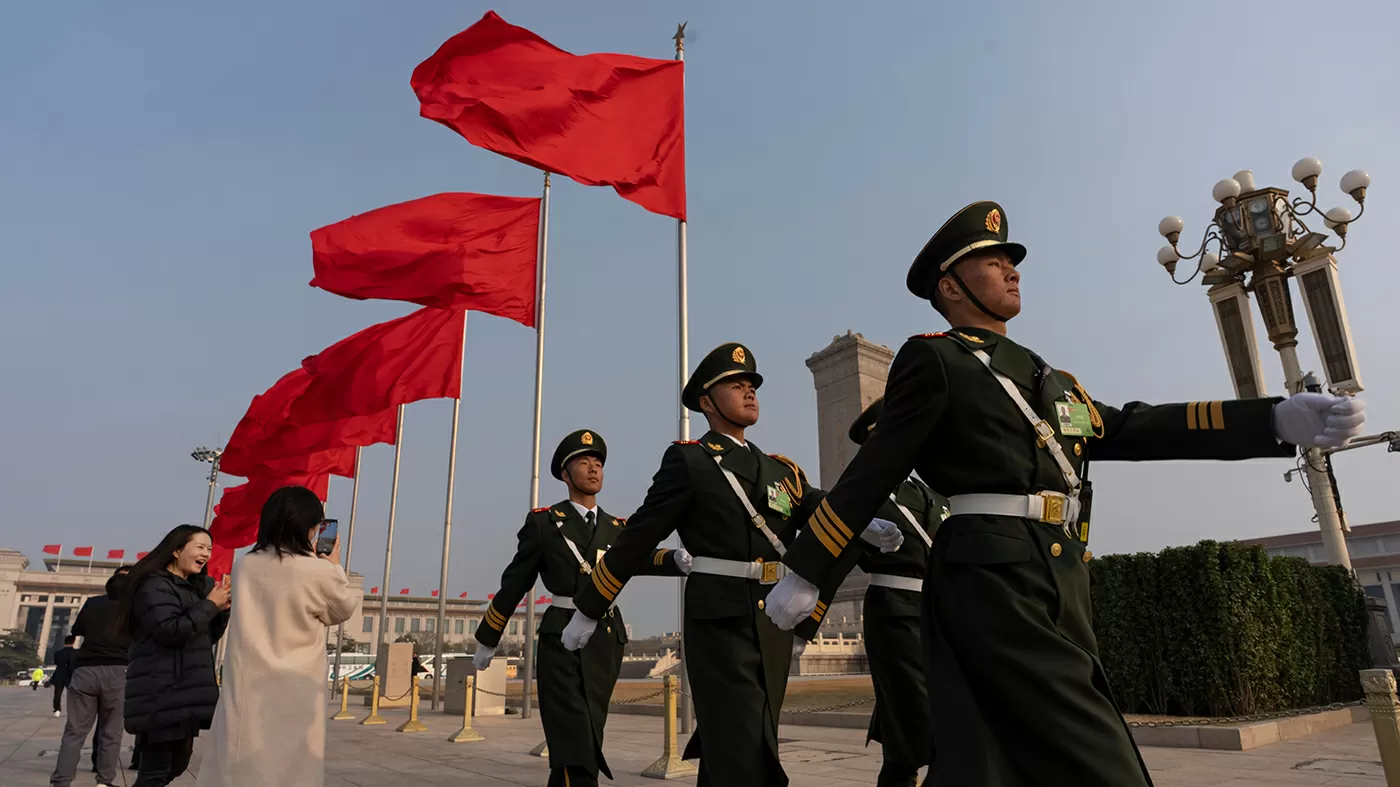
China, the world’s second-largest economy, has been all but silent on President Trump’s recent request for assistance in reopening the Strait of Hormuz. The Strait, a narrow waterway between Iran and Oman, is a vital route for global oil shipments, with about 20 percent of the world’s supply passing through it. However, due to the ongoing war with Iran, the Strait has been facing major disruptions, causing a significant increase in oil and gas prices.
President Trump’s request for assistance in reopening the Strait has been met with mixed reactions from various countries. While some have offered their support, China, one of the major players in the global economy, has yet to comment on the matter. This silence has raised questions and concerns about China’s stance on the issue and its role in finding a solution to the crisis.
China’s silence on this matter is understandable, as it is a delicate situation that requires careful consideration. As a major importer of oil, China is heavily reliant on the stability of the global oil market and any disruptions could have a significant impact on its economy. At the same time, China maintains close ties with both the United States and Iran, making it challenging to take a firm stance on the issue.
However, it is essential for China to understand the gravity of the situation and the potential consequences of staying silent. The closure of the Strait of Hormuz not only affects the global oil market, but it also has a significant impact on the stability of the region. Any escalation of the conflict could have severe implications for the entire world, including China.
China’s involvement in finding a solution to the crisis is crucial. As a permanent member of the United Nations Security Council, China has a responsibility to maintain peace and stability in the world. Moreover, China has also been a strong advocate for free trade and open markets, and the closure of the Strait goes against these principles.
China’s past actions and statements demonstrate its commitment to promoting peace and stability in the Middle East. In 2015, China played a vital role in the negotiations of the Iran nuclear deal, which aimed to reduce tensions in the region. China also has a significant economic presence in the Middle East, with investments and infrastructure projects in various countries. Therefore, China has a vested interest in maintaining stability in the region.
It is also worth noting that China has been actively involved in addressing the issue of oil security. In 2019, China launched the first crude oil futures contract denominated in Chinese Yuan, providing an alternative to the U.S. dollar-dominated oil market. This move showcases China’s determination to have a say in the global oil market and its efforts to reduce its dependency on the U.S. dollar.
Furthermore, China has also been working towards diversifying its energy sources by investing in renewable energy and reducing its reliance on oil. This approach not only benefits China’s economy but also contributes to global efforts in combating climate change.
Given China’s significant role in the global economy and its close ties with both the United States and Iran, it is crucial for the country to offer its perspective on the issue. China’s involvement in finding a solution to the crisis could help de-escalate tensions and bring about a peaceful resolution.
In conclusion, the closure of the Strait of Hormuz is a pressing issue that requires a collective effort from all major players in the global economy. China, as a major economic powerhouse and a responsible global citizen, must offer its comment on President Trump’s request for assistance. China’s involvement in finding a solution to the crisis would not only benefit the global economy but also demonstrate its commitment to promoting peace and stability in the region. It is time for China to break its silence and take a proactive stance in addressing this crucial issue.

