
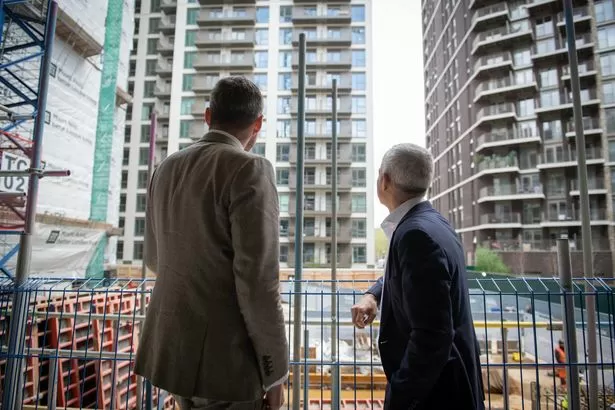
Sadiq Khan, the Mayor of London, has been making bold moves to address the housing crisis in the city. With a growing population and a shortage of affordable homes, he has been determined to speed up housebuilding and make London a more livable place for all. However, his focus on building high-rise tower blocks has been met with criticism from the London Assembly, who believe it is not the most effective solution. Let’s take a closer look at the situation and understand why this debate is gaining traction.
Since taking office in 2016, Sadiq Khan has been vocal about his commitment to tackling London’s housing crisis. He has set a target of building 66,000 new homes per year, with 50% of them being affordable. In order to achieve this, he has implemented various measures, such as streamlining the planning process, investing in affordable housing, and encouraging the use of modern methods of construction. These efforts have resulted in an increase in the number of new homes being built in the city, but they have also been met with some challenges.
One of the main criticisms of the Mayor’s approach is his focus on building high-rise tower blocks. While these buildings may provide a quick solution to the housing shortage, they have also been criticized for their impact on the city’s skyline and the communities living in them. The London Assembly has raised concerns about the lack of open spaces and amenities in these developments, which can lead to social isolation and a poor quality of life for residents. They also argue that tower blocks are not a sustainable solution in the long run, as they require a significant amount of resources and maintenance.
In response to these concerns, the Mayor’s office has defended their approach, stating that tower blocks are necessary to meet the high demand for housing in the city. They argue that these buildings are designed to accommodate a large number of people in a limited space, making them a practical solution for a densely populated city like London. They also highlight the benefits of modern construction methods, which can reduce the environmental impact and construction time of these buildings.
However, the London Assembly believes that the focus on tower blocks is overshadowing other, more viable solutions to the housing crisis. They believe that the Mayor should also consider alternative housing models, such as co-living and co-housing, which promote a sense of community and offer more affordable options for young professionals and families. They also suggest that the Mayor should focus on building homes in outer London, where land is more available and prices are lower, instead of concentrating solely on the inner city.
It is evident that both parties have valid points in this debate, but it is important to keep in mind the ultimate goal – to provide affordable and sustainable housing for all Londoners. While tower blocks may be a quick fix, they should not be the only solution. The London Assembly’s suggestions for alternative housing models and exploring opportunities in outer London should be seriously considered by the Mayor’s office.
In addition, it is crucial to involve the community in the decision-making process when it comes to building new homes. The residents who will be living in these developments should have a say in the design and amenities of their neighborhood. This will not only create a sense of ownership but also ensure that the developments meet the needs of the community.
In conclusion, Sadiq Khan’s efforts to speed up housebuilding in London are commendable, but it is important to have a balanced and holistic approach to the issue. The focus on tower blocks may provide a temporary solution, but it should not ignore the long-term implications and the potential for alternative solutions. By working together and considering all options, we can create a more livable and sustainable city for all Londoners.

