
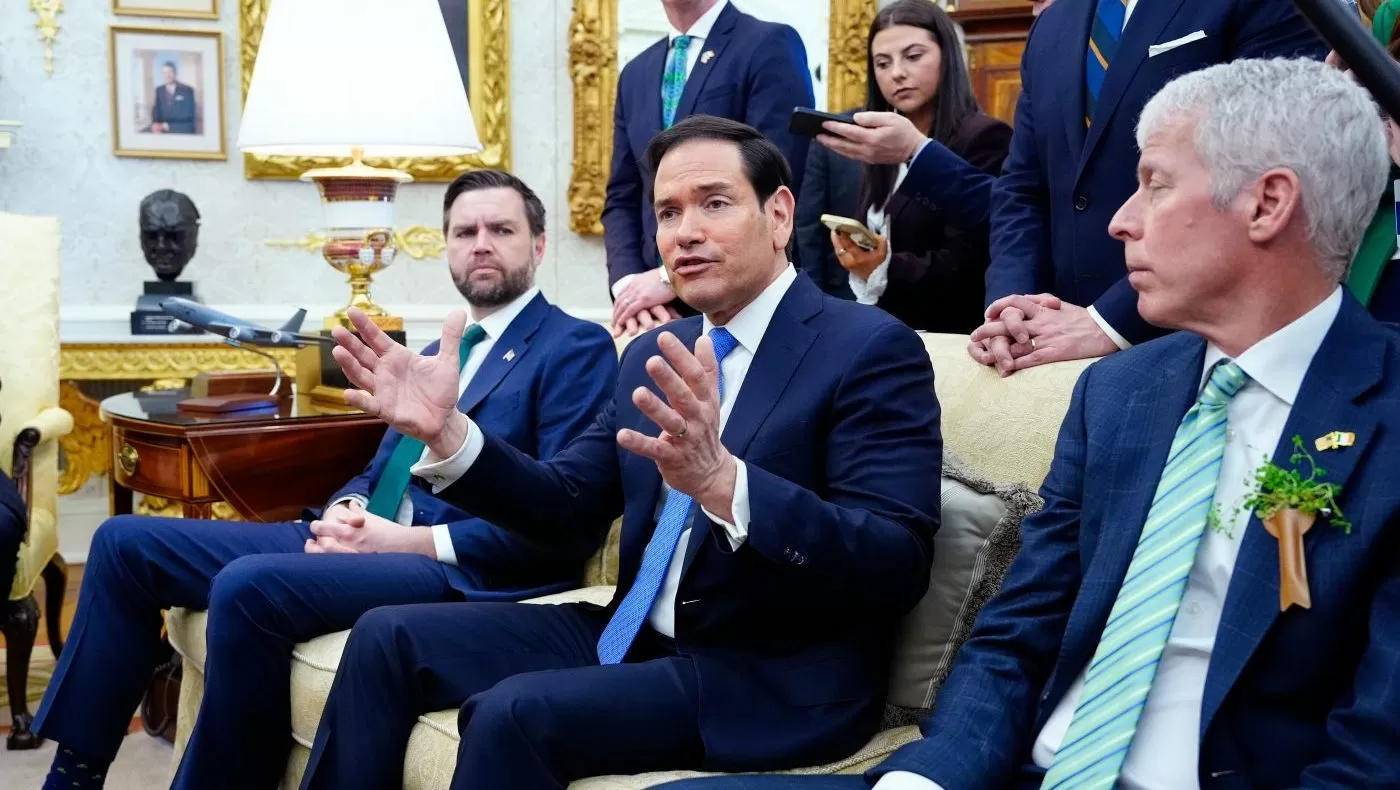
Secretary of State Marco Rubio has recently made a statement that has sparked discussions about the relationship between the United States and Cuba. On Tuesday, Rubio stated that Cuba needs to change its political leaders after reports surfaced that the Trump administration is seeking to remove President Miguel Díaz-Canel from power.
Rubio, who is known for his strong stance on Cuba, did not rule out the possibility of relaxing the long-standing embargo on the island nation in exchange for political reform. This statement has raised eyebrows and has left many wondering about the potential changes in the U.S.’s approach towards Cuba.
For decades, the relationship between the United States and Cuba has been strained, with the U.S. imposing a trade and travel embargo on Cuba in 1960. This embargo has been a contentious issue, with some arguing that it has not been effective in achieving its intended goals. However, others argue that the embargo is necessary to pressure Cuba into making political reforms.
In recent years, there have been some improvements in the relationship between the two countries. In 2014, former President Barack Obama announced a historic shift in U.S. policy towards Cuba, which included the restoration of diplomatic relations and easing of some travel and trade restrictions. This move was met with both praise and criticism, with some seeing it as a positive step towards normalizing relations, while others saw it as a concession to the Cuban government.
With the change in administration, there have been concerns about the future of the U.S.-Cuba relationship. President Trump has taken a more hardline approach, tightening restrictions on travel and trade and rolling back some of the changes made during the Obama administration. And now, with Rubio’s statement, it seems that there may be more changes on the horizon.
Rubio’s call for political change in Cuba is not new. He has long been a staunch opponent of the Cuban government and has been vocal about the need for democratic reforms on the island. He has also been critical of the Obama administration’s approach towards Cuba and has been a strong advocate for maintaining the embargo.
However, his statement about potentially relaxing the embargo in exchange for political reform is a shift in his previous stance. This move could signal a possible change in the U.S.’s strategy towards Cuba and may open the door for future negotiations between the two countries.
Some may see Rubio’s statement as a positive step towards improving the relationship between the U.S. and Cuba. It shows that the U.S. is willing to engage in dialogue and potentially make concessions in order to see political change in Cuba. This approach may be more effective in promoting democracy and human rights on the island.
On the other hand, there are concerns that relaxing the embargo could benefit the Cuban government more than the Cuban people. The embargo has been a tool to pressure the Cuban government into making political reforms, and lifting it without significant changes in the political landscape may be seen as a concession to the Cuban government.
It is clear that the U.S.-Cuba relationship is complex and there are no easy solutions. Both sides have different perspectives and concerns, and finding a balance between promoting democracy and human rights while also maintaining national interests is a delicate task.
As Secretary of State, Rubio’s statements carry weight and could potentially shape the future of U.S.-Cuba relations. It is important for all parties involved to carefully consider the potential consequences of any decision made regarding the embargo and political change in Cuba.
In conclusion, Secretary of State Marco Rubio’s recent statement about Cuba and the possibility of relaxing the U.S. embargo in exchange for political reform has sparked discussions about the future of the U.S.-Cuba relationship. While some may see this as a positive step towards promoting democracy and human rights, others have expressed concerns about the potential consequences. It is essential that any decision made takes into consideration the interests and well-being of both the U.S. and Cuban people.

