
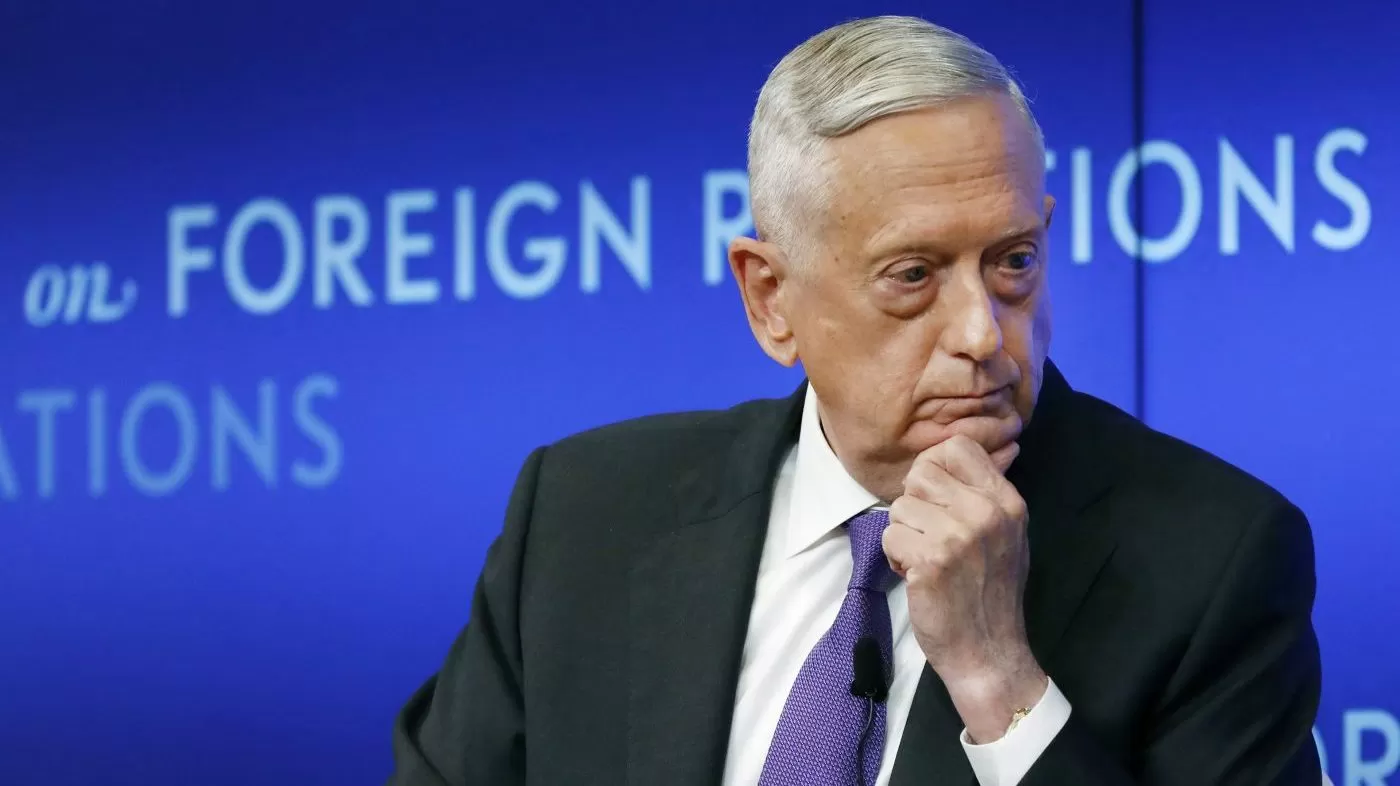
Former Defense Secretary Jim Mattis recently made a statement that has sparked a heated debate in the United States. He warned that if the U.S. were to end the war in the Middle East, it would effectively hand control of the Strait of Hormuz to Iran. This strategic waterway is responsible for the transportation of 20 percent of the world’s oil, making it a vital route for global energy supply.
In an interview with a major news network, Mattis stated, “Iran right now, if we declared victory, they would now say they own the strait. You’d see a tax for passage.” This statement has raised concerns about the potential consequences of withdrawing from the Middle East and the impact it could have on the global economy.
Mattis’ words carry weight, as he is a respected and knowledgeable figure in the military and political world. He served as the U.S. Secretary of Defense from 2017 to 2018 and has a wealth of experience in dealing with international conflicts. His warning should not be taken lightly and should serve as a wake-up call for the U.S. government to carefully consider its actions in the Middle East.
The Strait of Hormuz is a narrow waterway located between Iran and Oman, connecting the Persian Gulf to the Gulf of Oman and the Arabian Sea. It is a crucial route for oil tankers from the Middle East, including Saudi Arabia, Iraq, and Kuwait, to reach the rest of the world. Any disruption or control of this waterway could have severe consequences for the global economy, as it would impact the supply and price of oil.
Iran has long claimed sovereignty over the Strait of Hormuz, and tensions between the U.S. and Iran have been high in recent years. The U.S. has maintained a strong presence in the region to ensure the safety and stability of the strait, but with the possibility of a U.S. withdrawal, Iran could see this as an opportunity to assert its dominance over the waterway.
In the past, Iran has threatened to close the strait in response to U.S. sanctions, causing concerns about the free flow of oil. In 2019, tensions reached a boiling point when the U.S. accused Iran of attacking oil tankers in the strait, leading to a brief standoff between the two countries. With the potential for increased control over the strait, Iran could use it as a bargaining chip in future conflicts with the U.S. and its allies.
Furthermore, the U.S. withdrawal from the Middle East could also have repercussions for its allies in the region, particularly Israel and Saudi Arabia. Both countries have been staunch supporters of the U.S. and have relied on its military presence for security. With the U.S. potentially stepping back, these countries could feel vulnerable and exposed to potential threats from Iran.
Mattis’ statement has sparked a debate on whether the U.S. should continue its military involvement in the Middle East or withdraw and focus on domestic issues. While there are valid arguments on both sides, the potential consequences of ceding control of the Strait of Hormuz to Iran cannot be ignored.
The U.S. has a responsibility to protect its global interests and ensure the stability of the global economy. The Strait of Hormuz is a vital waterway, and any disruption or control by Iran could have far-reaching consequences. It is crucial for the U.S. government to carefully consider its actions and the potential impact they could have on the region and the world.
In conclusion, former Defense Secretary Jim Mattis’ warning about the U.S. ending the war in the Middle East and ceding control of the Strait of Hormuz to Iran should not be taken lightly. It is a wake-up call for the U.S. government to carefully consider its actions and the potential consequences they could have on the global economy. The U.S. must continue to play a key role in ensuring the stability and security of the Strait of Hormuz and the Middle East as a whole.

