
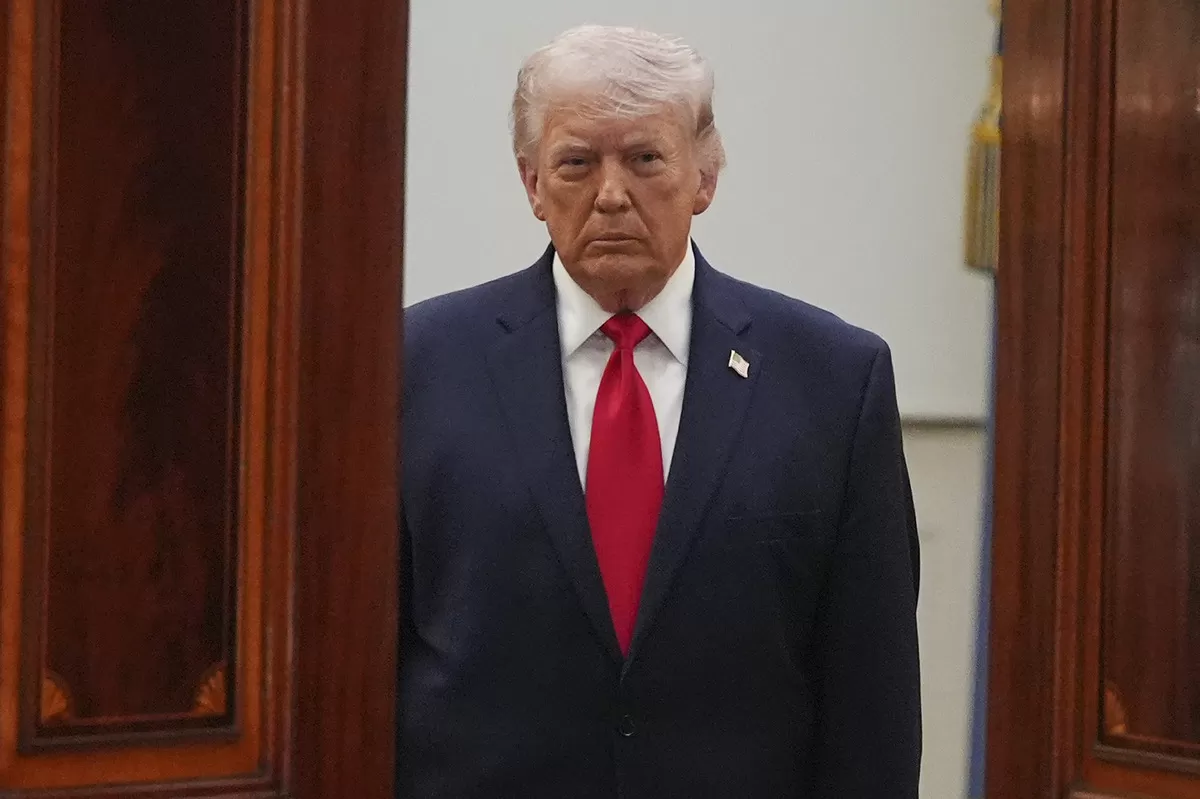
President Donald Trump’s threats have been unsuccessful in forcing Iran to reopen the vital Strait of Hormuz shipping lane. Despite his strong rhetoric and aggressive actions, Iran has remained steadfast in their decision to close the strait, causing tensions to rise between the two nations.
The Strait of Hormuz is a narrow waterway located between Iran and Oman, connecting the Persian Gulf to the Arabian Sea. It is a crucial shipping lane, responsible for the transportation of one-fifth of the world’s oil supply. This strategic location gives Iran significant control over the global oil market, making it a valuable bargaining chip in their ongoing conflict with the United States.
In recent months, tensions between the US and Iran have escalated, with President Trump imposing harsh economic sanctions on Iran in an effort to force them to renegotiate the 2015 nuclear deal. In response, Iran has retaliated by closing the Strait of Hormuz, effectively cutting off the flow of oil to the rest of the world.
President Trump has responded to this move with a series of threats and aggressive actions. He has warned Iran of severe consequences if they do not reopen the strait, including military action. He has also sent additional troops and warships to the region, further escalating the situation.
Despite these threats, Iran has remained firm in their decision to close the strait. They have stated that they will not be bullied or intimidated by the US, and that they have the right to protect their own interests. This stance has only served to further strain the already tense relationship between the two nations.
President Trump’s threats have also been met with criticism from the international community. Many countries have expressed concern over the potential for a military conflict in the region, and have urged both sides to engage in diplomatic negotiations to find a peaceful resolution.
In addition, the closure of the Strait of Hormuz has had a significant impact on the global economy. Oil prices have risen, causing instability in the market and affecting the economies of many countries. This has only added to the urgency for a resolution to be reached between the US and Iran.
Despite the lack of success in forcing Iran to reopen the strait, President Trump has remained steadfast in his approach. He has continued to issue threats and impose sanctions, hoping to pressure Iran into submission. However, this approach has not yielded the desired results and has only served to further escalate tensions between the two nations.
It is clear that a different approach is needed in order to resolve this conflict. Diplomatic negotiations and a willingness to compromise are necessary for a peaceful resolution to be reached. The international community must also play a role in facilitating these negotiations and encouraging both sides to find a solution that benefits all parties involved.
In conclusion, President Trump’s threats have so far been unsuccessful in forcing Iran to reopen the vital Strait of Hormuz shipping lane. The closure of the strait has caused tensions to rise between the two nations and has had a significant impact on the global economy. It is time for a change in approach, one that prioritizes diplomacy and cooperation in order to find a peaceful resolution to this ongoing conflict. The world is watching and hoping for a positive outcome that will benefit all parties involved.

