
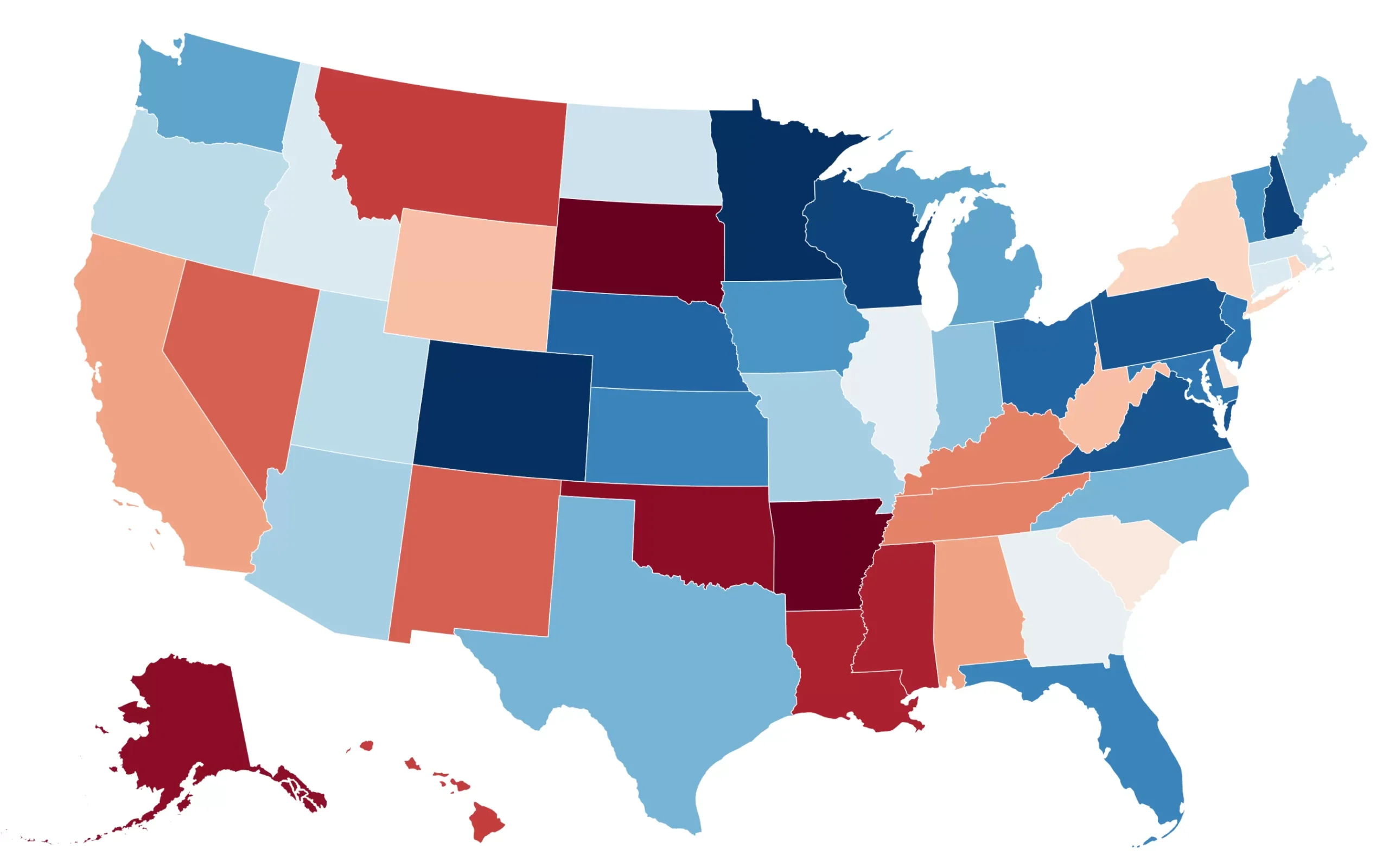
New research from a personal-finance website has revealed the top states in the United States with the best levels of financial literacy. The study, conducted by the website, aimed to identify which states are most equipped with the knowledge and skills to make informed financial decisions.
Financial literacy is the ability to understand and effectively manage one’s personal finances. It includes knowledge about budgeting, saving, investing, and managing debt. In today’s complex financial landscape, having a good level of financial literacy is crucial for individuals to achieve financial stability and success.
The study analyzed data from all 50 states, taking into account factors such as financial education programs, credit scores, and debt-to-income ratios. After careful analysis, the top states with the highest levels of financial literacy were identified as Massachusetts, New Hampshire, and Minnesota.
Massachusetts, known for its prestigious universities and high-quality education, ranked first in the study. The state has a strong focus on financial education, with programs such as the Massachusetts Financial Education Collaborative and the Massachusetts Jump$tart Coalition for Personal Financial Literacy. These initiatives aim to provide individuals with the necessary skills and knowledge to make sound financial decisions.
New Hampshire, another state known for its excellent education system, ranked second in the study. The state has a high percentage of residents with college degrees, which may contribute to their strong financial literacy. Additionally, New Hampshire has a low unemployment rate and a high median household income, indicating a financially stable population.
Minnesota, with its strong economy and low unemployment rate, ranked third in the study. The state also has a high percentage of residents with a college education, which may contribute to their financial literacy. Moreover, Minnesota has a strong focus on financial education, with programs such as the Minnesota Council on Economic Education and the Minnesota Jump$tart Coalition for Personal Financial Literacy.
On the other hand, the study also revealed the states with the lowest levels of financial literacy. These states include Mississippi, Louisiana, and Arkansas. These states have high poverty rates and low median household incomes, indicating a lack of financial stability among their residents.
The study’s findings highlight the importance of financial education and its impact on an individual’s financial well-being. It is crucial for individuals to have a good understanding of personal finance to make informed decisions about their money. With the right knowledge and skills, individuals can budget effectively, save for the future, and avoid falling into debt.
Moreover, financial literacy is not only beneficial for individuals but also for the economy as a whole. A financially literate population can contribute to a stable and thriving economy. It can also reduce the burden on government resources by reducing the number of individuals who rely on financial assistance.
In conclusion, the study’s results shed light on the states with the best levels of financial literacy in the United States. Massachusetts, New Hampshire, and Minnesota have proven to be leaders in equipping their residents with the necessary knowledge and skills to make sound financial decisions. However, the study also highlights the need for more financial education initiatives in states with lower levels of financial literacy. With the right education and resources, individuals can take control of their finances and pave the way for a more financially stable future.

