
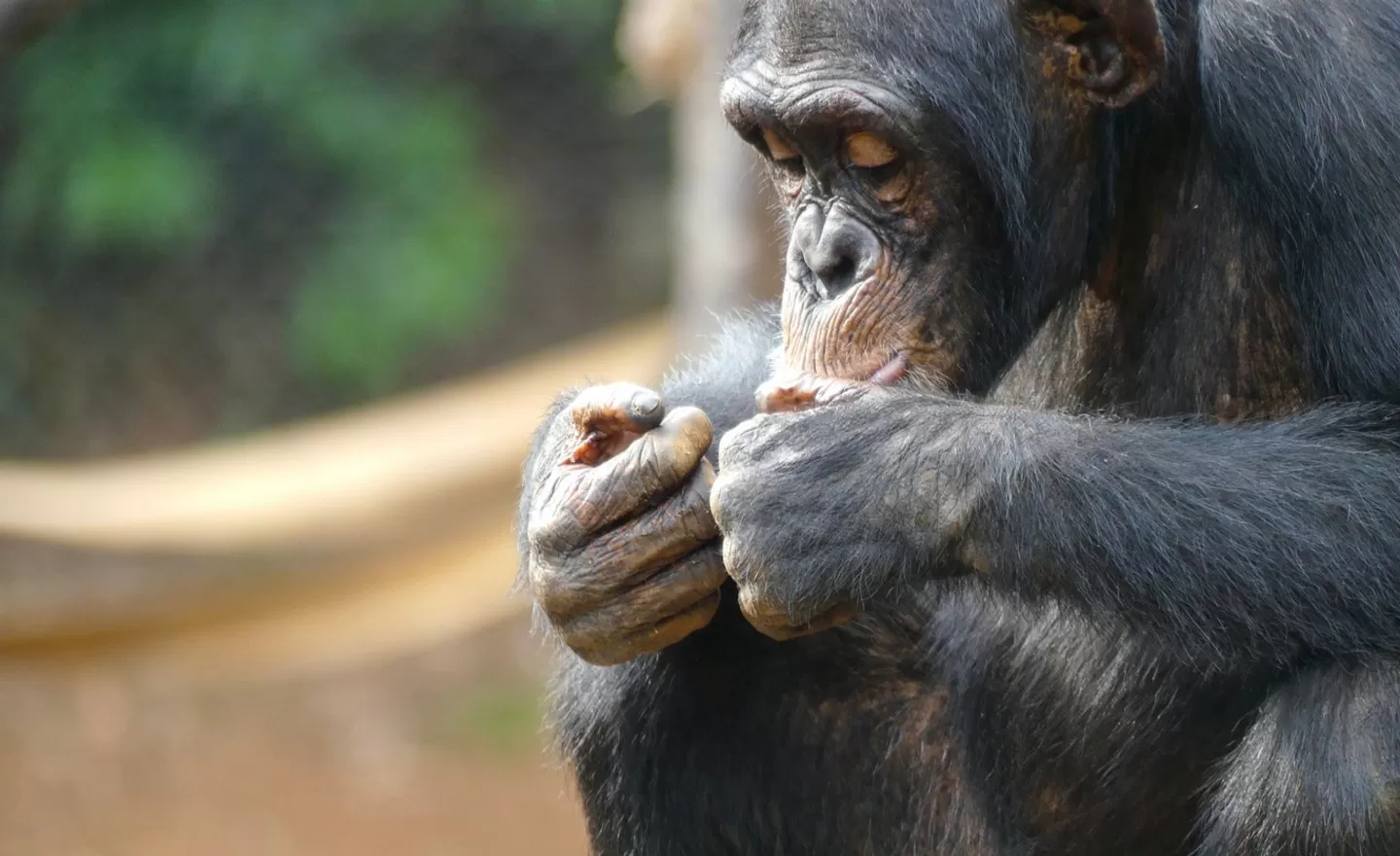
Researchers have long studied the behavior of chimpanzees, our closest living relatives. These intelligent and social creatures have been observed exhibiting complex behaviors similar to humans, including tool use, cooperation, and even aggression. And now, a recent study published in Science has shed light on a dark side of chimp behavior – the occurrence of a deadly civil war within a community of wild chimpanzees.
The study, which took place in Kibale National Park in Uganda, has documented a permanent split within the largest-known group of wild chimpanzees. The split was the result of a lethal conflict that erupted over the past several years, resulting in the deaths of many of the chimps.
For over 30 years, researchers have been monitoring the behavior of these chimpanzees, who live in a community of around 150 individuals. The community was once a cohesive and harmonious group, but in recent years, tensions began to rise and conflicts became more frequent. The researchers noticed a clear divide between two factions within the group, with one group led by an alpha male named Luther and the other by another male named Freud.
The conflict between these two groups intensified in 2010 when Luther was overthrown as alpha male by Freud. This led to a series of violent encounters between the two groups, resulting in the deaths of at least 22 chimps, including several infants. The killings were brutal and disturbing, with chimps using their teeth and hands as weapons.
The researchers were able to closely observe these conflicts and document the behaviors of the chimps involved. They found that the aggression was not limited to just males, as female chimps were also involved in the attacks. In fact, one of the females, who was pregnant at the time, lost her unborn baby during a particularly violent encounter.
This is not the first time that such a split has been observed in wild chimpanzee communities. In fact, similar events have been documented in other parts of Africa as well. However, what makes this study significant is the fact that the researchers were able to closely monitor the group for such a long period of time and document the events leading up to the split.
So, what could have caused this once peaceful community to turn against each other? The researchers believe that the root of the conflict lies in the competition for resources, particularly food. With a growing population and limited resources, the chimps were forced to split into smaller groups in order to survive. This led to increased competition and ultimately, the deadly conflict.
But beyond shedding light on the dark side of chimp behavior, this study has important implications for understanding the roots of human conflict. Chimpanzees share a common ancestor with humans, and this study provides valuable insights into the evolutionary origins of warfare and aggression in our species.
Moreover, studying the behavior of wild chimpanzees can also help us understand and manage conflicts in our own societies. By closely monitoring the behavior of these chimps, researchers can develop strategies to prevent and manage conflict within communities and ultimately promote peace.
It is also important to note that while this study highlights a dark aspect of chimp behavior, it also showcases the resilience and adaptability of these creatures. Despite the deadly conflict, the two groups were able to survive and continue to thrive in their respective territories. This is a testament to the strength and resilience of these amazing animals.
In conclusion, the recent study on the split within the largest-known group of wild chimpanzees in Kibale National Park provides valuable insights into the complex and sometimes violent behavior of these creatures. It also has important implications for understanding human conflict and promoting peace in our own societies. But above all, it highlights the resilience and adaptability of these amazing animals in the face of adversity.

