
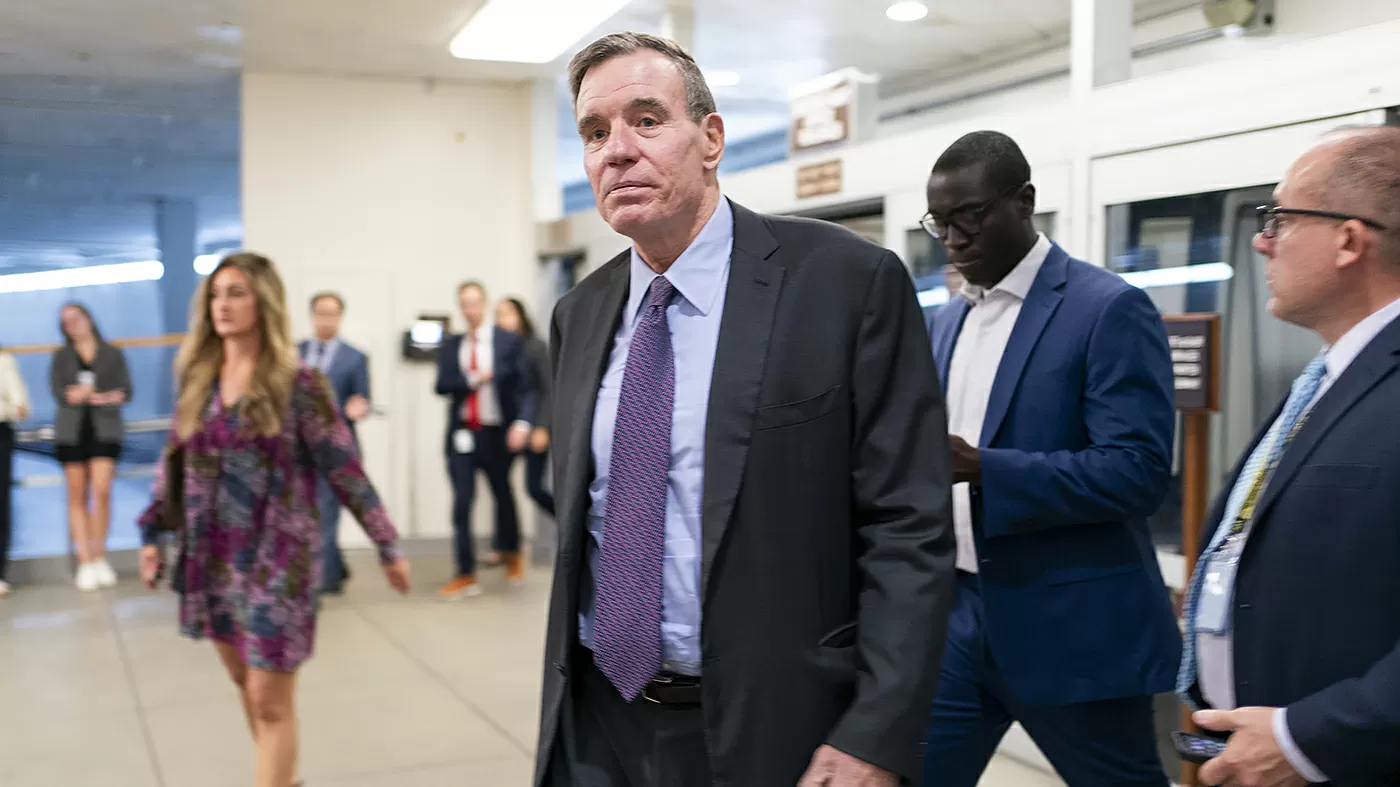
Senator Mark Warner of Virginia expressed his confusion and concern over President Trump’s recent announcement to blockade ships entering the Strait of Hormuz. In an interview on Sunday, Sen. Warner stated that he could not understand the “logic” behind such a move and emphasized the potential negative impact it could have on the global economy.
The Strait of Hormuz, located between Iran and Oman, is a vital waterway for international trade, particularly for oil and natural gas. It is estimated that 25% of the world’s natural gas passes through this narrow strait, making it a crucial route for energy supplies. Any disruption to the flow of traffic through the strait could have significant consequences for the global market, including a potential increase in gasoline prices.
Sen. Warner pointed out that the United States is already facing high gas prices, with the average cost per gallon reaching $4. He questioned the rationale behind implementing a blockade, which could further exacerbate the situation and put a strain on American consumers. The senator emphasized the need for a comprehensive and well-thought-out strategy instead of impulsive actions that could have severe consequences.
President Trump’s decision to blockade ships entering the Strait of Hormuz has drawn criticism from various political leaders and experts. The move was seen as a direct response to Iran’s threats to close the strait in retaliation to the U.S. withdrawing from the Iran nuclear deal. However, many have raised concerns over the legality and effectiveness of this action.
Sen. Warner, who serves as the vice chair of the Senate Intelligence Committee, also expressed his doubts about the effectiveness of a blockade. He stated that it would be challenging to enforce such a measure and could potentially escalate tensions in the region. The senator highlighted the importance of maintaining open communication and diplomacy to address issues with Iran, rather than taking aggressive and potentially harmful actions.
The senator’s remarks echo the sentiments of many who believe that the United States should prioritize finding a diplomatic solution to the ongoing tensions with Iran. The region is already facing numerous challenges, and any escalation could have severe consequences for the global economy and security.
In addition to the potential economic impact, a blockade could also have environmental consequences. The Strait of Hormuz is a fragile ecosystem, and a disruption in the flow of traffic could lead to oil spills and other environmental disasters. This could have long-term effects on the marine life and the livelihoods of people who depend on the sea for their survival.
Sen. Warner’s call for a more measured and thoughtful approach to addressing the situation in the Strait of Hormuz is a reminder that the decisions made by political leaders have far-reaching consequences. As a leading global power, the United States has a responsibility to act with prudence and consider the implications of its actions on both a national and international level.
In conclusion, Sen. Mark Warner’s comments on President Trump’s decision to blockade ships entering the Strait of Hormuz highlight the need for a more strategic and diplomatic approach to addressing tensions in the region. The senator’s concerns over the potential economic, environmental, and security repercussions of such a move serve as a reminder to all leaders to carefully consider their actions and prioritize finding peaceful solutions to global challenges.

