
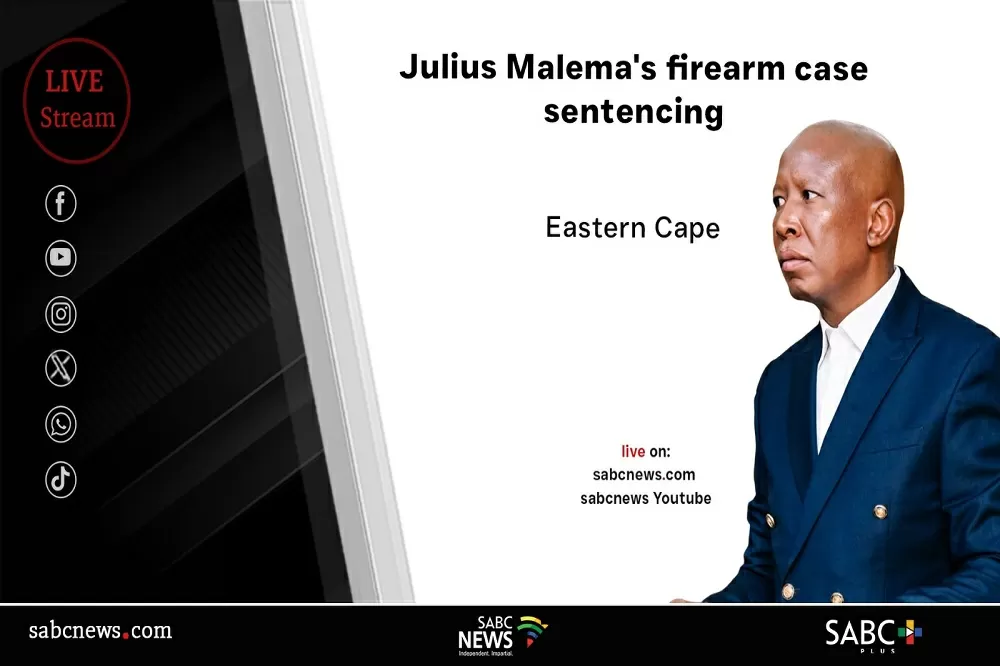
Last year, the South African political landscape was rocked by the news of Julius Malema’s conviction for unlawful possession and discharging of a firearm in a public area. The former leader of the Economic Freedom Fighters (EFF) was found guilty of these charges and sentenced to a fine of R10,000 or five years imprisonment. This was a significant blow to Malema, who has been a prominent figure in South African politics for many years.
The incident in question took place in 2018 when Malema was attending the EFF’s fifth birthday celebration in East London. During the event, Malema fired a rifle into the air, claiming it was a traditional salute. However, this act was deemed illegal as it violated the Firearms Control Act, which prohibits the discharge of a firearm in a public area without a valid reason. Malema’s actions were also seen as reckless and dangerous, as they could have caused harm to innocent bystanders.
The court’s decision to convict Malema was met with mixed reactions from the public. While some saw it as a necessary consequence for his actions, others viewed it as a political move to silence a vocal opposition leader. However, regardless of one’s political stance, it is essential to acknowledge that Malema’s conviction was a result of his own actions and not a political conspiracy.
As a leader and a public figure, Malema has a responsibility to uphold the law and set a positive example for his followers. Unfortunately, his actions on that day were a blatant disregard for the law and showed a lack of respect for the safety and well-being of others. It is crucial for leaders to be held accountable for their actions, and Malema’s conviction serves as a reminder of this.
Malema’s conviction also highlighted the need for stricter gun control laws in South Africa. The country has one of the highest rates of gun-related violence in the world, and incidents like this only add to the problem. It is essential for leaders to support and promote responsible gun ownership and discourage the use of firearms in public spaces.
Despite this setback, Malema remains a prominent figure in South African politics. He has been a vocal advocate for economic freedom and has gained a significant following among the country’s youth. However, his conviction serves as a reminder that no one is above the law, and leaders must lead by example.
In the aftermath of his conviction, Malema showed remorse for his actions and accepted responsibility for his mistake. He also used the opportunity to urge his supporters to respect the law and refrain from any violent or unlawful behavior. This display of accountability and leadership is commendable and should be a lesson for all leaders to take responsibility for their actions.
Malema’s conviction also sparked a conversation about the role of leaders in society. As public figures, leaders have a significant influence on their followers, and it is crucial for them to use their platform for the greater good. Malema’s actions on that day were not in line with his role as a leader, and his conviction serves as a reminder that leaders must be mindful of their actions and the impact they have on society.
In conclusion, Malema’s conviction for unlawful possession and discharging of a firearm was a significant event in South African politics. It served as a reminder of the need for stricter gun control laws and the importance of leaders being held accountable for their actions. While it may have been a setback for Malema, it also presented an opportunity for him to reflect on his actions and set a positive example for his followers. As a society, we must continue to hold our leaders to a high standard and demand accountability from them.

