
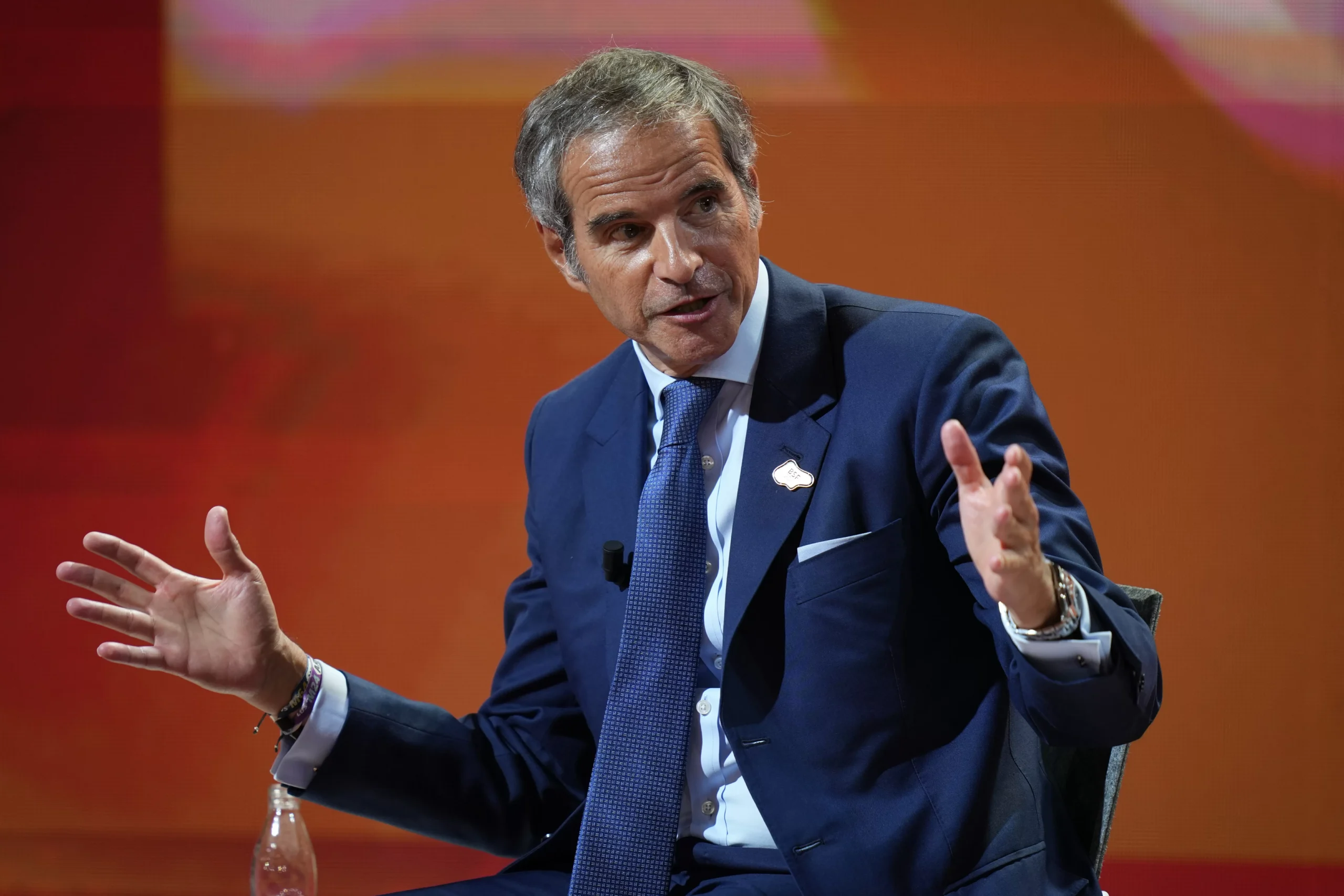
The International Atomic Energy Agency (IAEA) Director General Rafael Grossi has issued a stern warning against the dangers of reaching an agreement with Iran that lacks a clear method for assessing its nuclear development. In a press conference on Wednesday, Grossi emphasized the need for the presence of IAEA inspectors in order to effectively monitor Iran’s ambitious and extensive nuclear program.
Grossi’s remarks come at a critical time as negotiations between Iran and world powers, including the United States, are ongoing to revive the 2015 nuclear deal. The deal, formally known as the Joint Comprehensive Plan of Action (JCPOA), aimed to limit Iran’s nuclear activities in exchange for the lifting of economic sanctions. However, in 2018, the US withdrew from the deal and reimposed sanctions on Iran, prompting the country to gradually increase its nuclear activities.
In recent months, there have been talks of the US rejoining the JCPOA and lifting sanctions, but Grossi’s warning serves as a reminder that any agreement must have a clear and effective mechanism for monitoring Iran’s nuclear program. He stressed that Iran’s nuclear program is vast and ambitious, and therefore, it is crucial for IAEA inspectors to have access to all relevant sites and information in order to ensure compliance with the terms of the agreement.
Grossi also highlighted the importance of transparency in Iran’s nuclear activities. He stated that the IAEA has been able to verify Iran’s compliance with the JCPOA through its extensive monitoring and verification measures. However, he cautioned against the “illusion” of an agreement that does not clearly outline a method for assessing Iran’s nuclear development. Without proper monitoring and verification, there is a risk of Iran continuing its nuclear activities without the knowledge of the international community.
The IAEA has been closely monitoring Iran’s nuclear program since the signing of the JCPOA in 2015. Under the deal, Iran agreed to limit its uranium enrichment activities and allow IAEA inspectors to access its nuclear facilities. However, since the US withdrawal from the deal, Iran has gradually increased its uranium enrichment levels and has restricted access to some of its nuclear sites.
Grossi’s warning serves as a reminder of the importance of the IAEA’s role in ensuring the peaceful use of nuclear energy. The agency’s mission is to prevent the spread of nuclear weapons and promote the safe and secure use of nuclear energy for peaceful purposes. In order to fulfill this mission, it is crucial for the IAEA to have access to all relevant information and sites, especially in countries with ambitious nuclear programs like Iran.
The IAEA has been working tirelessly to monitor Iran’s nuclear activities and provide regular reports to the international community. Grossi’s warning is a testament to the agency’s commitment to upholding its mandate and ensuring the safety and security of the world.
In conclusion, the IAEA Director General’s warning against the “illusion” of an agreement with Iran without a clear method for assessing its nuclear development is a timely reminder of the importance of transparency and effective monitoring in nuclear agreements. As negotiations continue, it is crucial for all parties involved to prioritize the role of the IAEA and ensure that any agreement includes a robust mechanism for monitoring and verification. Only then can we be assured of the peaceful use of nuclear energy and the prevention of nuclear proliferation.

