
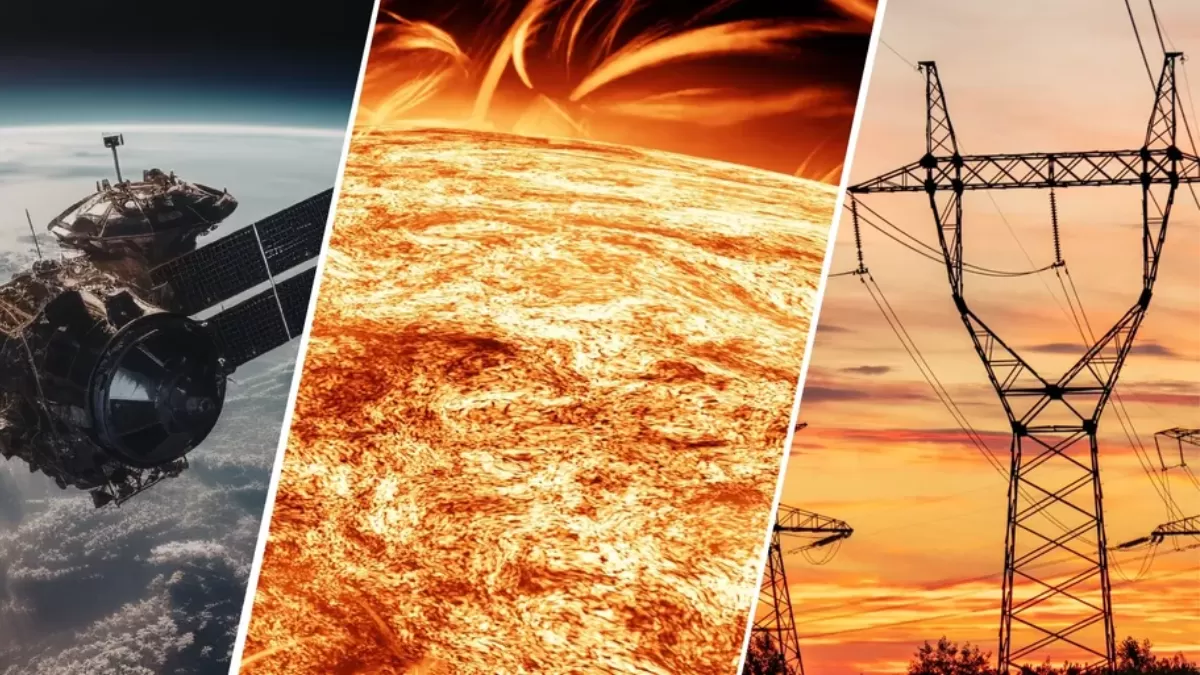
A Solar Superstorm: A Rare but Serious Threat to Modern Infrastructure
In the year 1859, a powerful solar superstorm hit the Earth, causing disruption to telegraph systems and lighting up the sky with an intense display of auroras. This event, known as the Carrington Event, is the most extreme solar storm to ever hit the Earth and it serves as a stark reminder of the potential dangers of such phenomena. Scientists now warn that a similar event could occur again, and this time, the consequences could be far more devastating.
A solar superstorm, also called a geomagnetic storm, is a result of increased solar activity that sends highly charged particles towards the Earth. When these particles reach our planet, they interact with the Earth’s magnetic field, causing disruptions in communications, satellites, GPS systems, and power grids. While such storms are rare, occurring once every 100-200 years, the impact of a solar superstorm can be catastrophic.
The concern over the potential effects of a solar superstorm has been growing in recent years. With our ever-increasing reliance on technology, the world has become more vulnerable to the disruptive effects of such events. The use of satellites for communication, navigation, and weather forecasting has become an integral part of our daily lives, and a solar storm could potentially knock out these vital systems. Moreover, our power grids, which are responsible for providing electricity to our homes and businesses, are also at risk of being severely damaged or even completely disabled.
In a recent study published in the journal Space Weather, the National Academy of Sciences estimated that a severe solar storm, like the Carrington Event, could cause up to $2 trillion in damages in the United States alone. This figure does not take into account the potential economic impact in other parts of the world. It is clear that a solar storm of this magnitude has the potential to disrupt the entire modern infrastructure and cause widespread chaos.
The good news is that scientists and engineers are working towards finding ways to mitigate the risks posed by solar superstorms. Improved monitoring and early warning systems have been put in place to detect and track solar activities that could lead to a superstorm. This allows for adequate preparation and response time to safeguard critical infrastructure. Additionally, there have been advancements in technology that can better protect our power grids and satellites from the damaging effects of a solar storm.
In addition to technological advancements, it is also important to raise awareness about the potential dangers of a solar superstorm. Governments, organizations, and individuals should take proactive measures to prepare for such an event. This includes having backup systems in place, such as alternative sources of communication and power, to minimize the impact of a solar storm.
While the chances of a solar superstorm occurring in our lifetime may be slim, the consequences could be catastrophic. Hence, it is crucial to take the necessary steps to prepare for such an event. Increased research and investment in technologies that can mitigate the risks of a solar superstorm are essential. We must also continue to educate ourselves on the subject and be prepared to act in the face of such a threat.
In conclusion, a solar superstorm like the Carrington Event may be a rare occurrence, but it is a serious threat to our modern infrastructure. The potential consequences of such an event cannot be ignored, and it is our responsibility to take proactive measures to protect our critical systems. While the risk may never be completely eliminated, with improved monitoring, safeguards, and preparedness, we can reduce the impact of a solar superstorm and ensure the safety and stability of our world.

