
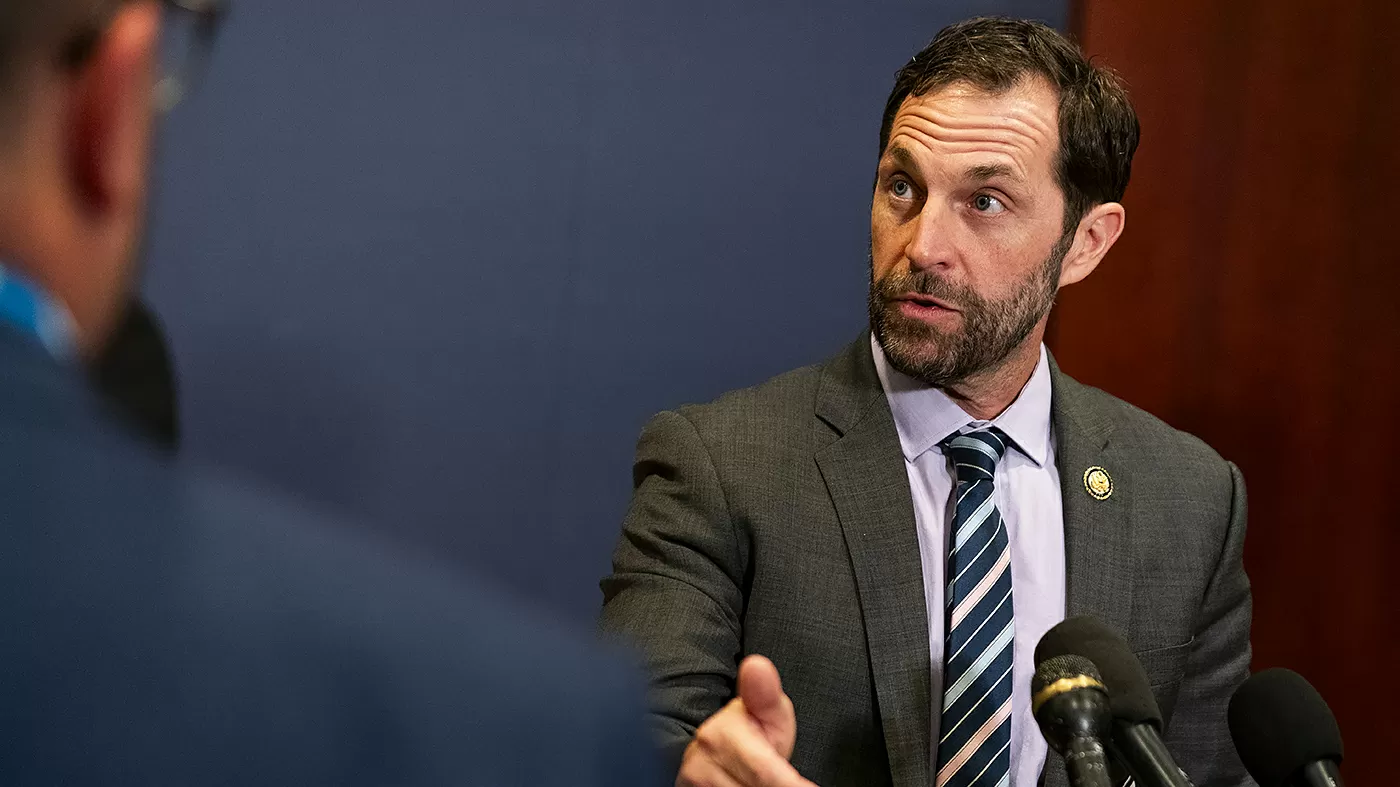
Rep. Jason Crow (D-Colo.) has recently raised concerns about the impact of the U.S. blockade in the Strait of Hormuz. In an interview with CNN’s Kate Bolduan, he stated that Russia is the “real winner” of this blockade, as it has led to increased oil prices globally. This statement calls for a closer examination of the blockade’s endgame and the potential consequences it may bring.
The Strait of Hormuz is a crucial waterway for global oil trade, with one-fifth of the world’s oil passing through it. The recent tensions between the United States and Iran have resulted in a blockade, causing a holdup of oil exports and a rise in oil prices. While the U.S. has claimed that this blockade is necessary to pressure Iran to negotiate a new nuclear deal, Rep. Crow has questioned its effectiveness and potential consequences.
In his interview, Rep. Crow pointed out that Iran was already blockading the Strait of Hormuz, which raises the question of what the U.S. blockade aims to achieve. Is it really an effective strategy, or is it only escalating the tensions and benefiting other countries like Russia? These are valid concerns that need to be addressed.
It is evident that Russia has been the biggest beneficiary of this blockade. With the global oil prices rising, Russia, being one of the world’s leading oil producers, is bound to gain significant profits. This raises concerns about the impact of the blockade on the U.S.’s relationships with its allies and the global economy. Is it worth jeopardizing these relationships and potentially causing a global economic crisis?
Moreover, the blockade also has implications for the safety and security of the region. With tensions between the U.S. and Iran at an all-time high, any miscalculation or misstep could lead to a military confrontation, putting the lives of innocent civilians at risk. The Strait of Hormuz is already a heavily militarized area, and the blockade only adds to the tensions and increases the risk of a potential conflict.
Rep. Crow’s concerns are not unfounded. The U.S. needs to carefully consider the potential consequences of this blockade and whether it aligns with its long-term strategic goals. While it may seem like a strong stance against Iran, the blockade’s endgame needs to be carefully evaluated. Is it sustainable, and what are the long-term effects on the region and the global economy?
Furthermore, the U.S. needs to consider the impact of this blockade on its relationships with its allies. While some countries have expressed support for the blockade, others have raised concerns about its effectiveness and potential consequences. The U.S. needs to work closely with its allies and listen to their concerns to find a more sustainable and effective solution.
It is also crucial for the U.S. to explore diplomatic avenues for resolving the tensions with Iran. Instead of resorting to military actions and blockades, dialogue and negotiations should be the first step towards de-escalation. This not only reduces the risk of a potential conflict but also shows the U.S.’s commitment to finding peaceful solutions.
In conclusion, Rep. Jason Crow’s remarks about the U.S. blockade in the Strait of Hormuz have shed light on some crucial aspects that need to be considered. The blockade’s endgame and potential consequences must be carefully evaluated to ensure that it aligns with the U.S.’s long-term strategic goals and does not harm its relationships with its allies. It is time for the U.S. to explore diplomatic avenues and prioritize peaceful solutions to resolve the tensions with Iran. Only then can we truly claim victory, and not let Russia be the “real winner” of this blockade.

