Helium-3 Moon Mining: Future Energy Source or Space Myth?
Discover why Helium-3 from the moon could revolutionize energy production. Explore mining feasibility, costs, and its potential as future fuel.
Understanding Helium-3 and Its Significance
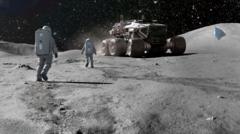
Helium-3 moon mining has emerged as one of the most intriguing concepts in space exploration and energy development. This rare isotope, virtually absent in Earth's atmosphere, exists in substantial quantities within lunar regolith, captured by billions of years of solar wind interactions. Scientists and entrepreneurs are increasingly exploring the viability of extracting and transporting this resource back to Earth, where it could potentially transform global energy production.
The element itself is a stable isotope of helium with two protons and one neutron, making it fundamentally different from the common Helium-4 that fills party balloons. Its unique nuclear properties make it exceptionally valuable for specific applications, particularly in fusion energy research and specialized medical equipment.
Why Helium-3 Matters for Future Energy
The primary driver behind Helium-3 moon mining interest lies in its potential role in nuclear fusion reactors. Unlike traditional uranium-based nuclear fission, fusion reactions using Helium-3 would produce significantly fewer radioactive byproducts, making it an extraordinarily clean energy source. One ton of Helium-3 could theoretically generate energy equivalent to burning three million tons of fossil fuels, representing an unprecedented energy density.
Current demand for Helium-3 already exceeds supply. Medical imaging facilities, cryogenic applications, and research institutions desperately need this resource. Experts project demand will soar exponentially as fusion technology advances and becomes commercially viable. This supply-demand gap is creating the economic foundation for lunar exploration projects.
Helium-3 Moon Mining: Technical Challenges
Extracting Helium-3 from lunar surface materials presents formidable technical obstacles. The isotope exists in extremely low concentrations within the regolith—approximately one part per billion. Mining operations would require processing vast quantities of lunar soil, approximately 300 tons, to yield just one kilogram of usable Helium-3.
Current extraction technologies involve heating regolith to extremely high temperatures to release trapped gases, then separating Helium-3 from other isotopes through sophisticated mass spectrometry. This energy-intensive process would require establishing permanent lunar mining facilities with reliable power sources, likely solar arrays or nuclear reactors.
Infrastructure Requirements
Establishing Helium-3 moon mining operations would demand comprehensive infrastructure development. This includes pressurized habitats for workers, equipment manufacturing and maintenance facilities, refined ore processing plants, and secure storage systems. Transportation systems capable of launching processed material back to Earth would need development, potentially including automated cargo shuttles or space elevators.
Environmental Considerations
Mining lunar resources raises legitimate concerns about environmental impact on the moon's pristine geological features and scientific value. Permanent excavation could disturb ancient geological records and contaminate sites of scientific interest. International space law and ethical guidelines would need refinement before large-scale operations commence.
Economic Feasibility of Lunar Helium-3 Operations
Current space transportation costs make Helium-3 moon mining economically questionable. Launching materials to the moon costs approximately $1,000 to $10,000 per kilogram, with return trips potentially doubling this expense. Even accounting for Helium-3's theoretical value, profitability requires dramatic reductions in launch costs.
However, companies like SpaceX are developing reusable rocket technology that could eventually reduce transportation expenses by 90 percent or more. As launch costs decline and fusion energy technology matures, the economic calculus could fundamentally shift. Some projections suggest that by 2040-2050, lunar mining could become commercially viable.
The market value for Helium-3 remains speculative. Current prices fluctuate between $1,000 and $10,000 per liter, depending on purity and application. If fusion energy becomes mainstream, demand could skyrocket, potentially increasing prices significantly.
International Initiatives and Space Programs
Multiple nations are actively pursuing lunar exploration programs with resource extraction considerations. China's Chang'e lunar missions have demonstrated advanced surface exploration capabilities. The United States' Artemis program aims to establish sustainable lunar presence. Russia and India continue advancing their lunar capabilities.
Private companies including SpaceX, Blue Origin, and emerging space startups are developing technologies and infrastructure that could eventually support Helium-3 moon mining. These initiatives represent a fundamental shift toward commercial space exploration.
The Reality of Helium-3 Moon Mining Today
Despite considerable interest, Helium-3 moon mining remains largely theoretical. No commercial extraction has occurred, and technology for large-scale operations has not been demonstrated. The timeline for viable operations extends decades into the future, requiring substantial technological breakthroughs and economic developments.
Nevertheless, Helium-3 moon mining represents humanity's expanding ambitions regarding space resource utilization. As Earth faces growing energy demands and climate pressures, developing alternative fuel sources becomes increasingly critical. Lunar resources may eventually play a vital role in humanity's energy future.


