Israeli Settlers Siege Palestinian Homes in Qusra Village
Israeli troops tell Palestinians to evacuate homes in Qusra. Mayor reports houses used as military barracks during settler siege operations.
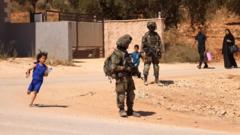
Evacuation Orders in Qusra: Families Forced to Abandon Homes
Residents of Qusra village face an unprecedented crisis as Israeli settlers and military forces intensify pressure to force Palestinian families from their homes. The situation surrounding Israeli settlers and the occupation of residential properties has reached critical levels, with local authorities documenting systematic displacement tactics.
According to the municipal leadership, Israeli troops have been conducting operations that directly target the civilian population, ordering inhabitants to vacate their residences. This coordinated effort has left hundreds of families in a precarious situation, uncertain about their legal standing and future security.
Military Use of Residential Properties
One of the most concerning aspects of this crisis involves the conversion of private Palestinian homes into military installations. Israeli forces have reportedly commandeered numerous residences throughout Qusra, transforming them into temporary barracks and operational centers.
The seizure of homes for military purposes represents a significant escalation in tactics employed by Israeli settlers. Rather than establishing new settlements or military bases, the strategy now focuses on occupying existing Palestinian structures, forcing families into displacement while simultaneously creating strategic positions throughout the village.
Local Authority Response and Documentation
The mayor of Qusra has become the primary voice documenting these developments, providing detailed accounts of the forced evacuation orders being issued to residents. Municipal officials are recording incidents systematically, though their ability to protect citizens remains severely limited given the military superiority and governmental backing of Israeli forces.
Local leadership emphasizes that families are being given minimal time to vacate, often receiving verbal notices without formal written documentation. This lack of procedural transparency creates additional confusion and vulnerability for displaced populations, many of whom lack resources to establish alternative housing arrangements.
Impact on Palestinian Communities
The forced displacement represents more than a housing crisis; it fundamentally disrupts community structures, economic activities, and social bonds developed over generations. Families are being separated, children removed from schools, and livelihoods destroyed by sudden relocation requirements.
Palestinian residents describe the psychological toll of living under constant threat of expulsion. The uncertainty regarding property ownership and residence rights creates an atmosphere of perpetual instability, affecting mental health, educational outcomes, and economic productivity across the affected population.
Broader Context of Settlement Expansion
The developments in Qusra reflect a broader pattern of Israeli settlement activities in the West Bank. The village has long been vulnerable to settler encroachment due to its proximity to established Israeli settlements and its location in designated Area C under Israeli administrative control.
These incidents underscore the ongoing tensions between Palestinian aspirations for territorial security and Israeli expansionist policies. The conversion of homes into military barracks represents an evolution in occupation tactics, moving beyond traditional settlement construction to incorporate existing Palestinian infrastructure into military and administrative systems.
International Implications and Legal Questions
The forced evacuation of Palestinians from their homes raises serious questions under international humanitarian law and conventions protecting civilian populations during conflicts. Human rights organizations have highlighted concerns about potential violations of laws governing occupied territories and civilian protection standards.
The systematic nature of these operations, involving coordination between military forces and settler groups, suggests calculated policy implementation rather than isolated incidents. This distinction carries significant legal implications under frameworks governing international conflicts and occupation dynamics.
Looking Forward
The situation in Qusra remains fluid, with ongoing reports of additional evacuation orders and military movements. Local authorities continue documenting incidents while civil society organizations work to provide humanitarian assistance to displaced families. The international community watches these developments closely, with implications for broader Israeli-Palestinian relations and regional stability considerations.


