Trident Modernisation Drives UK Defence Investment Strategy
Prime Minister highlights Trident renewal as cornerstone of defence spending, launching next phase of submarine replacement in Barrow-in-Furness with focus on c...
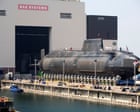
Trident Renewal Becomes Core Priority in Defence Strategy
The government's Trident renewal initiative has emerged as a pivotal element of the nation's broader defence spending framework, reflecting a strategic commitment to maintaining nuclear deterrence capabilities. During a significant visit to Barrow-in-Furness, the Prime Minister is unveiling the advancement of the Trident replacement programme, positioning this monumental undertaking as fundamental to reshaping Britain's industrial landscape and securing employment opportunities across multiple regions.
The Trident renewal project represents one of the most substantial defence investments in recent decades, with the government allocating substantial resources to ensure continuity of the submarine-based deterrent system. This commitment underscores the administration's determination to blend security objectives with economic revitalisation, particularly in areas dependent on defence manufacturing capabilities.
£31 Billion Dreadnought-Class Investment in Cumbrian Manufacturing
The development of the Dreadnought-class submarines, valued at approximately £31 billion, constitutes a major economic stimulus for Barrow-in-Furness and surrounding communities. These cutting-edge vessels represent technological advancement in naval engineering and serve as vessels capable of maintaining Britain's continuous at-sea deterrent for decades to come. The manufacturing process involves thousands of skilled workers, apprentices, and specialised technicians who contribute to one of the defence sector's most sophisticated programmes.
Construction at the Cumbrian shipyard demonstrates how defence spending directly translates into tangible employment and economic activity within local communities. The Dreadnought-class boats require components sourced from suppliers across the United Kingdom, creating supply chain opportunities that extend far beyond the immediate manufacturing site. This interconnected approach to procurement ensures that the benefits of Trident renewal dispersed throughout the national economy.
Community Reindustrialisation Through Defence Spending
The Prime Minister's emphasis on utilising defence spending as a mechanism for community regeneration represents a departure from traditional arguments about military expenditure. Rather than presenting defence investment as a burden on public finances, the administration frames the Trident renewal programme as a strategic economic tool capable of revitalising post-industrial areas that have experienced prolonged economic challenges.
Barrow-in-Furness, historically reliant on submarine construction, has weathered periods of uncertainty regarding its industrial future. The Trident renewal commitment provides long-term stability and visibility for the shipyard's operations, enabling workforce planning and investment in training infrastructure. Local educational institutions can now confidently develop engineering and technical programmes aligned with industry requirements, creating pathways for young people into well-compensated careers.
Strategic Significance of Submarine Replacement Programme
The next phase of the nuclear submarine replacement programme carries implications extending beyond industrial policy into core national security considerations. The submarines produced through this initiative will form the backbone of Britain's continuous at-sea deterrent, a capability maintained without interruption since 1969. This unbroken record of deployment demonstrates the operational reliability and strategic importance of the submarine force.
Advanced manufacturing techniques employed in Dreadnought-class construction establish British shipyards as centres of technological excellence. The demands of submarine construction require precision engineering, advanced materials science, and sophisticated electrical and mechanical systems integration. These capabilities position UK defence manufacturers competitively within international markets and contribute to sustained technological leadership within the sector.
Broader Defence Investment Context
The Trident renewal programme exists within a wider landscape of defence spending commitments aimed at modernising Britain's armed forces. Alongside submarine investment, the government pursues upgrades to air defence systems, naval vessels, and ground-based capabilities. These complementary programmes create a comprehensive security posture while simultaneously generating industrial activity across multiple regions and manufacturing centres.
Economic analyses consistently demonstrate that defence spending generates significant multiplier effects throughout the broader economy. For every pound invested in defence manufacturing, additional economic activity is stimulated through supply chain transactions, wage expenditure, and associated service provision. The Trident renewal programme exemplifies this principle, with benefits extending to communities far removed from Barrow-in-Furness.
Looking Forward: Continuity and Capability
The government's unwavering commitment to Trident renewal ensures that Britain maintains technological parity with other nuclear-armed nations and preserves strategic independence in security matters. The programme's completion timeline extends across multiple decades, providing employment security and industrial capacity utilisation for an extended period. This long-term visibility enables workforce development, supplier relationship building, and technological innovation within the defence sector.
As the next phase of the submarine replacement programme launches, the administration anticipates renewed scrutiny from various stakeholders. Environmental considerations, fiscal implications, and strategic rationale will undoubtedly feature in parliamentary debate and public discourse. Nevertheless, the government views Trident renewal as non-negotiable, essential both to national defence requirements and to economic revitalisation objectives within communities dependent on defence manufacturing activity.